About the treatment
One lamp, three jobs, and which of them you actually need
Intense pulsed light is not a single treatment. It is a broad band of light that can be filtered and tuned, and what it does depends entirely on which part of that band we let through and how hard we drive it.
That is why you will see three light treatments on our Red Deer menu that all sound the same. They run on the same equipment and they are not the same appointment.
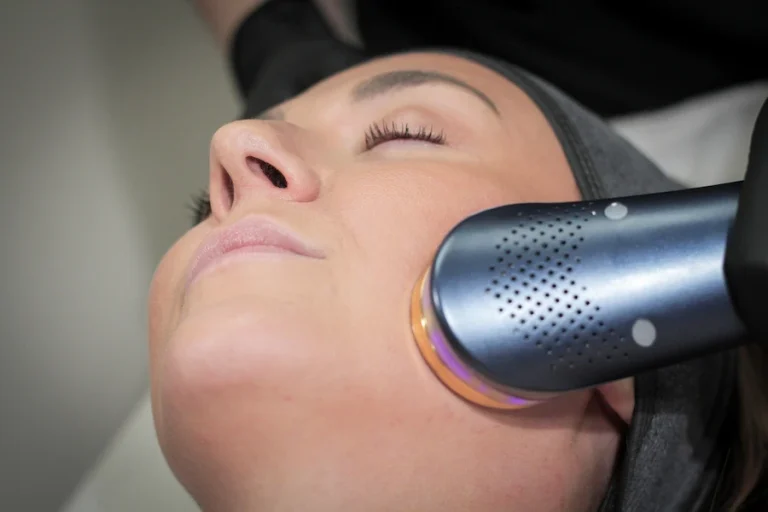
This page is the general one. A standard IPL facial is aimed at mixed sun damage — the combination of flat brown marks and small red vessels that most faces in central Alberta accumulate together rather than one at a time. If your complaint is a fairly even spread of both, this is the setting you want.
If the brown is the whole story and the redness is not, the brightening facial is tuned harder towards pigment. If the problem is active breakouts and the marks they leave, that is the acne facial, which uses a different part of the spectrum again. You do not have to work out which one you need before you arrive; that is what the consultation is for, and it is free.
What all three share is the mechanism. The light passes through the surface without damaging it and is absorbed by something coloured underneath — melanin, haemoglobin, or the pigment inside a bacterium. That target heats, breaks up and is carried away by the skin over the following fortnight. Nothing is cut, nothing is abraded, and the surface you see is never broken, which is the reason there is no real downtime.
The honest limit
Two things decide whether we can treat you, and one of them is the season
We assess before we book rather than after, and this is the reason. Pulse light is not safe on every skin, and it is not safe on every skin in every month.
Natural skin tone. The treatment works because the target absorbs far more light than the skin around it. On fair skin a brown spot stands out to the machine as clearly as it does to you. As natural tone deepens, the surrounding skin absorbs more of the same light, that margin narrows, and the risk shifts from clearing the mark to burning the tissue or leaving a pale patch where the mark used to be. A pale patch is considerably harder to fix than the spot you came in about, so where the margin is too small we say no and offer something else.
A tan, including one you did not notice getting. This is where Red Deer catches people out. Almost nobody here thinks of themselves as tanned in March, but a season of sledding, skiing, ice fishing or simply being outside on bright snow puts real colour on a face — and the machine reads that colour exactly the same way it reads a summer tan. A booking may be moved a few weeks for that reason, and it is not us being cautious for its own sake.
If light turns out to be the wrong tool for your skin, that is not the end of the conversation. Chemical exfoliation and a course of red light both reach similar goals on skin where pulse light cannot go.
Why here
Alberta is the sunniest province in the country, and faces keep the record
People associate sun damage with hot places. It is a function of light, not of temperature, and central Alberta gets a great deal of light.
More clear sky than almost anywhere in Canada
The prairies run one of the highest annual sunshine totals in the country. That exposure arrives in small daily instalments — a walk across a parking lot, a drive west into the afternoon sun — and it accumulates on the cheekbones, the nose and the left side of the face in a pattern we can usually spot from the door.
Snow doubles the dose
Fresh snow reflects a very large share of the ultraviolet that lands on it straight back upward. That is why a February day on a field, a rink or a hill can deliver more to the underside of your chin and nose than a July afternoon does. Winter here is not a break from exposure.
Cold and wind add the red half
Repeated cold, chinook wind and warming up hard indoors leave small facial vessels permanently dilated across the cheeks and around the nose. That is the other half of what a general IPL facial is for, and it is the part people here rarely realise is treatable.
The low-light months are the window
A course sits weeks apart, so it takes a season. November through March gives you the lowest ultraviolet of the year to run it in, and we are open seven days on Timberlands Drive, which makes spacing the sessions correctly a good deal easier.
Indications
What is it good for?
Colour, in both directions. Brown that should not be there and red that will not settle.
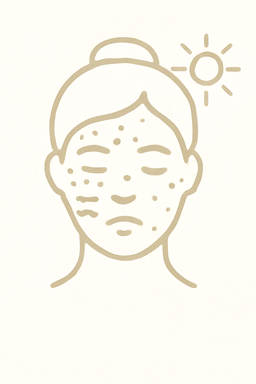
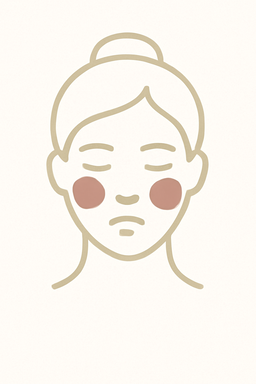
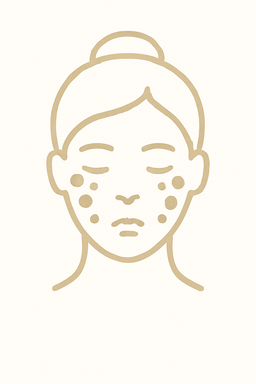
It will not change anything you can feel rather than see. A rough surface belongs with microdermabrasion, congestion with a hydro facial, and indented scarring with microneedling. The whole Red Deer menu sits on the clinic page.
Choosing between them
IPL or microneedling
This is the cleanest division on our whole menu, and it saves people a wasted course. One treats colour. The other treats structure. Almost nothing overlaps.
IPL facial
- Removes things that are the wrong colour
- Leaves the surface of the skin intact
- Judged by what has disappeared, about a fortnight after each session
- Ruled out by a deep natural tone or a current tan
- No real downtime beyond a few hours of warmth
Microneedling
- Rebuilds things that are the wrong shape
- Deliberately makes thousands of tiny channels through it
- Judged over months, as new collagen fills in
- Safe on every skin tone, which is exactly why we reach for it
- A few days of looking windburned
Spots and redness point to the light. Pitted scars, enlarged pores and lines you can feel point to the needles. Faces that have both are common, and the usual order is to finish the light course in the dark months and run microneedling afterwards — not the two in the same fortnight.
Getting ready
Pre & post treatment
The rule that moves appointments is colour on the skin. Everything on this list exists to make sure the light lands on the mark and not on you.
Counting back from your session
- Four weeks: no sunbed, no bottled tan and no deliberate sun. The bottled kind matters most, because it sits on the outside where the light meets it first.
- Two weeks: nothing waxed, threaded or plucked anywhere we will be treating, and no other resurfacing treatment.
- Seven days: retinol out of the routine. Three days: acids and scrubs out as well.
- At booking: tell us about cold sores, about anything you take that raises sun sensitivity, and about any bright days you have spent on snow recently.
Counting forward from it
- The first few days: treated marks go darker and take on a speckled, coffee-ground look. This is the result, not a complication. Leave it completely alone.
- The following week or so: the fragments work their way up and flake off with the normal turnover of the skin. No picking and no scrubbing to hurry it.
- Two days: no sauna, no hot tub, no hard workout. Heat prolongs the flush.
- From now on: daily sunscreen, winter included. Clearing what is there does nothing about what you make next summer.
Also on Timberlands Drive
Treatments that work well around this one
- Brightening Facial (IPL) in Red Deer — the same light tuned squarely at pigment
- Acne Facial (IPL) in Red Deer — the same light aimed at breakouts and their aftermath
- Red Light Therapy in Red Deer — the whole-field route, safe on every skin tone
- Microdermabrasion in Red Deer — for the roughness that light will not touch
- Microneedling in Red Deer — for scarring, pores and lines
- Our Red Deer clinic — everything we run on Timberlands Drive