About the treatment
Two problems, one appointment
Anyone who has had acne for a while knows it is really two complaints wearing the same name. There are the spots you have now, and there is the record of every spot you have had since. Most acne treatments only address the first.
The spots you have now. The bacterium involved in inflamed acne produces its own pigments as a by-product of living in an airless pore. Those pigments absorb light in a narrow band, and when they do, the reaction generates oxygen inside a bacterium that has adapted to living without any. Deliver enough of that band and the colony is knocked back without a drop of antibiotic, without drying the surface out, and without the skin around the pore being touched at all.
The record they leave. This is where pulse light separates itself from every other acne treatment we run. A mark left after a spot is either a patch of dilated small vessels, which reads red, or a stain of pigment, which reads brown. Both of those are colour, and colour is exactly what the rest of this light band clears. So the same appointment that reduces the breakout also works on the eighteen months of freckled evidence around it.
What it does not do is change texture. An indented scar is a missing piece of skin, not a mark on it, and no amount of light will fill that in — that is a job for microneedling, and the sensible order is to settle the acne first.
Before we book you
The two conversations we always have first
Neither of these is a formality, and both of them occasionally end with us sending someone elsewhere. We would rather have them now than after you have paid for a course.
The first is about your skin, not your acne. Pulse light relies on the target absorbing far more of the light than the skin surrounding it. In deeper natural tones that difference narrows until the treatment stops being reliably safe, and a tan narrows it temporarily in anyone. People here rarely count a winter of bright days on snow as a tan, but the equipment does. Where the margin is too small, blue light therapy reaches the bacterial half of the problem with none of that constraint, and it is very often the better answer.
The second is about how severe things are. Light is good at inflamed surface acne: papules, pustules, the pattern most people mean when they say breakouts. It is not the right treatment for deep, painful cystic nodules or for acne that is actively scarring, and neither of those should wait on a spa appointment. If that is what we see, we will say so plainly and tell you to see a physician. Equally, if you are on or have recently finished a strong oral acne medication, tell us at booking — that changes how the skin responds and we will normally wait.
Why here
Why a breakout leaves a longer mark in central Alberta
The acne itself is not especially local. What is local is how long the evidence hangs around afterwards, and that is the part this treatment is unusually good at.
A stripped barrier keeps the inflammation going
Heated indoor air here runs extremely dry, and the standard response to oily skin is to strip it further with foaming washes and alcohol toners. A barrier in that state stays inflamed for weeks after the spot itself has gone, and inflammation is what tells the skin to lay down pigment. Longer inflammation, darker mark.
Helmets, hard hats and balaclavas
Between the rink, the sled and a great many outdoor trades, faces here spend half the year under something. Pressure, friction, warmth and trapped sweat produce a very recognisable band of breakouts along the jaw, the chin strap line and the forehead, and it recurs in the same places every winter.
Bright days undo the fading
A brown mark left after a spot will fade on its own, slowly, as long as nothing re-stimulates the pigment. Ultraviolet re-stimulates it, and between the summer and the snow glare there is very little of the year here that does not. It is the main reason marks that should have gone in six months are still there at two years.
Seven days a week matters for a course
Acne treatment only works if the sessions actually happen on schedule. We are open every day on Timberlands Drive, which is what makes a course realistic around shift work, school and a drive in from Lacombe, Blackfalds or Sylvan Lake.
Indications
What is it good for?
Inflamed surface acne, and everything it leaves behind that is a colour rather than a shape.
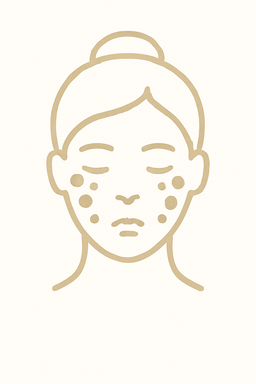
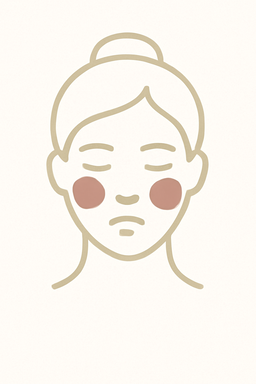
Blackheads and a congested surface are a physical problem and clear faster with a hydro facial. Pitted scarring needs microneedling. Where skin tone rules light out, blue light therapy does the antibacterial half safely. The whole menu is on the Red Deer clinic page.
Choosing between them
Pulse light or an amino fruit acid peel
Both are used on breakout-prone skin and both improve tone, but they get there from opposite directions — one from inside the pore, one from the surface down.
Acne facial with IPL
- Targets the bacteria and the oil gland below the surface
- Clears red and brown marks at the same time
- Leaves the skin surface unbroken, so nothing peels
- Ruled out by a deep natural tone or a recent tan
- Best on inflamed spots you can see coming up
AFA chemical peel
- Works chemically on the surface and the pore opening
- Improves tone gradually rather than removing marks outright
- Some light flaking for a few days afterwards
- Safe on every skin tone and in every season
- Best on congestion, blackheads and a rough, oily surface
If the inflamed spots and the leftover marks are what bother you, take the light. If the complaint is more about oil, blocked pores and a coarse texture, take the peel. They alternate well across a year, and on skin where light is not an option the peel carries the load on its own.
Getting ready
Pre & post treatment
Acne skin is usually already carrying several active products, so most of the preparation here is about taking things away rather than adding them.
Winding the routine down
- A week out: stop retinol, adapalene and any prescription vitamin A. They thin the surface and make the skin read hotter than it is.
- Three days out: benzoyl peroxide, salicylic acid, scrubs and clay masks all pause as well. Wash with something plain and do nothing else.
- A month out: no tanning of any kind, and let us know if you have spent bright days on snow or water.
- At booking: mention cold sores, any medication that raises light sensitivity, and any oral acne treatment you are on or have just finished.
Building it back up
- That evening: the face is warm and looks flushed, rather like mild sunburn. A plain moisturiser and nothing clever.
- The first week: expect a short purge in some skins as blocked pores empty. Annoying, temporary, and not a sign the treatment failed.
- Brown marks: darken before they lift, the same as they would on any pulse light treatment. Let them shed by themselves.
- Five days: then reintroduce actives one at a time, not all together. Sunscreen resumes immediately and stays through the winter.
Also on Timberlands Drive
Treatments that work well around this one
- Blue Light Therapy in Red Deer — the antibacterial half, safe on every skin tone
- Hydro Facial in Red Deer — for congestion and blackheads specifically
- AFA Chemical Peel in Red Deer — the chemical route to a clearer surface
- Microneedling in Red Deer — for the scarring light cannot reach
- Brightening Facial (IPL) in Red Deer — once the breakouts have settled and only marks remain
- Our Red Deer clinic — everything we run on Timberlands Drive