About the treatment
What blue light therapy actually is
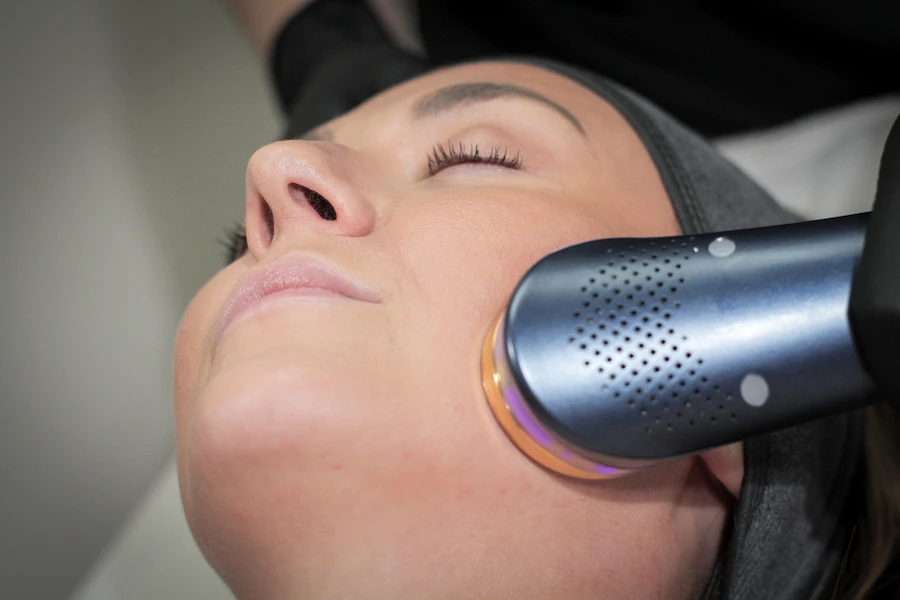
Inflammatory acne is a bacterial problem. A pore blocked with oil and dead cells becomes an airless pocket, and Cutibacterium acnes multiplies inside it. The swelling, the redness and the soreness are your immune system reacting to that. Blue light kills the bacteria directly.
It works because those bacteria produce molecules called porphyrins as part of their own metabolism. Porphyrins absorb blue light at a specific wavelength, and when they do they generate reactive oxygen that destroys the bacterium from the inside. Your own skin cells make no porphyrins, so nothing happens to them.
That selectivity is the point. There is no acid, no abrasion, no antibiotic and no drying agent — which is why blue light is often the option left when creams have made the skin too dry to keep using them. At our Ottawa clinic on McCarthy Road it is used on its own and as the step after extractions, to stop a deep-cleansing facial turning into a breakout a few days later.
How it works
What it does to your skin
Three separate effects, which is why it does more than a spot treatment does.
It kills the bacteria
Not just on the surface but inside the pore, where creams struggle to reach and where the bacteria causing the swelling actually live. This is the part that stops new spots forming rather than treating the ones already there.
It settles oil production
The light has a calming effect on the sebaceous glands, so they produce less of the oil that blocks pores in the first place. Less oil means fewer blocked pores, which means fewer places for bacteria to take hold.
It calms the inflammation
The redness and swelling around an active spot are an immune response, and blue light quietens it. This is the effect people notice first — skin looks less angry after a single session, before any of the clearing has happened.
Why here
Why this suits acne in Ottawa
Ottawa’s two extreme seasons cause breakouts for opposite reasons, and both of them make the usual acne routine harder to stick with.
Winter dryness makes acne treatment impossible
The standard answer to acne is a drying one — acids, benzoyl peroxide, retinoids. Layer that on skin already stripped by five months of indoor heating and it becomes unusable. Blue light does nothing drying at all, so it works when the creams cannot be tolerated.
Humid summers block pores
Heat and humidity mean more oil and more sweat sitting on the skin, and August is reliably a bad month for congestion here. Blue light works on both ends of that — the oil production and the bacteria that follow it.
Masks, scarves and helmets
Five months of scarves and toques against the jaw and chin traps heat and friction exactly where breakouts concentrate. It is a genuinely seasonal pattern, and it responds well to a course of light run through the winter.
Adding no sun sensitivity matters
Most acne medication makes skin burn more easily, which is a problem in an Ottawa summer. LED adds no photosensitivity, so a course can run through July without changing anything else you do.
Indications
What is it good for?
Active, inflammatory acne above all — the red, sore, raised kind rather than the flat marks left behind afterwards.
For the marks and uneven tone acne leaves behind, an AFA chemical peel is the better tool, and for indented scarring it is microneedling. Everything else is on our Ottawa clinic page.
The difference
Blue light or an acne cream?
Topical acne treatment
- Works by drying the skin out and shedding the surface
- Daily, indefinitely, and it stops working when you stop
- Often intolerable on skin already dry from winter
- Usually increases sun sensitivity
- Reaches the surface far better than it reaches inside a pore
Blue light therapy
- Kills the bacteria directly, without drying anything
- A course of sessions, then monthly maintenance
- Suitable on dry, stripped or sensitised skin
- Adds no photosensitivity at all
- Reaches into the pore, which is where the problem is
This is not an argument for abandoning what your dermatologist gave you. Blue light sits alongside a topical routine perfectly well, and for many people the value is that it lets them use a gentler cream than they otherwise would. Tell us what you are already on and we will work around it.
Getting ready
Pre & post treatment
Short list on both sides. The main thing is arriving with genuinely clean skin, because anything sitting on the surface blocks the light.
Before your appointment
- Skip actives: no harsh exfoliants, retinoids or acids for two to three days.
- Arrive clean: completely make-up free, including any SPF or tinted moisturiser.
- Tell us everything: open wounds, inflammation, recent procedures and any acne medication you take.
- Stay out of the sun: no direct sun or tanning beds beforehand.
After your appointment
- Mild warmth or redness is normal and fades within the hour.
- Be gentle: a mild cleanser and a light moisturiser — do not let the skin get dry.
- Pause actives: no retinoids, acids or scrubs for two to three days.
- No heat: skip saunas, steam rooms and heavy workouts for 24 hours.
- Daily SPF, as with any treated skin.
Results
Blue light therapy before and after
A client treated at You Glow Aesthetics. Note what changes: fewer active, inflamed spots and far less redness around them.
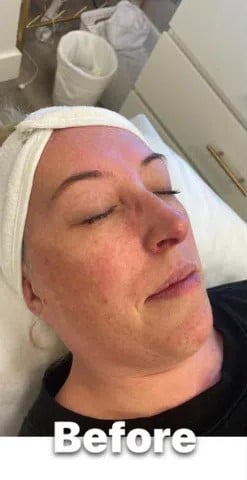
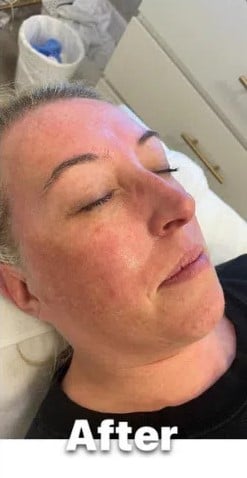
Individual results vary with the type and severity of the acne and how many sessions are completed. Acne is a recurring condition, so maintenance is part of holding a result like this.
Also at our Ottawa clinic
Treatments that work well around this one
- Hydro Facial in Ottawa — clears the pores first, so the light has less to work through
- AFA Chemical Peel in Ottawa — for the discoloured marks left after the spots have gone
- Microneedling in Ottawa — for indented scarring, once the active acne has settled
- Anti-Aging Red Light Therapy in Ottawa — the other wavelength, for redness and repair
- Microdermabrasion in Ottawa — for congestion and blackheads rather than inflamed spots
- Blue light therapy brand-wide — how the treatment works across all our clinics