About the treatment
What microneedling actually is
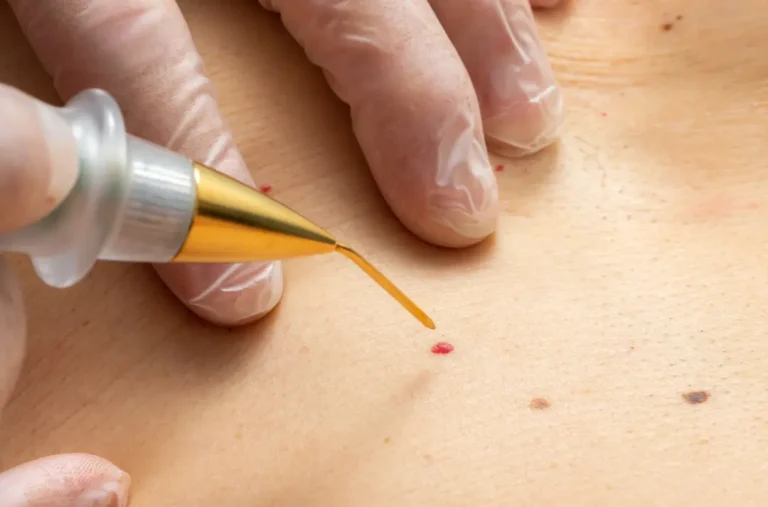
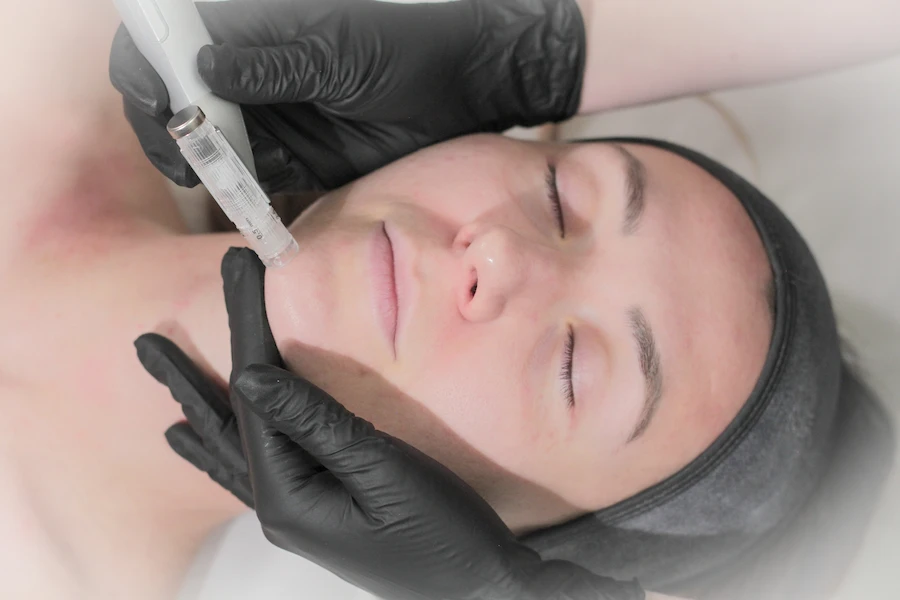
Microneedling is collagen induction therapy. A pen fitted with very fine needles makes thousands of controlled micro-channels in the skin, and your body responds to them the way it responds to any small injury — by sending collagen and elastin to rebuild the area.
That is the whole mechanism, and it is what separates microneedling from every treatment that works on the surface. A peel or a scrub takes the top layer off. Microneedling leaves the surface largely intact and rebuilds the structure underneath it. Which is why it is one of the few things that genuinely improves an indented acne scar rather than blurring the edges of one.
At our Ottawa clinic on McCarthy Road the depth is set per area of the face — shallower over the forehead and around the eyes, deeper across cheeks that are carrying scarring. A topical numbing cream goes on first and is left until the area is properly numb, so what most clients report is pressure and vibration rather than pain.
How it works
What it does to your skin
Three things happen, and only the first one is visible on the day.
The channels open
The pen passes over the skin and leaves thousands of micro-channels. They close within about an hour, but while they are open the serums we apply go in far deeper than anything you could push in at home. This is the part that makes the skin look plump and flushed straight away.
The repair response fires
Your body reads the micro-channels as damage and starts a wound-healing cascade — growth factors first, then new collagen and elastin laid down through the dermis. Nothing about this is visible. It is happening for weeks after you leave.
The structure changes
New collagen fills from underneath. Indented scars lift, pores tighten because the skin around them is firmer, and fine lines soften because there is more support beneath them. This is why results keep improving for two to three months after a session.
Why here
What it means to do this in Ottawa
The treatment is the same anywhere. When you book it, and what you do afterwards, is not.
Winter is the right season for it
Freshly needled skin is far more sun-sensitive than usual, and sun exposure in the weeks after a session is the main thing that undoes the result. Ottawa’s short, low-light winter days make November through March the easiest window to run a full course properly.
Dry air slows the healing phase
The repair response needs a skin barrier that is holding water. Indoor heating works against that all winter, so we build barrier support into the aftercare rather than assuming your usual routine will cover it — and a Hydro Facial between sessions is often the simplest way to keep it topped up.
A course needs planning around the calendar
Three to six sessions a few weeks apart is a three to five month commitment. Starting it in late autumn means the course finishes before the summer, which is the sequence that produces the best result and the least pigmentation risk.
Cold-weather redness reads differently
The pink flush afterwards looks like windburn, which in an Ottawa February is unremarkable. Most clients book a late-afternoon appointment and are back to normal by the next morning.
Indications
What is it good for?
Microneedling earns its place where the problem is structural — a dip, a slack area, a texture that creams cannot reach.
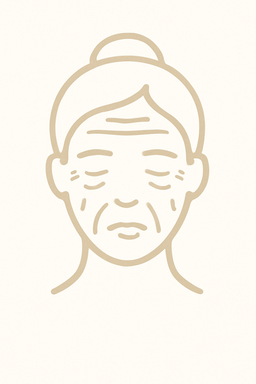
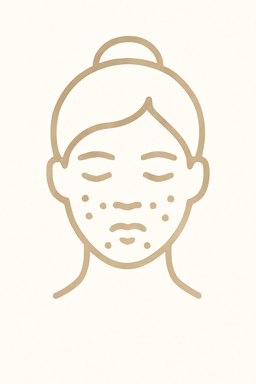
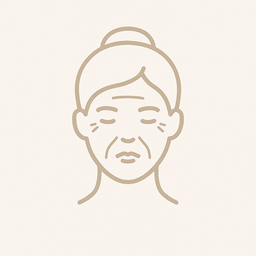
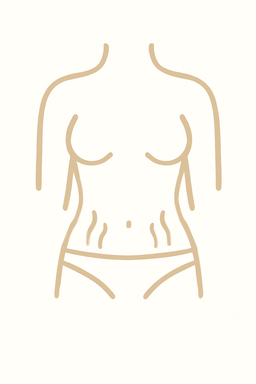
Active breakouts, cold sores or a recent peel are reasons to wait rather than reasons you cannot have it. See everything we offer at our Ottawa clinic.
The difference
Microneedling or a home derma roller?
A derma roller at home
- Needles of 0.25 to 0.5 mm — surface only
- Rolls, so the needles enter and exit at an angle and tear
- One depth everywhere, whatever the area needs
- Cleaned by you, reused for months
- Helps absorption. Does not reach the dermis, so it does not build collagen
Clinical microneedling
- Adjustable to the depth the dermis actually needs
- Stamps vertically at speed — clean channels, no tearing
- Depth changed per area across one face
- Sterile single-use cartridge, numbing cream, trained hands
- Reaches the layer where collagen is made, which is the entire point
The distinction matters because the two are often spoken about as the same treatment at different price points. They are not. A roller is a skincare tool for absorption; clinical microneedling is a controlled wound-healing treatment. If you have tried a roller and seen nothing change, that is the reason.
Getting ready
Pre & post treatment
Microneedling asks a little more of you than a facial does, mostly in the week afterwards. It is worth following closely — the aftercare is what protects the result.
Before your appointment
- Stop actives: no retinoids, acids or strong exfoliants for three to five days beforehand.
- Stay out of the sun: no sunburn and no tanning for a week before.
- Arrive bare: no make-up, serums or oils on the skin.
- Pause other treatments: no peels or aggressive procedures in the run-up.
- Tell us: mention cold sores, active breakouts or anything you are taking for acne.
After your appointment
- Expect pink: redness, warmth and tightness like mild sunburn, settling over 24 to 72 hours.
- Keep it bland: a gentle cleanser and a fragrance-free moisturiser, nothing else.
- Still no actives: hold retinoids and acids for three to five days.
- No heat: skip saunas, hot baths and hard workouts for 24 to 48 hours.
- SPF every morning, without exception — this is the one that protects your investment.
Results
Microneedling before and after
A client treated for acne scarring at You Glow Aesthetics. The change is in the surface level of the skin, not in its colour — which is what collagen doing its job looks like.
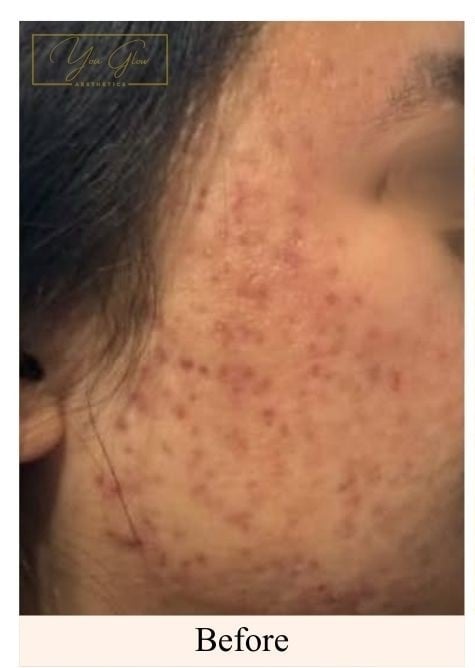
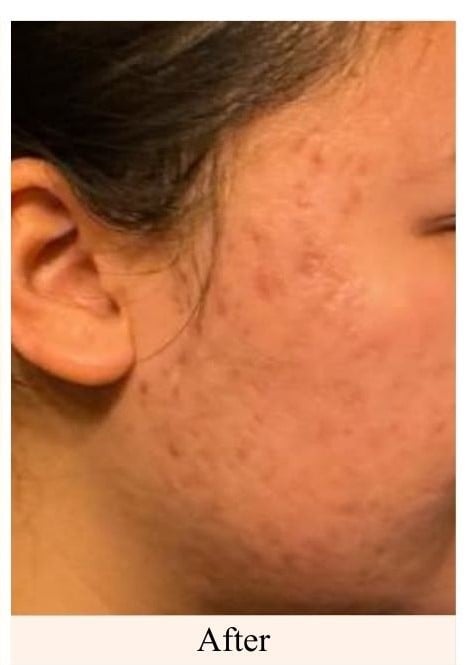
Individual results vary with skin type, the depth of the scarring and how many sessions are completed. Scar work in particular is a course, not a single visit.
Also at our Ottawa clinic
Treatments that work well around this one
- Hydro Facial in Ottawa — the usual choice between microneedling sessions, to keep the barrier hydrated while it heals
- AFA Chemical Peel in Ottawa — for the pigment left behind by old breakouts, which needling alone does not address
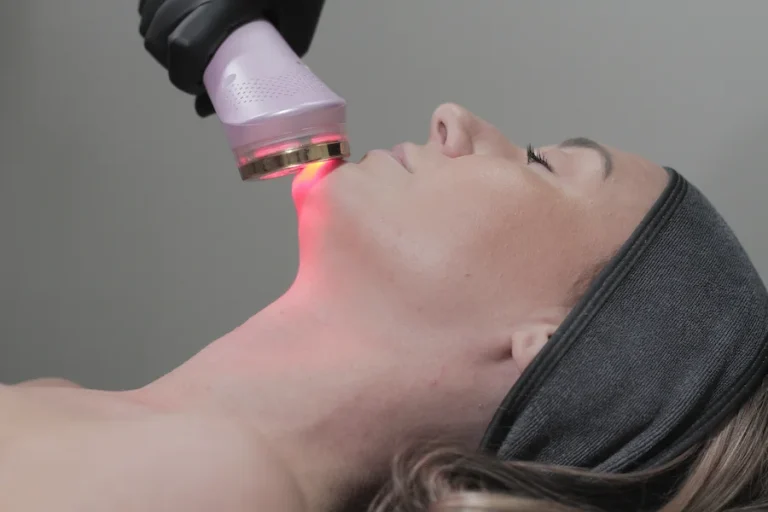
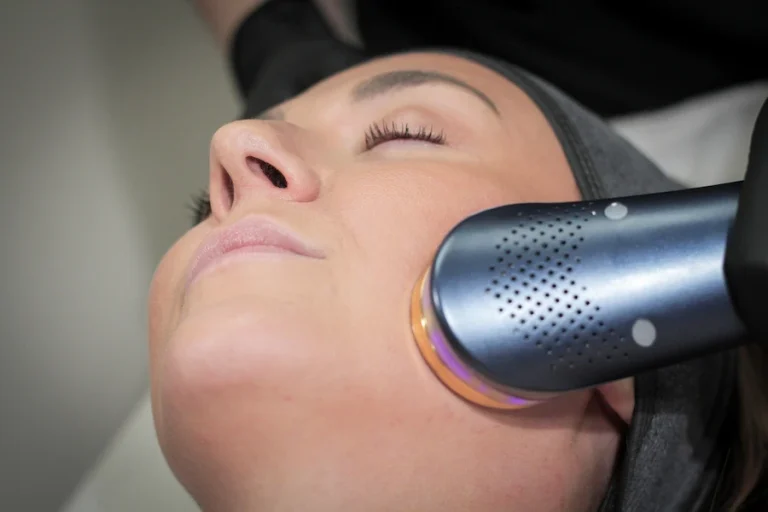
- Anti-Aging Red Light Therapy in Ottawa — calms the skin and supports collagen with no needles at all
- Blue Light Therapy in Ottawa — worth settling active breakouts with this first, before any needling
- Scalp Microneedling in Ottawa — the same principle applied to the hair follicles
- Microneedling across all our clinics — how the treatment works brand-wide