About the treatment
Calgary sees more sun than anywhere else in Canada, and skin keeps the receipts
Most people here think of sun damage as a summer problem. It is not. It is a slow ledger written over decades, and this city is unusually good at filling it in.
Three things stack up. The altitude means thinner atmosphere and more ultraviolet reaching you than at sea level. The snow reflects a large share of what does arrive straight back up into your face, which is why people burn on ski days in February. And the sunshine hours are among the highest in the country, so the exposure keeps accruing through months when nobody is thinking about it.
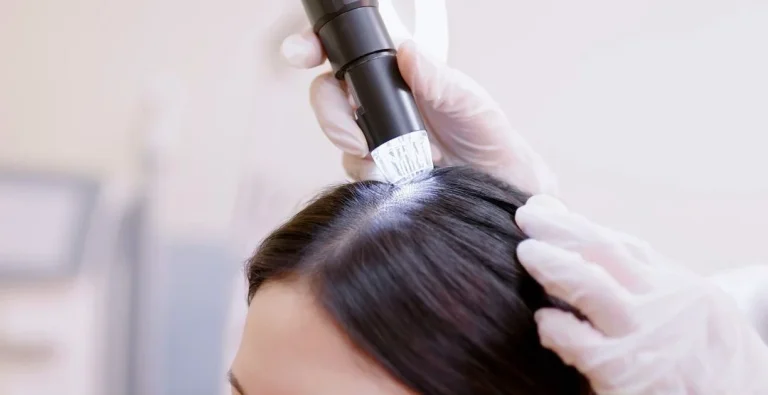
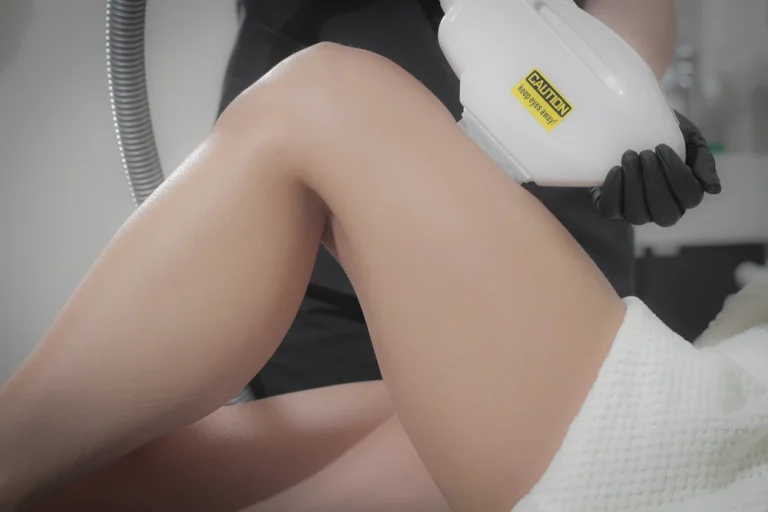
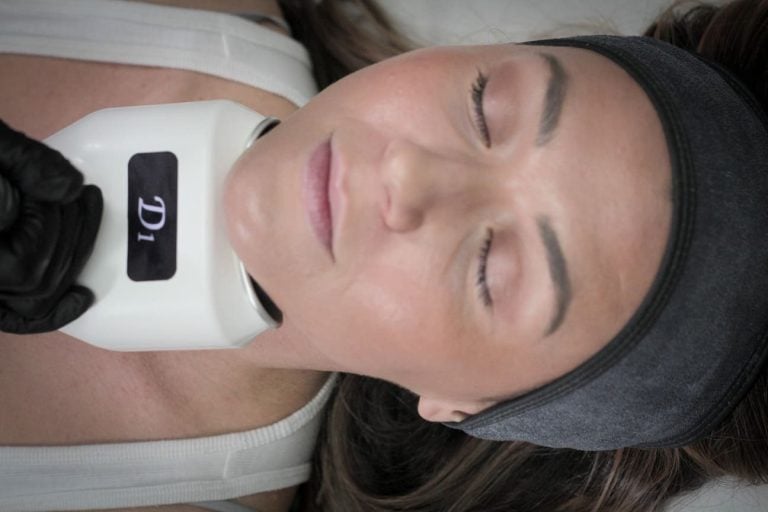
The result shows up as flat brown patches on the cheekbones, temples and the bridge of the nose, along with fine broken vessels around the nostrils. Intense pulsed light works on exactly those two things. A broad band of light passes through the skin surface and is absorbed by the pigment cluster and by the blood inside the vessel; both convert it to heat, and the body clears the damaged target over the following weeks. The surface itself is left intact, which is why there is no peeling and no real recovery.
The honest limit
Skin tone and a winter tan both decide whether we treat you
This is the paragraph most IPL pages leave out, and it is the one that protects you.
The whole treatment depends on one gap: how much more energy the mark takes up than the skin it sits in. Where that gap is wide, the mark absorbs, heats and clears while everything around it barely notices. Where it is narrow, the surrounding tissue takes a share it was never meant to have, and what you get is a burn or a patch left permanently lighter or darker — considerably harder to live with than the spot you walked in to have removed.
A tan does the same thing temporarily, and in Calgary that catches people out in the wrong season. Two weeks in the mountains in March will leave a face darker than the one we assessed in January. We check tone at every appointment rather than only the first, and we will move a session rather than take the risk. If pulse light is not right for your skin, there are other routes on Macleod Trail to the same result and we will name them.
What to expect
The appointment, then the fortnight that follows
The session itself is short and undramatic. The visible part happens afterwards, and people who are not warned about it worry unnecessarily.
In the chair
Eye shields, a layer of cool gel, then a series of flashes across the area. The usual description is an elastic band snapped against the skin: sharp, brief and entirely manageable.
The first three days
Treated spots darken, sometimes noticeably, and can take on a speckled look. That is the expected response and the sign the light found its target. Any redness settles within hours.
Day five to fourteen
The darkened pigment works its way out as the skin turns over. Leave it alone. Picking at this stage is the one dependable way to turn a good result into a mark.
Indications
What is it good for?
Colour, in both directions. Brown marks from the sun, and red ones from dilated vessels.

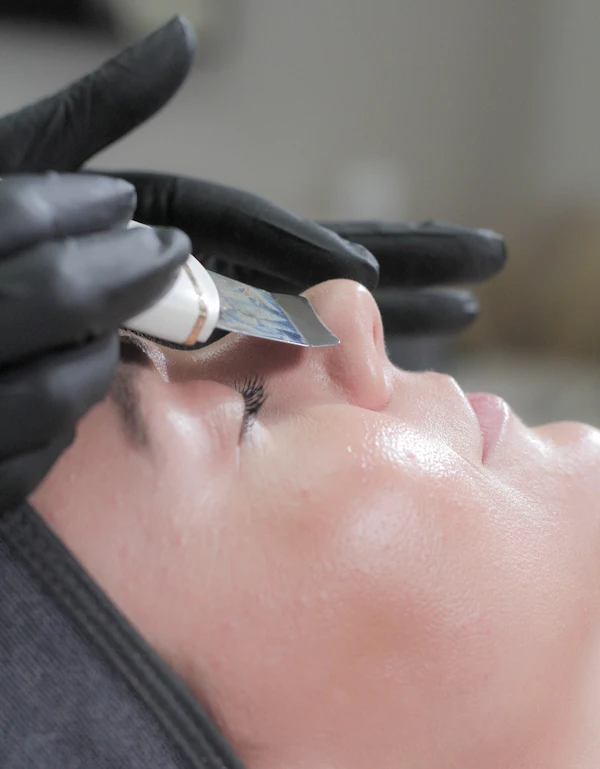
Texture you can feel with a fingertip will not respond — that is microneedling territory, and dryness belongs with the hydro facial. Everything we run on Macleod Trail is on the Calgary SE clinic page.
Choosing between them
IPL or a carbon peel facial
We run both here and they get confused because both involve a machine and a flash of light. They are aimed at completely different complaints.
IPL facial
- Light absorbed by pigment and by blood — it treats colour
- Sun spots, age spots, broken capillaries, general redness
- A course of three to five, several weeks apart
- Restricted by skin tone and ruled out on a tan
Carbon peel facial
- A carbon layer absorbs the laser and takes the surface with it — it treats texture
- Oiliness, open pores, congestion, a dull rough surface
- Visible after one, better with a few
- Far less restricted by skin tone
If your complaint is both — blotchy and rough — they sequence well, and we would normally run the colour work first.
Getting ready
Pre & post treatment
The instructions before an IPL session are not advisory. Arriving tanned means we reschedule you, and in this city that happens more often than you would think.
Four weeks out, and closer
- No sun, no booth, no self-tan for four weeks. That includes a week in the mountains — snow glare tans a face properly.
- Stop retinoids a week before and acids three days before.
- Do not wax, thread or pluck the area for two weeks.
- Tell us about photosensitising medication and about any history of cold sores.
For a fortnight after
- Sunscreen every morning, and reapply on a bright winter day. Snow reflects it back at you.
- Nothing hot for 48 hours — and a chinook afternoon in the car counts.
- No actives for five days, then reintroduce one at a time.
- Keep the barrier fed. Calgary air is dry enough that treated skin needs more moisturiser than you expect.
Also on Macleod Trail
Treatments that work well around this one
- Brightening Facial (IPL) in Calgary SE — the same light aimed squarely at pigment
- Acne Facial (IPL) in Calgary SE — the same light aimed at breakouts and the redness after them
- AFA Chemical Peel in Calgary SE — the chemical route to tone, for skin IPL does not suit
- Microneedling in Calgary SE — for the texture side of the same face
- Our Calgary SE clinic — everything we run in south Calgary