About the treatment
A peel built around amino acids
Most peels exfoliate by lowering the pH at the surface until the bonds holding dead cells together give way. It works, and on skin that is already short of water it takes more than you intended. An amino fruit acid peel starts from a different formulation: fruit acids paired with amino acids, which are water-loving and stay in the skin.
The exfoliation still happens. What changes is what is left behind — a surface that has been resurfaced without being stripped of the moisture it was holding on to. That is the whole argument for this peel over a conventional one, and in a climate like this it is not a small distinction.
It is applied in layers, and how many layers you get is decided at the appointment rather than booked in advance. At our Macleod Trail clinic that decision is made from the skin in front of us on the day, not from what we did last time.
Why here
The peel most Calgary faces can actually tolerate
A great many people here have been told they are not a candidate for peels. Usually what they were told is that they are not a candidate for a strong glycolic peel, which is a narrower statement.
Barriers here run compromised
Dry outside air, heated indoor air and repeated chinooks mean a lot of skin in this city is already operating below par before anyone applies anything to it. A peel that strips further has to work against that. One that hydrates while it resurfaces does not.
Reactive skin is not automatically excluded
Redness and sensitivity are a reason to be careful about strength, not a reason to rule out exfoliation altogether. We start conservatively and build across a series, and most people who thought peels were off the table tolerate this one comfortably.
The strength changes week to week
How dry the air has been, what you have been using at home, whether you have been outside a lot — all of it changes what your skin can take that day. Deciding at the appointment is not indecision; it is the only sensible way to run this treatment.
And the sun undoes it faster than you build it
At this altitude, unprotected exposure between peels will put pigment back quicker than the course removes it. If you are not going to wear sunscreen, a pigmentation course is not a good use of your money and we will say so.
The appointment
What half an hour in the chair looks like
No drama, no surprises, and you will know at each stage what is happening and why.
Assess and cleanse
We look at how the skin is behaving that day, ask what you have been using and check for anything that would change the plan. Then a thorough double cleanse, because residue makes a peel apply unevenly.
Layer, and watch
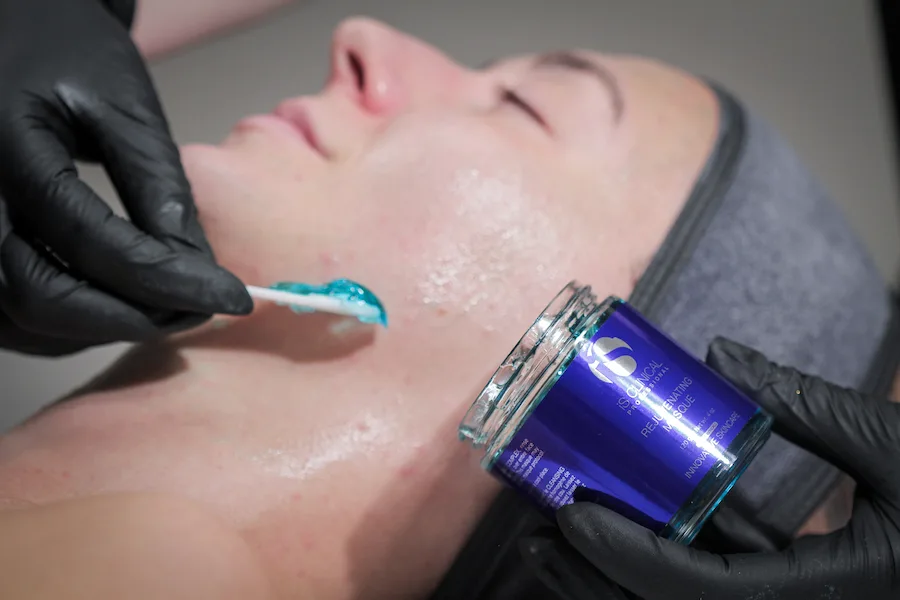
The first layer goes on and we wait. A mild tingle or warmth is normal. Depending on how your skin responds, a second or third layer follows — this is the part that is decided in the room.
Neutralise and protect
The peel is stopped, a calming serum goes on and sunscreen finishes it. You leave with a slight flush that settles within the hour and instructions for the next few days.
Indications
What is it good for?
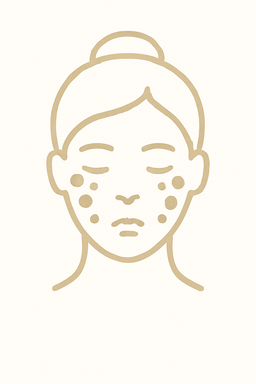
Colour and surface: tone, pigment, dullness and the roughness that comes with dry skin.
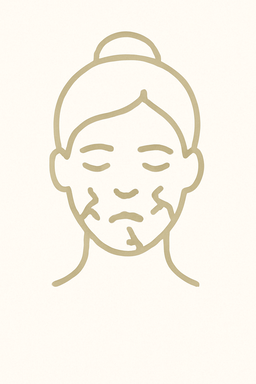

Anything you can feel as a dip needs microneedling rather than a peel. Everything available in south Calgary is on our Calgary SE clinic page.
Being straight with you
Three expectations worth adjusting
You will not sheet-peel
People arrive expecting to hide for a week. Light flaking around the nose and chin for two or three days is the realistic version. If dramatic peeling is what you were hoping to buy, this is not the treatment.
Pigment moves slowly
Brightness arrives after the first peel and it is genuine. Actual pigment takes four to six sessions two to four weeks apart, and melasma in particular is managed rather than cured. Anyone promising to clear years of sun damage in one visit is overselling.
Home care is half the result
What you use between peels, and whether you protect the skin from the sun, decides how much of each session survives to the next. The clients who see the biggest change are not the ones who booked the strongest peel.
Getting ready
Pre & post treatment
Straightforward on both sides. The one that matters most is the sunscreen afterwards.
Leading up to it
- Pause retinoids and exfoliating acids for five days beforehand.
- No waxing, threading or facial hair removal in the week before.
- Keep the face out of strong sun for a fortnight, and no self-tanner on it.
- Come with clean skin and no make-up if you can manage it.
- Tell us if you are prone to cold sores or have started any new medication.
The days after
- A flush and a tight feeling for a few hours; light flaking from about day two.
- Let it flake on its own. Picking is what turns a peel into a mark.
- Bland routine for five days: gentle cleanser, plain moisturiser, nothing active.
- Sunscreen every morning without exception — freshly resurfaced skin picks up pigment fast at this altitude.
- Nothing hot for 48 hours: steam, sauna, hard training.
Results
Chemical peel before and after
A client at You Glow Aesthetics. The change is in evenness rather than in any single spot — the skin is reading as one colour instead of several.
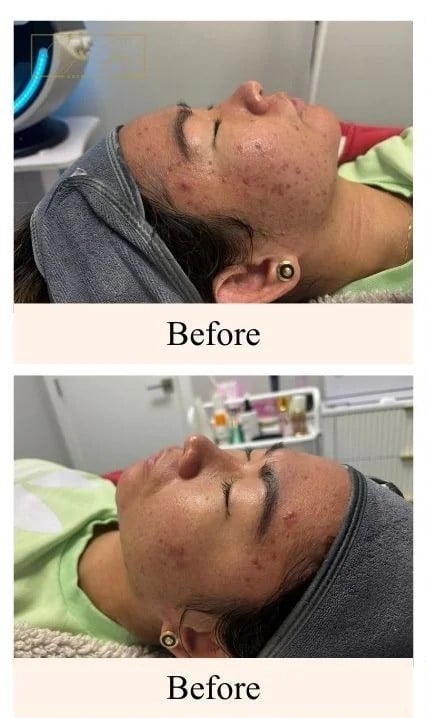
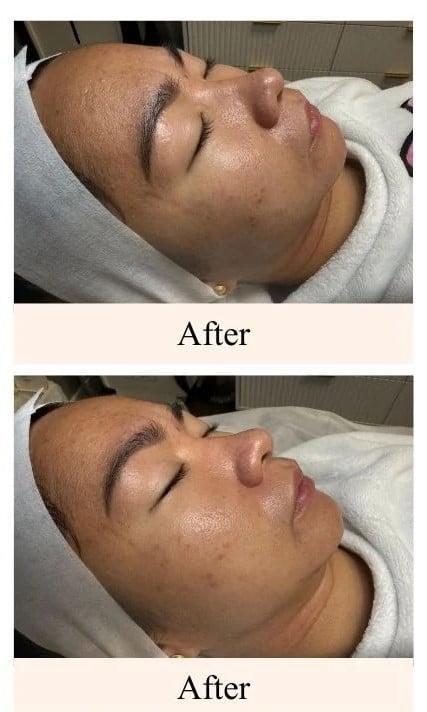
Individual results vary with skin type, the depth and age of the pigmentation, how many peels are completed and how consistently sun protection is used.
Also on Macleod Trail
Treatments that pair well with a peel
- Dermaplaning in Calgary SE — clears the dead layer first so the peel penetrates evenly
- Hydro Facial in Calgary SE — for congestion, which a peel does not physically remove
- Microneedling in Calgary SE — for scarring with depth to it
- Red Light Therapy in Calgary SE — calms the skin in the days afterwards
- Chemical peels brand-wide — how the treatment works across all our clinics