About the treatment
Light your cells can use
Red and near-infrared wavelengths pass through the surface and are absorbed by mitochondria — the part of a cell that produces its energy. Absorption raises that output, and a cell with more energy available repairs, builds and calms itself more effectively than one running short.
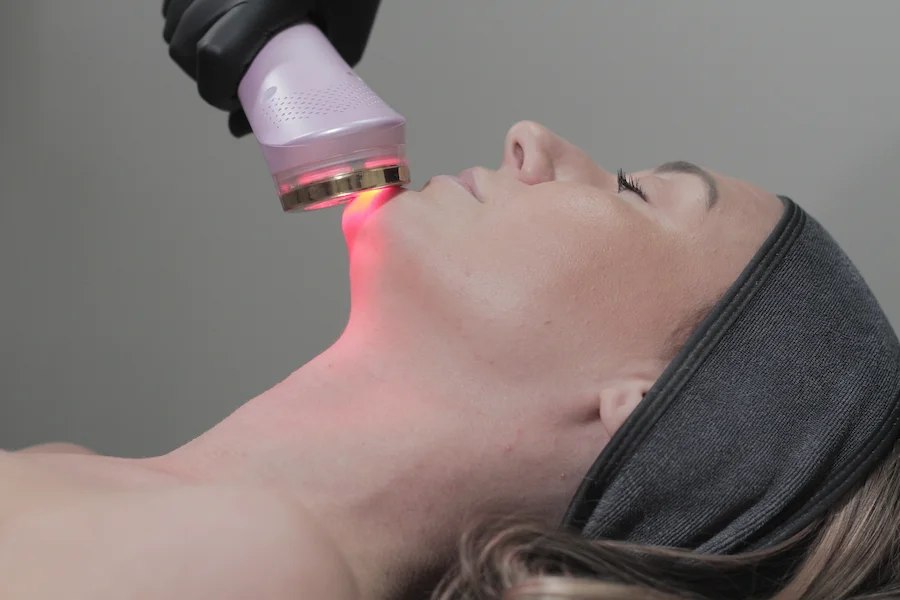
That is the entire mechanism, and it explains why the treatment feels like nothing. There is no ablation, no injury and no wound to heal. You lie under a panel with your eyes covered and the only sensation is a mild warmth.
What it produces is not dramatic on any single day and is obvious across a course: firmer-feeling skin, less background redness, softer fine lines and a face that settles faster after anything else we do to it. At our Macleod Trail clinic it is added to more appointments than it is booked on its own.
How it works
Four things happening at once
None of them are visible in the room. All of them are the reason the treatment is judged over weeks rather than after one session.
Fibroblasts get to work
The cells that make collagen and elastin are energy-hungry, and they respond directly to a raise in available energy. More production means firmer skin and softer fine lines — slowly, and without anything being damaged first.
Circulation improves locally
Better blood flow through the treated area means more oxygen and nutrients arriving and more waste leaving. It is a large part of why skin looks less grey after a course, particularly in the middle of winter.
Inflammation settles
Red light has a measurable calming effect on inflamed tissue, which is why it helps with generalised redness and reactive skin, and why it is so useful straight after a peel or a needling session.
Repair runs faster
Every recovery process in the skin is energy-dependent. Giving the cells more to work with shortens the settling period after other treatments — the reason clients on a course of anything usually end up adding this to it.
The comparison
Red light or blue light?
Same technology, different wavelengths, different targets entirely. People often book one when they wanted the other.
Red and near-infrared
- Around 630 to 850 nanometres, penetrating into the dermis
- Feeds the cells that build collagen and elastin
- Booked for ageing skin, slackness, redness and repair
- Builds quietly; there is nothing to see on the day
Blue
- Around 415 nanometres, stopping at the surface and the follicle
- Destroys the organism responsible for inflammatory acne
- Booked for live breakouts, oiliness and congestion
- The inflammation usually eases within the first fortnight
They solve different problems and plenty of people use both — blue light to settle active breakouts, red light afterwards for the redness and texture left behind.
Indications
What is it good for?
Firmness, fine lines, background redness and recovery. Gentle enough for skin that reacts to almost everything else.
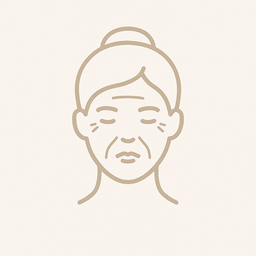
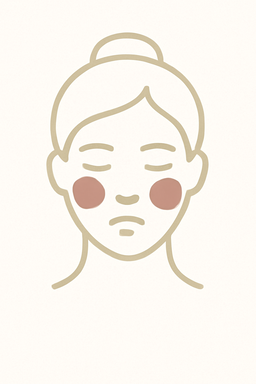
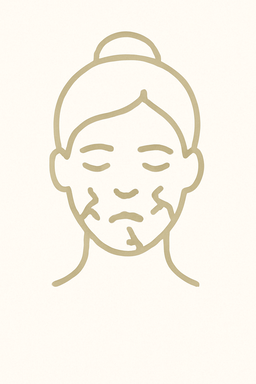
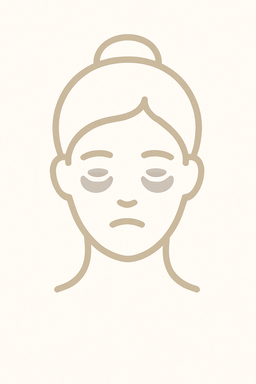
Slack skin and deep lines need something that builds structure — usually microneedling. The full list for south Calgary is on our Calgary SE clinic page.
Why here
The treatment a Calgary winter cannot interfere with
Most things we do come with a seasonal caveat. This one does not, and through the long half of the year that turns out to matter.
No sun sensitivity afterwards
Nothing about red light makes the skin more vulnerable to UV, so a bright day on the slopes the following weekend is not a problem. Almost every resurfacing treatment we offer carries that restriction; this one does not.
Nothing to hide afterwards
No flaking, no pinkness beyond a few minutes, nothing that anyone would notice. You can book it on a Friday afternoon before something on the Friday evening.
It works on the thing winter causes
Dullness, background redness and a barrier that is slow to settle are exactly what the cold months produce here. This is the treatment that addresses them without asking the skin to recover from anything.
Getting ready
Pre & post treatment
Close to nothing on both sides. That is not us being casual — there genuinely is very little to say.
Before
- Come with a clean face: no make-up, no sunscreen, no heavy moisturiser.
- Mention any medication or supplement that causes light sensitivity. It changes how we set the session, not whether you can have it.
- Tell us if you have had another treatment recently — that usually makes red light more appropriate rather than less.
- No other preparation. You can come straight from work.
After
- Straight back to your day. Make-up, gym, anything — no restrictions.
- A faint warmth or flush for a few minutes at most.
- Moisturise as usual, and keep the sunscreen going for reasons unrelated to this treatment.
- Come back on schedule. Two or three times a week for four to six weeks is what produces a result; occasional sessions do not.
Results
LED light therapy before and after
A client at You Glow Aesthetics. The difference is in evenness and in how the skin holds light rather than in any single feature.
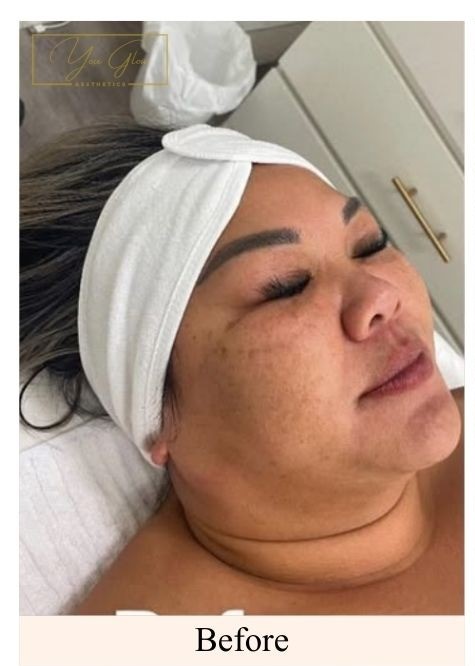
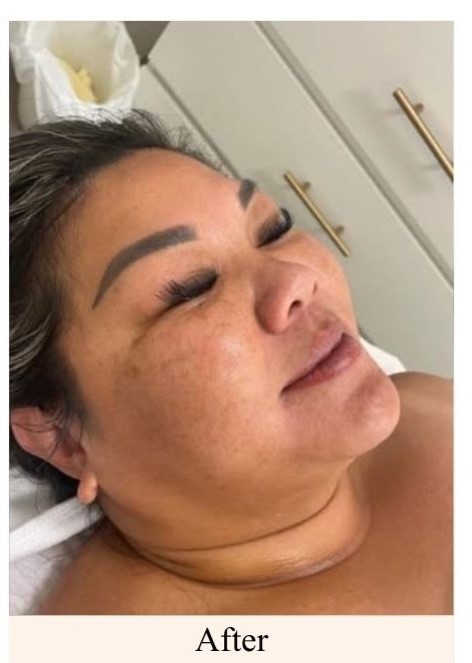
Individual results vary with skin type, age, how many sessions are completed and what else is being done alongside.
Also on Macleod Trail
Treatments red light works well alongside
- Microneedling in Calgary SE — red light afterwards shortens the settling period
- AFA Chemical Peel in Calgary SE — the same benefit after a resurfacing appointment
- Blue Light Therapy in Calgary SE — the acne half of LED, often run in the same visit
- Hydro Facial in Calgary SE — a common pairing for a full reset
- LED light therapy brand-wide — how the treatment works across all our clinics