About the treatment
A wavelength the bacteria cannot survive
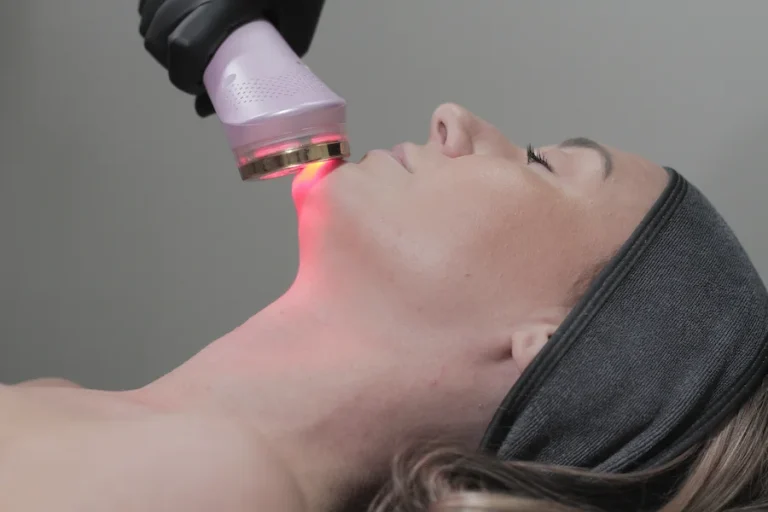
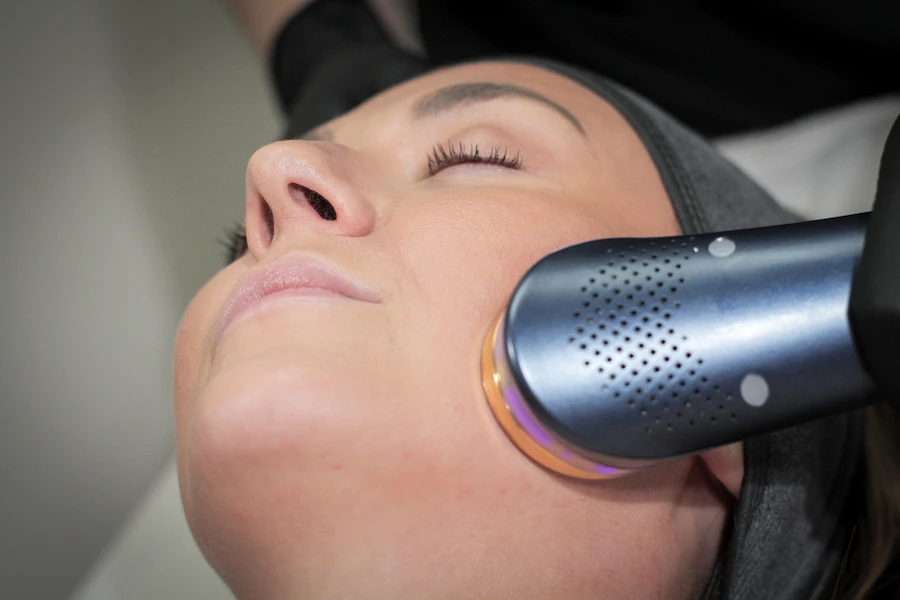
The bacteria involved in inflammatory acne produce compounds called porphyrins as a by-product of living in the pore. Porphyrins absorb light at around 415 nanometres, and when they do, the reaction releases oxygen inside a bacterium adapted to live without it. That is fatal to the organism and harmless to you.
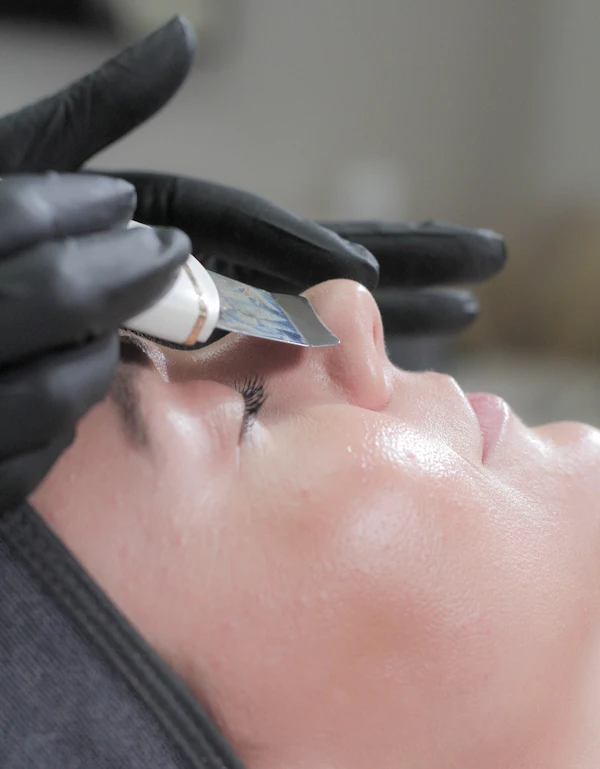
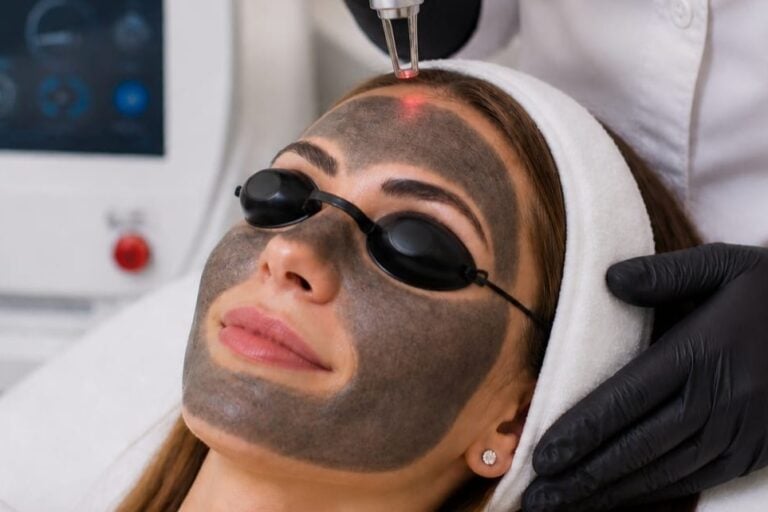
Nothing is applied to your skin and nothing is taken from it. You lie under a panel with your eyes covered for the length of a session while the light does the work. There is no heat worth mentioning, no stinging and nothing to recover from.
It is the treatment we reach for when someone’s skin cannot take the standard approach any more — when benzoyl peroxide and retinoids have left them red, flaking and no clearer. At our Macleod Trail clinic that describes a good proportion of the people who book it.
Why here
Treating acne without wrecking a dry-climate barrier
The conventional acne routine is built around drying the skin out. In Calgary, that runs straight into a problem.
The air is already doing the drying
Between the outdoor humidity in January and the furnace running indoors, skin here loses water faster than it can replace it. Add a drying acne regimen on top and you get a barrier that is both breaking out and visibly damaged.
A stripped barrier makes more oil, not less
Skin responds to water loss by increasing oil production. So the routine intended to reduce oil ends up increasing it, and people conclude their acne is worsening when what has actually failed is the approach.
Light does not participate in that cycle
It removes nothing from the surface. Oil production, barrier thickness and hydration are all unaffected, which means you can run a course of this alongside repairing the damage the last routine did.
And it does not care what season it is
No sun sensitivity afterwards, no downtime, nothing visible. Unlike most acne treatments, there is no reason to avoid any part of the year with it — which matters when the difficult months are also the long ones here.
The comparison
Clinical panel or the mask you bought online?
Home LED is not a con. It is a different category of device, and expecting one to do the other’s job is where the disappointment comes from.
In clinic
- Narrow, calibrated output around 415 nanometres
- Enough intensity to reach bacteria inside the follicle
- Whole face covered evenly at a fixed distance
- A course of sessions with someone tracking the response
At home
- Broader, less precise wavelength on most consumer devices
- Lower output, so far longer exposure for far less effect
- Fit and distance vary every time you put it on
- Useful for holding a result; slow at creating one
The sensible arrangement is both: a clinic course to get the inflammation under control, then a home device to keep it there between visits. Nobody needs to choose one and dismiss the other.
Indications
What is it good for?
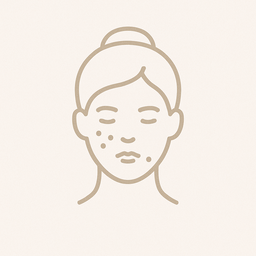
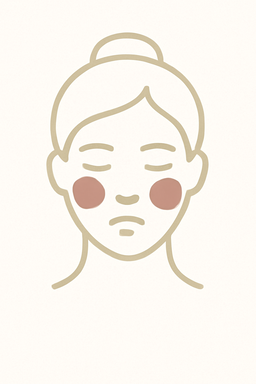
Active, inflamed breakouts and the redness around them. Not the marks left behind — those are a separate job.
Marks and scarring left after acne belong to microneedling or a peel. Everything we offer in south Calgary is on our Calgary SE clinic page.
Being straight with you
What blue light does not do
It does not clear a blocked pore
Blackheads and closed comedones are a plug, not an infection, and light does not remove a plug. Those need physical extraction — usually a Hydro Facial — and a lot of people need both treatments rather than one.
It does not change your hormones
If your breakouts arrive on a monthly cycle or along the jaw, the cause is upstream of anything a light can reach. This will reduce the severity of each round; it will not stop the rounds arriving.
It does not fade the marks
The brown and red patches left behind are pigment and dilated capillaries, and they need something that works on colour. Clearing the acne stops new ones forming, which is a different achievement from removing the old ones.
Getting ready
Pre & post treatment
There is remarkably little to either list, which is a large part of the appeal.
Before you come
- Clean skin, no make-up, no sunscreen. Anything on the surface reflects light that should be going in.
- List what you are taking. Some antibiotics, acne medications and supplements such as St John’s wort increase light sensitivity.
- Ease off strong actives for a day or two if your skin is already irritated.
- Come as you are otherwise. A live breakout is not a reason to cancel — it is the reason to attend.
Afterwards
- Nothing to see and nothing to feel. Occasionally a faint warmth for a few minutes.
- Make-up, gym, anything — immediately. There are no restrictions at all.
- Keep moisturising properly. The treatment is not drying, but the climate is.
- Do not stop your prescription without speaking to whoever prescribed it. This works alongside, not instead.
- Book the next one before you leave. Consistency is what makes a course work.
Results
Blue light therapy before and after
A client at You Glow Aesthetics. Look at the inflammation around each lesion rather than at the count — settling that is what happens first with this treatment.
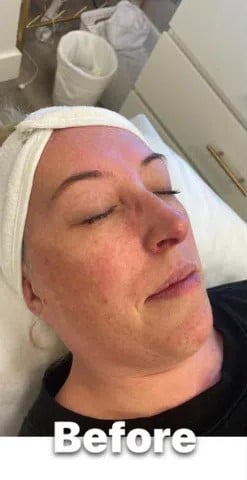
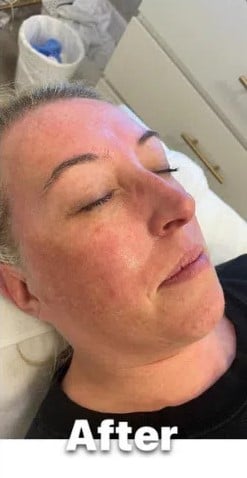
Individual results vary with the type and severity of the acne, how many sessions are completed and what else is being used on the skin.
Also on Macleod Trail
Treatments that work well around this one
- Hydro Facial in Calgary SE — clears the blockages light cannot reach
- Carbon Peel Facial in Calgary SE — for oily, congested skin alongside the light course
- Red Light Therapy in Calgary SE — often run in the same session, for the redness left behind
- Microneedling in Calgary SE — once the acne is quiet, for the scarring it left
- Blue light therapy brand-wide — how the treatment works across all our clinics