About the treatment
Pigment is not bleached away, it is lifted out
The word brightening suggests something is being applied that makes skin lighter. With light treatment the mechanism is the opposite of that, and understanding it explains everything about how the next two weeks will look.
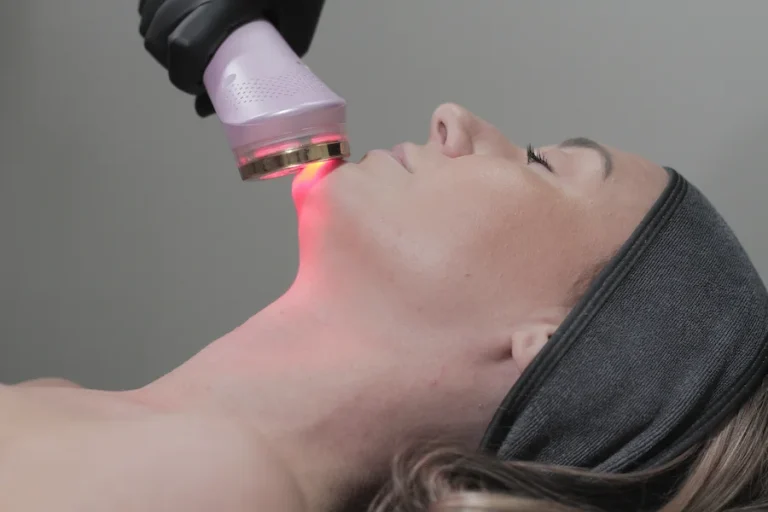
A brown mark is a cluster of melanin sitting in the lower part of the epidermis. Pulse light passes through the clear tissue above it and is absorbed almost entirely by that cluster, because dark material absorbs light and pale material does not. The absorbed energy becomes heat, the cluster is disrupted, and the fragments are pushed upward with the natural turnover of the skin until they reach the surface and flake away.
So the mark gets darker before it goes. That sequence — darker on day two, speckled by day four, gone somewhere between day seven and day fourteen — is not a side effect. It is the treatment working, visible from the outside. Nobody who has been told this in advance is alarmed by it; nearly everybody who has not been told is.
Getting the diagnosis right
Four kinds of brown, and only two of them belong here
Most disappointing pigment treatments are disappointing because the wrong thing was treated. This is the part of the consultation that matters most.
Sun spots and age spots
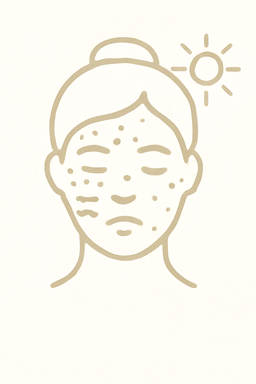
Discrete, flat, hard-edged, usually on the cheekbones, temples and the backs of the hands. This is what pulse light is best at, and it often clears in a small number of sessions.
Freckling and general sun mottling
Diffuse but still superficial. Responds well, though it wants a course rather than a single visit, and it comes back if the sunscreen habit does not.
Melasma
Soft-edged, symmetrical, often across the cheeks, forehead or upper lip, and driven by hormones rather than only by sun. Heat can make it worse. We will usually steer you away from light treatment for this and towards the chemical route instead.
Post-inflammatory marks
What is left where a spot or an injury healed. Some of these are pigment and some are flat red vessels, and they need different settings. Many of them also fade on their own, and we will say so if waiting is the honest advice.
Why here
Why south Calgary faces mark the way they do
This city has a specific pigment profile, and once you know the causes the timing of a course makes obvious sense.
Altitude and clear skies
Thinner atmosphere means more ultraviolet arriving, and Calgary gets more sunshine hours than any other major Canadian city. The exposure is real even when the temperature says otherwise.
Snow reflects it straight back up
Which is why the marks turn up on the cheekbones, the nose and the upper lip — the surfaces that catch light coming from below as well as above. A ski season does more than a beach holiday.
Dry air makes it look worse than it is
A dehydrated surface scatters light and flattens the face, so the same pigment reads darker in February than in July. Part of a brightening course is fixing that, and it is the part that shows first.
Late autumn is the time to start
A course of three to five sessions spaced several weeks apart needs untanned skin at every one. October through March gives you that window, provided you keep off the slopes without sunscreen.
Indications
What is it good for?
Uneven tone with a defined cause: sun spots, mottling and dullness sitting over them.
Rough texture and open pores are a different job — see the carbon peel facial. For redness and broken vessels, the general IPL facial covers it. Full list on the Calgary SE clinic page.
Choosing between them
Brightening with light or with an AFA peel
We offer both on Macleod Trail and they are genuinely different tools. One goes after individual marks; the other resets the whole surface.
Brightening facial with IPL
- Targeted — it finds the dark cluster and leaves the rest alone
- Best on hard-edged spots, freckling and sun mottling
- Faster: real change in three to five sessions
- Limited by skin tone, ruled out on a tan, and not the right call for melasma
AFA chemical peel
- Whole-surface — it exfoliates and interrupts pigment production everywhere
- Best on diffuse dullness, soft-edged unevenness and melasma
- Slower and more gradual, over a longer course
- Safe on every skin tone, and it adds moisture rather than heat
Where somebody has both kinds of pigment, the usual plan is a peel course with pulse light used on the individual spots. That sequencing is a conversation, not a package.
Getting ready
Pre & post treatment
Pigment work is the treatment most easily undone between appointments, so the aftercare here is not a formality.
Before each session
- Four clear weeks with no sun, no booth and no self-tan. Skiing without high-factor sunscreen counts as sun.
- Stop retinoids a week out and acids three days out.
- Tell us about hormonal changes — pregnancy, a new contraceptive. Both drive melasma and both change the plan.
- Tell us about photosensitising medication and any history of cold sores.
Over the fortnight after
- Expect the spots to darken first. That is the treatment, not a problem.
- Do not pick or exfoliate them off. Let the skin release them.
- Sunscreen daily, reapplied on bright days. This decides whether the result lasts a year or a season.
- Nothing hot for 48 hours, and no actives for five days.
Also on Macleod Trail
Treatments that work well around this one
- AFA Chemical Peel in Calgary SE — the chemical route, and the right one for melasma
- IPL Facial in Calgary SE — the broader photofacial, redness included
- Carbon Peel Facial in Calgary SE — when texture is part of what is dulling the skin
- Hydro Facial in Calgary SE — for the dehydration that makes pigment look darker
- Our Calgary SE clinic — everything we run in south Calgary