About the treatment
Not a laser, and the difference is the whole point
Intense pulsed light is routinely described as laser treatment. It is not, and the distinction decides what it can do for you and what it cannot.
A laser emits one wavelength. Pulse light emits a broad band of them at once, filtered down to the range that suits the job. That band is absorbed by two things in particular: melanin, which is what a brown spot is made of, and haemoglobin, which is what a visible vessel is full of. Everything else in the skin lets the light pass.
What the target absorbs, it converts to heat. A pigment cluster takes the energy, darkens over the next day or two, works its way to the surface and flakes off. A small vessel takes the energy, its wall is damaged, and the body clears it away over the following weeks. Neither of those is a resurfacing. The skin’s surface is left intact, which is why there is no peeling and no real recovery.
It follows that pulse light is excellent at colour and does almost nothing for texture. If you can feel the problem with a fingertip, this is not the treatment for it.
The honest limit
Skin tone decides whether this is safe for you
This is the part that gets left off most IPL pages, and it is the most important paragraph on this one.
Pulse light cannot tell the difference between the pigment you want removed and the pigment that is evenly present in your skin. On fair skin, the spot absorbs far more energy than the background and comes away cleanly. As natural tone deepens, that gap narrows, and the risk shifts from treating the spot to burning the skin around it — which can leave a pale patch or a darker one that is harder to fix than what you came in for.
The same logic applies to a tan. Sun-exposed skin in August is temporarily darker than the same skin in February, so a treatment that was safe in winter is not automatically safe in summer. We assess tone at every appointment, not just the first, and we will decline a session rather than take the risk. If IPL is not right for your skin, there are other routes to the same result and we will point you at them.
Why here
The Vancouver timing advantage
Light treatments have a season, and this coast has an unusually generous one.
A long low-UV window
October to April here is about as safe a stretch for pulse light as anywhere in the country. You can run a full course of three to five sessions inside it without ever being treated on tanned skin.
Rain is not the same as protection
UVA still reaches you through cloud, which is why the pigment is there in the first place. The winter advantage is about tan, not about going without sunscreen.
Summer here is the problem, not the season
Ten intense weeks of beach, water and mountain sun is where most of a Vancouver face’s pigment is made. Treating in September and protecting through July is the rhythm that actually works.
Six days a week on West Broadway
We run Tuesday through Sunday, closed Mondays and Saturdays. Sessions sit three to four weeks apart, so a Sunday slot is usually the easiest one to keep through a course.
Indications
What is it good for?
Colour, in both directions: brown marks and red ones.

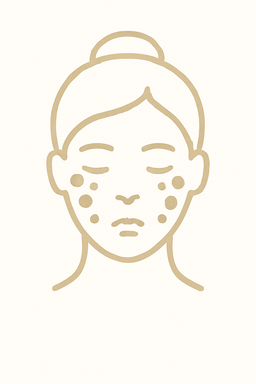
Texture, scarring and open pores are not on this list — that is microneedling or exfoliation for clear skin territory. The full Kitsilano list is on the Vancouver clinic page.
What to expect
The session, and the fortnight afterwards
The appointment is short and undramatic. The interesting part happens over the following two weeks, and knowing that in advance stops people panicking.
In the chair
Eye shields on, cool gel, then a series of flashes. It is often described as an elastic band snapped against the skin — sharp, brief, entirely tolerable, and over quickly.
Days one to three
Treated spots go darker, sometimes noticeably so, and can look like coffee grounds. This is the expected response and the sign it worked. Redness settles within hours.
Days five to fourteen
The darkened pigment lifts away as the skin turns over. Do not help it. Picking at this stage is the one reliable way to turn a good result into a mark.
Getting ready
Pre & post treatment
The pre-treatment side of this one is not advisory. Arriving tanned means we reschedule you.
Four weeks out, then closer
- No sun, no booth, no self-tan for four weeks. Fake tan reads as pigment to the machine and it burns.
- Stop retinoids a week before and acids three days before.
- Do not wax, thread or pluck in the treatment area for two weeks.
- Tell us about photosensitising medication — some antibiotics, some acne drugs, St John’s wort. Also tell us about a history of cold sores.
For two weeks after
- Sunscreen daily, without exception. This is the single factor that decides whether the result holds.
- Nothing hot for 48 hours — sauna, hot yoga, a long hot shower.
- No actives for five days, then reintroduce slowly.
- Leave the darkened spots alone until they go by themselves.
Also on West Broadway
Treatments that work well around this one
- Facial Brightening in Vancouver — the route for diffuse pigment and for skin tones IPL does not suit
- Microneedling in Vancouver — for the texture side, once the colour is handled
- Laser Hair Removal in Vancouver — the same light principle aimed at the follicle
- Signature Infra Red Facial in Vancouver — something calming between sessions
- Our Vancouver clinic — the full Kitsilano list