Your skin was fine in August, and now, a few weeks into October, there are new spots along your jaw, your hairline, or your chin. It is a familiar Toronto story, and it rarely has a single cause. Fall stacks several small changes on top of each other: the air turns from humid to dry, the furnace comes on, scarves and masks return, routines tighten and sleep slips.
This guide is about triggers, not treatments. Understanding what may be nudging your skin in the wrong direction helps you choose a sensible first step, avoid the habits that tend to make things worse, and recognise when it is time to ask a professional. It is general education, not a diagnosis.
Key Takeaways
- Triggers tend to stack. A drier barrier, a new moisturizer, and a stressful week can each contribute a little, and together they may be enough to tip skin into a breakout.
- Most first steps are about removing irritation, not adding strength. Gentler cleansing, one product change at a time, and cleaner fabrics are usually better starting points than a harsher routine.
- Diet and sleep may play a role for some people, but the research is mixed, so treat them as things to observe rather than rules to follow.
- Picking and over-exfoliating are the two habits most likely to turn a short flare into a longer one.
- Persistent, painful, or scarring acne is a reason to see a doctor, with professional skin care as a supporting option rather than a substitute.
Why Fall Is a Common Turning Point for Toronto Skin
Toronto summers are humid. Sweat, sunscreen, and sebum tend to sit on the face instead of evaporating, and You Glow’s Toronto team describes July and August as a high season for congestion. Then, within a few weeks, the air cools outside, and indoor heating dries everything out.
That swing is the heart of the fall story. Skin that spent months occluded by humidity suddenly faces dry air, and the clinic’s Toronto pages describe a pattern in which a stripped, dehydrated barrier may prompt skin to produce more oil to compensate. It is a clinical observation rather than a proven rule, but it fits what many people notice: skin that feels tight and looks oily at the same time.
Add the return of routine. September often means school drop-offs, full office weeks and tighter schedules, and the breakouts the clinic sees in autumn tend to be described as deeper and more hormonal than the summer ones. Whether that holds for you depends on your skin, hormones, and stress levels, which is why a trigger-by-trigger approach is more useful than a generic fall skincare list.
The Everyday Triggers Behind a Fall Breakout
Humid air to dry heat
When the barrier loses water, skin can feel rough, tight, and reactive. Reaching for a stronger cleanser or a drying spot treatment to fix the oiliness often adds to the irritation. The American Academy of Dermatology notes that dry skin is irritated skin, and that irritating it can worsen acne, so the goal is to calm rather than strip.
Masks, scarves, hats and straps
Anything held against the face traps heat and rubs. The AAD describes a friction-and-sweat pattern called acne mechanica, usually discussed with sports equipment and clothing, and the same mechanism may apply to a scarf, a mask, a helmet strap or a phone pressed to the cheek. Breakouts that follow a band along the jaw or hairline often have a mechanical explanation rather than a hormonal one.
Heavier moisturizers and product switching
Dry air makes a richer cream tempting, but richer isn’t always better for acne-prone skin. The AAD recommends products labeled non-comedogenic or oil-free, and cautions against trying a new acne product every week or so because that approach can irritate skin and cause breakouts. If you changed two things at once, it is hard to know which one your skin objected to.
Sweat, then skipping cleansing
Fall workouts, commutes in layers, and overheated offices all produce sweat, and when you’re tired, it’s easy to go to bed without cleansing properly. The AAD advises washing after sweating, removing makeup before bed, and patting sweat away rather than rubbing. Washing more often isn’t the answer either, because over-washing can cause irritation.
Stress and routine changes
According to the AAD, stress cannot cause acne but may worsen existing acne, and studies suggest that acne severity can rise as stress intensifies. A new school year, a busy quarter at work or a household schedule reshuffle all count. This is one trigger you cannot always remove, so the realistic goal is a simpler skin routine while life is not.
Sleep and diet, with a grain of salt
The AAD lists too little sleep and certain foods among things that may worsen acne, and its diet guidance is candid that findings on high-glycemic diets and dairy are mixed and need more research. A sensible approach is to notice patterns in your own skin rather than cut whole food groups on the strength of a headline.
Trigger-to-First-Step Table
This table is a starting point for thinking, not a prescription. If a breakout is painful, deep, widespread, or leaving marks, skip ahead to the professional help section.
| Possible trigger | How it may contribute | A sensible first step |
|---|---|---|
| Humid-to-dry air shift | A dehydrated barrier may feel tight while oil production stays high | Switch to a mild cleanser and a non-comedogenic moisturizer; skip alcohol-based toners |
| Masks, scarves, hats | Friction, heat and trapped sweat irritate skin under the fabric | Wash fabrics often, choose softer or looser layers, and cleanse after a long wear |
| Heavier cream or new products | Rich or oily formulas may clog pores; stacking new actives may irritate | Change one product at a time and give it several weeks before judging |
| Sweat left on skin | Sweat, sunscreen and makeup can sit in pores after a long day | Pat sweat dry, cleanse after exercise and remove makeup before bed |
| Stress and a changed routine | Stress may worsen existing acne | Simplify the routine to cleanser, moisturizer, and sunscreen while life is busy |
| Short sleep, diet shifts | May contribute for some people; evidence is mixed | Keep a two-to-three-week note of sleep, food, and flare-ups before changing anything big |
Is Your Fall Skin Routine Working Against You?
Triggers are easier to spot with a second pair of eyes. A free consultation at You Glow Aesthetics is a chance to talk through what has changed in your routine, what your skin is doing, and which options, if any, fit your situation.
It is a conversation first, with no pressure to book a course, and the team can say plainly when something is outside what a clinic should treat.
What Not to Do When Skin Starts Breaking Out
When a breakout appears, the instinct is to act fast and act hard. That instinct is what usually extends the flare. The American Academy of Dermatology’s list of habits that can worsen acne includes several of the moves below.
| Common reaction | Why it tends to backfire | A gentler alternative |
|---|---|---|
| Over-exfoliating with scrubs, acids and brushes | Scrubbing can irritate skin and cause acne to flare, and a damaged barrier is slower to settle | Cleanse lightly with fingertips, rinse with warm water and pat dry |
| Picking or squeezing | Pushes material deeper, raises inflammation, and may lead to marks or scarring | Leave it alone and use a product designed for blemishes |
| Drying everything out | Dry skin is irritated skin, and irritation can bring more breakouts | Use a moisturizer made for acne-prone skin twice daily |
| Switching products every few days | Frequent changes can irritate and make it impossible to see what works | Give one product a fair trial, generally several weeks |
If a home routine is already feeling like a tug-of-war, our piece on common mistakes people make when treating acne at home goes deeper into the habits above. And if you have done everything sensibly and the pattern keeps returning, why acne treatments fail without a personalized plan explains why a one-size routine often stalls.
When Professional Help Makes Sense
Many people can manage mild, occasional breakouts at home. It may be time for professional input if the breakouts are deep, painful or leaving marks, if they keep returning in the same places, or if several weeks of a calm, consistent routine has made little difference. The AAD says that if you have deep or painful acne, you should see a dermatologist, and that guidance is worth taking seriously.
A doctor or dermatologist is the right first call for severe, cystic or scarring acne, for anything that may be linked to a medication, and for breakouts that seem tied to hormonal changes. You Glow’s own pages are open about this: the clinic describes severe cystic acne as a medical matter and says it is not a substitute for a dermatologist. For a broader look at monthly flare-ups, see our guide to adult hormonal acne and monthly breakouts.
Professional skin care sits alongside medical care. A consultation can help sort out which of your triggers are skin-surface issues, such as congestion, oil, or lingering redness, and which need a doctor’s attention.
Where Toronto Options May Fit
If you are in the city, You Glow Aesthetics runs a clinic on Wynford Drive in North York, and the Toronto clinic page lists everything offered there. The table below maps the skin-focused services that its Toronto pages connect to acne-prone skin. Suitability depends on your skin tone, history, current medications, and recent sun exposure, and we assess it at a consultation.
| What you are noticing | Toronto option the clinic describes | Worth knowing first |
|---|---|---|
| Inflamed, bacterial-looking breakouts and surrounding redness | Blue light therapy | Described as no-downtime; it does not empty blocked pores or remove marks left behind |
| Redness and marks after spots, plus some active acne | Acne facial with IPL | Skin tone can limit eligibility; a tan means waiting, and acne medications need disclosing |
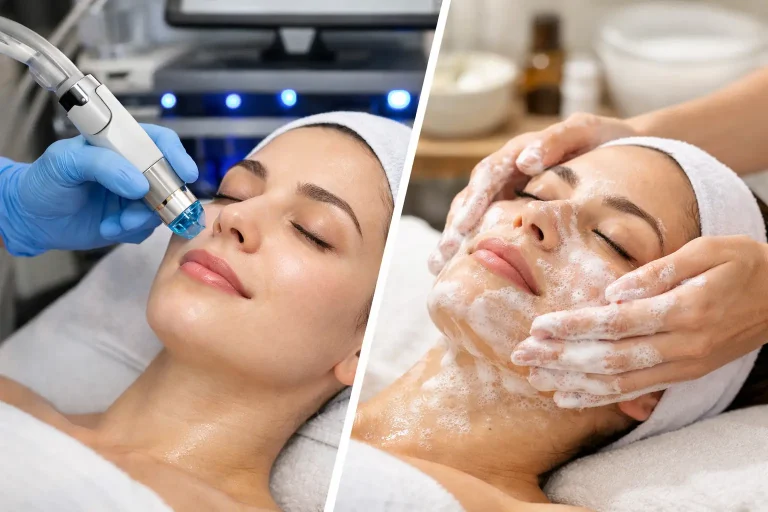
| Congestion, grime, and dehydrated, rough skin | Hydro facial | A fluid-and-suction approach with no needles; prescription acne medication should be mentioned |
| Oily, congested skin with visible pores | Carbon peel facial | A laser treatment where deeper tones need a patch test, and a tan or recent sun exposure means waiting |
For inflamed breakouts, the Toronto page for blue light therapy in Toronto describes a light-based approach aimed at acne-related bacteria and the redness around them. It also states plainly that it is not the answer for severe cystic acne and that one session does not finish the job, so maintenance and a suitable routine matter.
Where the bigger frustration is redness and flat marks, the acne facial with IPL in Toronto page says the treatment works better after the outbreak than during it. It also explains that results depend on skin tone and sun exposure, which is why they check eligibility first.
If congestion and city grime seem to be the issue, the Hydro Facial in Toronto page describes a deep-cleanse, exfoliation, and hydration facial, and the carbon peel facial in Toronto page positions that treatment around oily, congested skin. Both pages say fit depends on what your skin is doing, which is another reason to start with a conversation. For a wider look at how city living affects pores, our Toronto commuter skin guide covers pollution and pore health.
A Calmer Plan for Your Skin This Fall
If your skin changes with the weather and you are not sure what to do, You Glow Aesthetics in Toronto offers a free consultation to talk through your routine, your triggers, and which options may suit your skin. The aim is a personalized plan at a pace that suits you, not a sales pitch.
Bring a list of the products you use and any medications you take, and your team can take it from there. Whether the right answer is a routine tweak, a facial, or a referral to your doctor, you will leave knowing the next step.
Frequently Asked Questions
Why does my skin break out every fall in Toronto?
It is often a combination rather than one cause. The move from humid summer air to dry indoor heat can stress the skin barrier, while masks, scarves, and heavier moisturizers add friction and occlusion. Busier schedules bring stress and shorter sleep, which may also worsen existing acne. Because the mix differs for everyone, tracking what changed in your routine is more useful than a single fix.
Can stress really make acne worse?
Possibly, for people who already have acne. The American Academy of Dermatology says stress cannot cause acne but may worsen existing acne, and studies suggest that severity can increase as stress rises. That does not mean you caused your breakout. A simpler skin routine, steadier sleep, and gentle habits during busy weeks are reasonable ways to reduce the load on your skin.
Do masks and scarves cause breakouts?
They may contribute for some people. The AAD describes acne mechanica, where equipment or clothing traps heat and sweat and rubs against skin, and the same mechanism can plausibly apply to masks, scarves and straps. Clean fabrics, softer or looser layers and cleansing after long wear are sensible steps. Breakouts in a band under the fabric are a useful clue.
Should I exfoliate more to clear a fall breakout?
Usually not. The AAD warns that scrubbing can irritate skin and cause acne to flare, and that dry skin is irritated skin. Over-exfoliating can also leave a barrier that is sore and reactive, which may prolong the problem. A mild cleanser, a suitable moisturizer, and patience are usually the safer starting point, with professional input if things do not settle.
When should I see a doctor instead of a skin clinic?
See a doctor or dermatologist for deep, painful, or cystic acne, breakouts that scar, anything you suspect is linked to a medication, or acne that does not respond to a few weeks of calm, consistent care. A skin clinic can support the surface-level side, such as congestion, oil, and lingering redness, but it is not a replacement for medical diagnosis.