You want smoother skin, but you have heard that scraping a blade across your face will turn soft peach fuzz into dark stubble. It is a worry worth settling before you book.
This guide helps you decide whether the myth should hold you back, by explaining what the blade actually touches, what regrowth feels like, and when a different treatment is the better fit.
Key Takeaways
- Cutting hair at the surface does not change the follicle beneath it.
- Blunt, stubbly regrowth is a texture illusion, not a change in thickness or colour.
- Dermaplaning suits fine, light peach fuzz and dull texture; coarse, dark hair is laser territory.
- Active breakouts, flares, or cold sores are reasons to reschedule.
Why Hair Seems Thicker After Dermaplaning (and Isn’t)
Run a fingertip over freshly cut hair, and it can feel different from before, so it is easy to conclude that the blade changed the hair.
The sensation is real, but the explanation is not. Cleveland Clinic’s overview of vellus hair, or peach fuzz, says it does not grow back thicker after you remove it. New hairs can seem thicker only because the top part of the hair has to push through the skin’s surface as it grows back.
What changes is the tip. A natural vellus hair tapers, while a freshly cut one has a blunt end that feels stiffer than a tapered one for the first week or so. Colour and thickness are set below the surface, where the blade never goes.
Peach Fuzz, Terminal Hair and What the Blade Actually Touches
Dermaplaning is designed for vellus hair. This is the thin, fine down found on most faces, usually lighter and shorter than the thicker terminal hair you might see on a chin or upper lip. A blade passed over vellus hair does not turn it into terminal hair.
That distinction cuts both ways. It is why dermaplaning will not turn your peach fuzz into something heavier. It is also why it is the wrong tool for stronger, darker facial hair, which leaves a blunt end you will notice within days of being cut flat.
One caution: if you notice a sudden increase in facial hair, mention it to your healthcare provider. Cleveland Clinic notes that the amount and appearance of vellus hair can sometimes reflect a health condition. That is a medical question, not a skincare one.
What Regrowth Feels Like, Stage by Stage
Regrowth varies from person to person, and the timings below are general descriptions rather than promises. Our clinics describe the blunt sensation as lasting for the first week or so.
| Stage | What you may notice | What is going on |
|---|---|---|
| Right after | Very smooth skin, makeup sits flat | Dead surface layer and fine hair removed |
| First week or so | Hair may feel blunt or slightly stiff | Cut tips are square rather than tapered |
| Around two to four weeks | Fine hair returns, as described by our Calgary SE team | The same soft hair grows back |
| Beyond that | Hair feels the way it always did | Regrowth has moved past the blunt stage |
Because the blade cuts at the surface instead of pulling from the root, the lasting redness and ingrown hairs that waxing and threading can cause are less of a concern.
Not Sure Which Kind of Hair You Have?
Telling soft peach fuzz from coarse hair is harder than it sounds, especially in different light or on different parts of the face. Your esthetician can look at it with you and say honestly which treatment suits it.
Bring your questions, including the one about thicker hair. You can have an esthetician assess your hair type in a free consultation, and we will look at your skin and hair together before recommending anything.
Dermaplaning, Waxing, Threading or Laser: Which Fits Your Hair?
Each option does a different job, and mixing up the jobs is where expectations go wrong. Dermaplaning is not a hair-reduction treatment, so the hair it removes will return.
| Option | What it does | Best suited to |
|---|---|---|
| Dermaplaning | Cuts vellus hair at the surface and lifts dead skin; the follicle is untouched | Fine, light peach fuzz and a dull, rough surface |
| Waxing or threading | Pulls hair out at the root; irritation and ingrown hairs are possible | Temporary removal where skin tolerates it |
| Laser hair removal | Targets the follicle, relying on pigment in the hair; sessions vary | Coarse, dark hair on the chin, upper lip or jaw |
Our laser hair removal page describes how it targets the follicle, with hair becoming finer and lighter over time, and our facial laser hair removal page covers the face specifically. Results and the number of sessions vary and are planned at consultation. Laser works best on dark hair, so very fine, colourless fuzz is not what it is for.
What Dermaplaning Is Really For: Smoother, Better-Prepared Skin
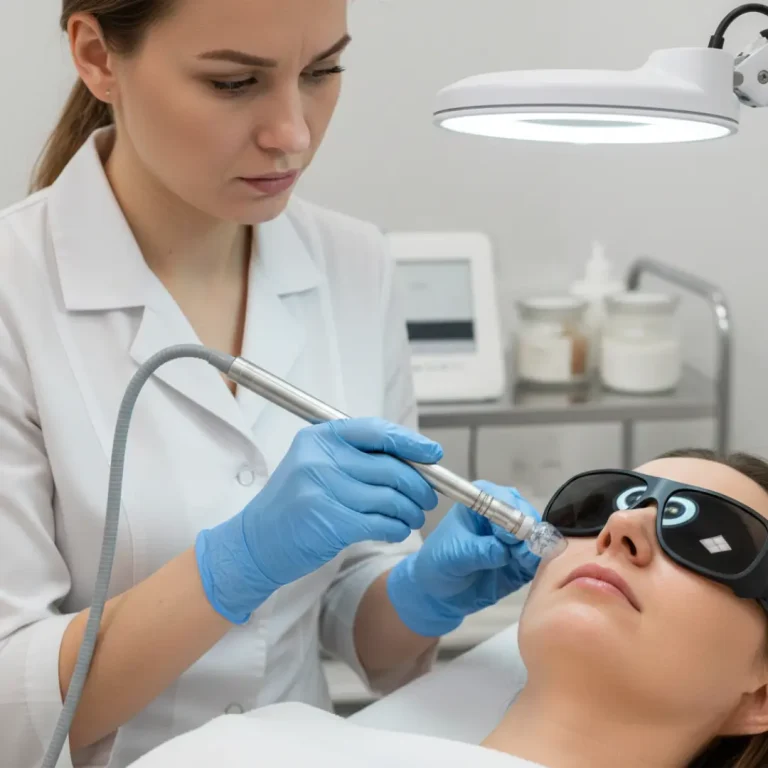
Dermaplaning is manual exfoliation. A trained provider uses a sterile surgical blade at roughly a 45-degree angle to lift away dead surface cells and fine hair, with no chemicals or lasers. You can see the details on our dermaplaning treatment page.
The hair removal is almost a side effect. The point is the dead layer that can make skin look dull and feel rough. Clearing it is designed to leave skin smoother and may help serums and moisturizers absorb more effectively, a side effect explored in our post on why skincare isn’t sinking in.
Aftercare and Frequency Without the Guesswork
Dermaplaning has no downtime. Some people notice light pinkness or mild sensitivity for about an hour, which fades quickly.
- Apply broad-spectrum sunscreen daily, because freshly exfoliated skin needs protecting from the sun.
- Keep your routine gentle for a few days, with a soothing, fragrance-free moisturizer.
- Pause exfoliating products, retinoids, and strong actives for as long as your clinic advises, since the guidance varies slightly between clinics.
- Skip saunas and hot yoga for a day or two.
For maintenance, many clients book every three to six weeks, depending on their skin’s renewal cycle and goals. Our Calgary SE team advises against going more often than every three weeks, since that can take the barrier down faster than it rebuilds. Before your visit, skip exfoliants, retinoids, and acids for three to five days, minimize sun exposure, and arrive makeup-free.
Who Should Reschedule or Check First
Dermaplaning suits many people, but not every skin on every day. Your provider checks on the day, and a postponement is a safety decision, not a judgment.
| Situation | Likely outcome | Why it matters |
|---|---|---|
| Active, inflamed breakouts | Likely postponed | A blade over inflamed skin can spread bacteria |
| Rosacea or eczema flare | Likely rescheduled | The barrier is already compromised mid-flare |
| Cold sore history | Tell your provider | Treatment can be planned around it |
| Recent chemical peel or cuts | Tell your provider | Both are on our pre-treatment disclosure list |
| Recent isotretinoin | Discuss first | Skin may be thinner, so your prescriber should weigh in |
If you have darker skin and are wondering about suitability, our guide on whether dermaplaning is safe for darker skin tones covers it in detail.
Clinic Blade or Home Razor?
The thickness myth is not the main reason to think twice about doing this at home. Technique is. Angle, pressure, and direction across the jaw and upper lip are the skill, and a trained provider also knows when to postpone, which a home tool cannot assess.
Dermaplaning is offered at all seven of our clinics. Our Calgary SE dermaplaning page, for example, links exfoliation to dry-climate skin, and you can find every clinic on our locations page. Details and availability can vary, so confirm when you book.
Frequently Asked Questions
Can dermaplaning make facial hair darker?
No. Colour is set below the surface, and the blade only cuts the hair at the surface. Dermaplaned peach fuzz returns as the same soft hair. It may feel stiffer for the first week or so because the cut tip is blunt, but that is a trick of texture, not a change in the hair itself.
How soon does hair return after dermaplaning?
It varies. Our Calgary SE team describes fine hair returning in around two to four weeks, and the blunt feeling usually passes within the first week or so. Many clients rebook every three to six weeks, and your clinic can help you set a rhythm that suits your skin.
Is dermaplaning the same as shaving my face?
Not quite. Dermaplaning uses a sterile surgical blade in trained hands, and it is designed to exfoliate as well as remove fine hair. Technique matters, and a provider can also postpone if your skin is inflamed. Home shaving lacks that assessment, which is why results and comfort can differ.
Can I wear makeup after dermaplaning?
Ask your clinic, since timing depends on your skin and how it reacts. Makeup tends to sit flatter on a smoothed surface, which is why many clients book dermaplaning before events. Keep your routine gentle, wear sunscreen daily, and hold exfoliants and retinoids for the period your clinic advises.
Does dermaplaning work on coarse chin or upper lip hair?
It is not designed for it. Dermaplaning targets fine, light vellus hair, and cutting coarse, dark hair flat tends to leave a blunt end you will notice within days. Laser hair removal works on the follicle and relies on hair pigment, so your esthetician may suggest it for stronger hair.
Smooth Skin Without the Regrowth Worry
If the thicker-hair myth has been holding you back, you can set it down. Fine vellus hair grows back as the same fine hair, and what you will mainly notice is how smooth your skin feels and how well products and makeup sit.
When you are ready, plan your dermaplaning visit around your skin and hair at your nearest You Glow clinic, and we will recommend what makes sense for you.