The first hard frost is a useful deadline. Summer has left its marks on your skin, the heating is about to come on, and the products that suited July may not suit November. A short checklist now is easier than repairing a flaky, tight complexion in February.
This guide is built to be worked through in order: audit what summer left behind, adjust your home routine, learn the barrier warning signs, then decide which professional treatments are worth discussing and which should wait. It is written for Red Deer, but the sequence applies to most of central Alberta.
Key Takeaways
- Audit first, shop second: note texture, dark marks, redness, breakouts, and dryness before changing anything.
- Barrier comfort comes before exfoliation. If you feel tightness, stinging, or flaking, pause the actives.
- Courses that ask you to avoid sun, such as laser hair removal and peels, are easier to follow when skin is covered up.
- Snow glare counts as sun, so SPF stays on the list all winter.
Step 1: Run a Post-Summer Skin Audit
Do this in daylight, with no makeup, and take a photo. Summer exposure rarely shows up all at once. It may show up as a rougher surface, a few new dark spots, or a face that looks flat even after sleep. Write down what you see rather than what you wish you saw, because a clear list makes every later decision easier.
- Run a fingertip over each cheek. Does it feel rough or dull?
- Check for new brown marks or a patchy tone, especially on the cheekbones and nose.
- Look for persistent redness, and for breakouts along the jaw or under hat lines.
- Note whether your moisturizer still absorbs or just sits on top.
| What you notice | What it may point to | What to raise at a consultation |
|---|---|---|
| Rough, dull surface | Dead-cell build-up | Exfoliating options such as microdermabrasion or dermaplaning |
| New brown spots | Sun-related pigment | Whether light or peel treatments suit your skin and current tan |
| Flushing or lingering redness | Reactive or compromised skin | Gentle options and what to avoid for now |
| Inflamed breakouts | Bacteria-driven acne | Blue light therapy, and whether a doctor should see you too |
| Dry patches that products will not fix | Barrier strain | Hydration-focused treatment and routine changes |
Step 2: Switch Your Routine as the Air Dries Out
Cold outdoor air holds little moisture, and indoor heating dries it further. The Canadian Dermatology Association notes that cold weather is the most common cause of dry skin, because of low outdoor humidity and heating systems. That is why a routine that felt fine in August can start to sting in October.
Change one product at a time, so you can tell what helps and what does not.
- Cleanser: move from a foaming or gel formula to a creamy, low-fragrance one. If your face feels tight after washing, the cleanser is too strong.
- Moisturizer: choose something richer than your summer lotion, and apply it to slightly damp skin.
- SPF: keep it, every morning. Snow reflects ultraviolet light, so a bright winter day still counts.
- Actives: retinoids and acids can wait until your skin feels comfortable again; then reintroduce them one at a time.
For a deeper look at what dry, dehydrated, and damaged skin each needs, our winter skin guide picks up where this checklist leaves off.
Step 3: Learn the Barrier Warning Signs
Your skin barrier is the outer layer that holds water in and keeps irritants out. When it is strained, almost everything you apply feels different. Stop and simplify if you notice any of these.
- Stinging when you apply products that never used to sting
- Tightness soon after washing
- Flaking that sits under makeup
- New redness or sensitivity after an exfoliating product
The fix is usually boring: gentle cleanser, plain moisturizer, and sunscreen for a week or two. Strained skin is also a good reason to postpone peels and needling. Our Red Deer team often moves people to a calmer treatment first, then returns to resurfacing once the barrier recovers.
Treatments to Discuss by Concern
This table lists only treatments with a page on the Red Deer clinic site. It is a starting point for the consultation, not a prescription, since results vary with skin type, tan, history, and how well skin is protected afterward.
| Concern | Red Deer treatment to discuss | Autumn note |
|---|---|---|
| Dull, congested, dehydrated skin | Hydro Facial | No downtime, so it suits busy weeks |
| Rough texture you can feel | Microdermabrasion | Do not stack it with another exfoliant in the same week |
| Fine facial hair and flaking | Dermaplaning facial | Not suitable over active breakouts or sunburn |
| Uneven tone and sun spots | AFA chemical peel | Avoid when skin is tanned, burnt or barrier-strained |
| Brown marks and redness together | IPL facial | A current tan may delay your start date |
| Inflamed acne | Blue light therapy | Treats bacteria without drying the skin |
| Reactive skin or redness | Red light therapy | Gentle, with no downtime |
| Acne scars, pores, lines | Microneedling | Usually a course over several months |
Each treatment page is linked from the You Glow Aesthetics Red Deer clinic page, and our overview of top treatments in Red Deer explains each at a glance.
Autumn Is Easier to Plan With a Skin Analysis
If your audit turned up more than one concern, or you are unsure which signals matter, a short conversation saves guesswork. You Glow Aesthetics offers a free 30-minute consultation in Red Deer, where the team reviews your skin before recommending anything, and nothing is booked until you are happy with the plan.
Bring your current products or a photo of them. Mention any retinoids, prescription acne medication, recent sun or windburn, and cold sore history, because those details affect timing.
Why Autumn Suits Sun-Sensitive Treatments
Several treatments ask you to keep the area out of the sun and avoid a tan before and after. In autumn and winter, arms, legs and backs are covered most days, so that rule takes less effort. The Red Deer pages describe this timing for IPL, peels and microneedling, with courses that often start in the colder months.
There is one catch. Summer color fades slowly, and a tan can delay IPL or a peel until your skin is back to its natural tone. Tell the team about recent sun, bottled tan, and sunbed use, and be honest about weekends outdoors.
Laser Hair Removal: Why Fall Is a Natural Start
Laser hair removal works as a course, with sessions spaced weeks apart to follow the hair growth cycle, so a full plan can take most of a year. Starting in autumn means you spend the early sessions with treated areas under clothing, which makes the no-sun rule simple. It is also easier to avoid waxing, threading and plucking when you are not wearing shorts.
- Shave the area before each session. Do not wax or pluck for the weeks before.
- Arrive with bare skin: no deodorant, lotion or fake tan on the treatment area.
- Keep sunscreen on exposed areas such as the face and neck, since snow glare still counts.
- Expect results to depend on hair color, skin tone, growth cycle and area, which a patch test and consultation help clarify.
The Red Deer laser hair removal page sets out the areas treated and what to expect. Hair needs to be dark enough for the light to target, so lighter hair may not suit this treatment.
Scalp and Body Items for the Checklist
Skin care does not stop at the jaw. Toques, hard hats and dry indoor air can leave the scalp tight or flaky, and thinning hair is easier to assess in autumn photographs than under a hat in January.
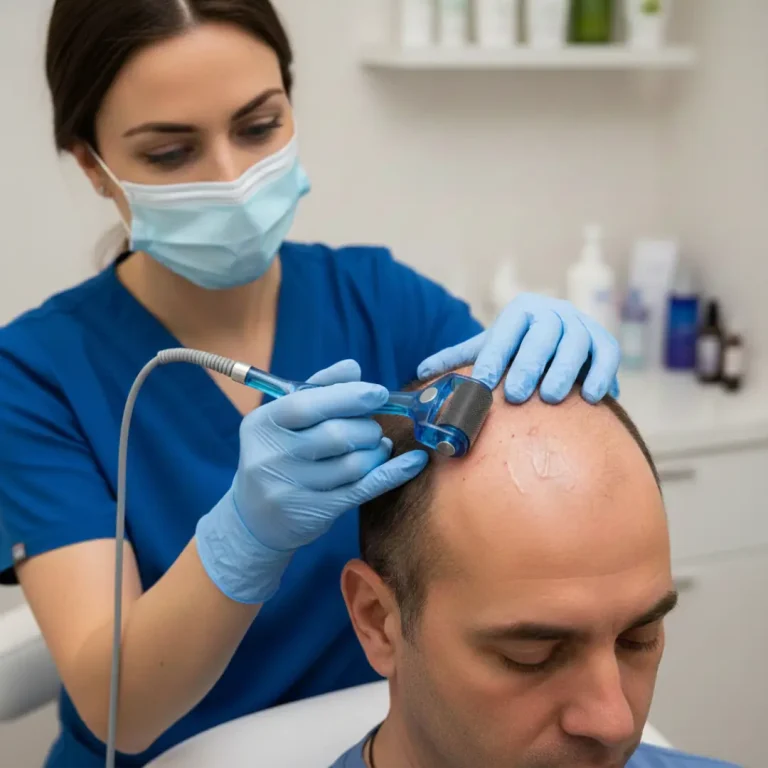
Scalp microneedling targets thinning caused by shrinking follicles. The Red Deer page says to allow about three months before judging, and plans commonly run six to eight appointments four to six weeks apart. It also states clearly that it is not a diagnosis, so check with your doctor if the cause of hair loss is unclear.
Body treatments such as laser lipo cavitation, double chin removal, and the non-surgical butt lift are weekly courses, usually eight to twelve visits or six to ten for the chin. Winter, with a covered body and quieter calendar, is a practical time to commit. They focus on shape and definition, not weight loss, and a consultation determines who is a good candidate.
What to Start Now and What to Wait On
| Start now | Wait, or sequence carefully |
|---|---|
| Routine swap: gentler cleanser, richer moisturizer, daily SPF | New strong actives while your barrier feels tight or stings |
| Hydro Facial or microdermabrasion for surface texture | Two exfoliating treatments in the same week |
| Laser hair removal course, once patch test and consultation are done | Waxing, plucking or fake tan before sessions |
| Microneedling or scalp microneedling courses, if you are comfortable with several months | Needling over active breakouts, cold sores, sunburn or windburn |
| AFA peel or IPL, when skin is back to natural tone | Either one while tanned or after recent sun |
Plan Your Autumn With You Glow Aesthetics in Red Deer
If you would like a second opinion on your audit, You Glow Aesthetics in Red Deer offers a free consultation at the Timberlands Drive clinic, open seven days a week. The team can look at your skin, talk through timing, and build a plan around your goals and calendar.
There is no pressure to book anything on the day. Book a Free Consultation whenever you are ready.
Frequently Asked Questions
When should I start my autumn skin care routine in Red Deer?
Start when the nights turn cold and the heating comes on, usually in early to mid autumn. Skin dries out gradually, so adjusting early is easier than recovering later. Begin with a gentler cleanser, richer moisturizer, and daily sunscreen, and change one product at a time so you can spot what helps.
Do I still need sunscreen in autumn and winter?
Yes. Ultraviolet light is present all year, and snow reflects it back toward the face. The Red Deer treatment pages repeat this point for freshly treated skin in particular. A daily SPF is a low-effort habit that protects both your results and the progress you make this autumn.
How do I know if my skin barrier is damaged?
Common signs include stinging with products that were previously fine, tightness after washing, flaking, and new redness. These are general signals, not a diagnosis. Simplify to a gentle cleanser, plain moisturizer, and sunscreen, and see a doctor if irritation is severe or does not settle.
Is autumn a good time to start laser hair removal?
For many people, yes. A course takes months, and starting in autumn means the early sessions happen while treated areas are covered. You still need to avoid tanning and keep exposed areas protected. Hair color, skin tone and growth cycle affect suitability, so a consultation and patch test come first.
Should I book a facial or a consultation first?
If your concerns are mild, such as dullness or dryness, a facial may be a fine start. If you have several concerns, active breakouts, a tan or recent sun exposure, or you are unsure, begin with the free consultation. The team can then recommend the right treatment and sequence.