About the treatment
The hair is the wire, not the target
It helps to understand what is being treated, because it explains every rule we will give you later — including the ones that sound arbitrary.
What we are trying to disable sits at the base of the follicle, several millimetres under the surface, out of reach of anything you could put on the skin. It is the small population of cells that builds a new hair once the old one has gone. Nothing you do at the surface touches it, which is why shaving, waxing and creams all reset the clock instead of stopping it.
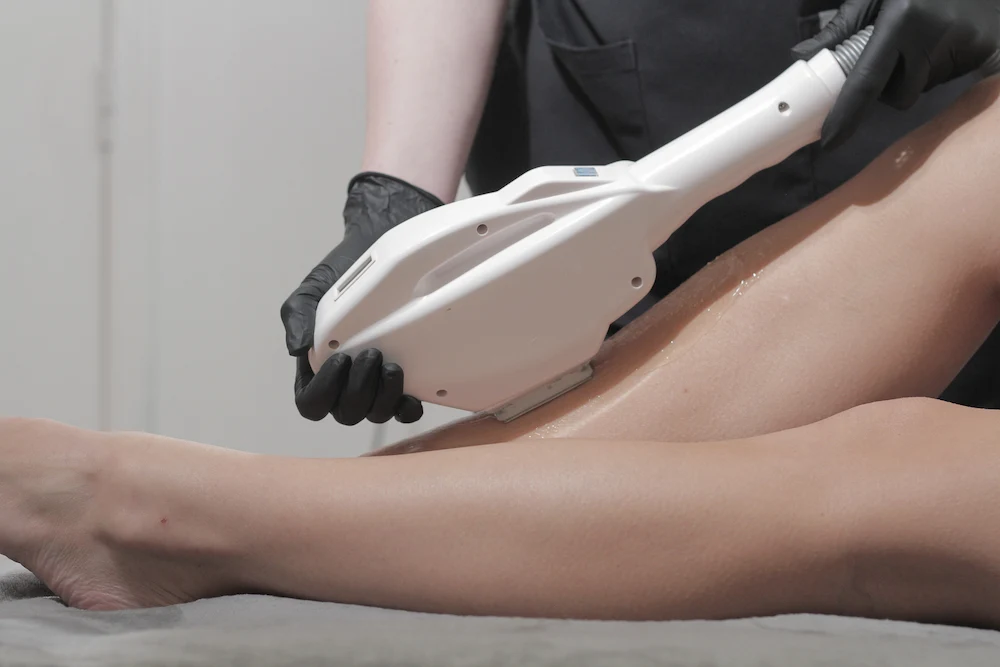
The hair shaft is how the energy gets down there. The pigment inside it absorbs the laser light and turns it into heat, and the shaft conducts that heat along its own length into the root. Get enough of it into the base and the structures that would have built the next hair stop working.
Two consequences follow immediately, and they are worth knowing before you book rather than after. The hair has to be present and attached, which is why waxing, threading and plucking are out for weeks beforehand while shaving is positively encouraged. And the hair has to be dark, because the whole mechanism runs on pigment — grey, white, true blonde and most red hair have nothing for the light to grab, and no machine on the market changes that.
The local case
Shaving is rougher on skin here than most people admit
A lot of the people who book this are not chasing smooth legs for a holiday. They are tired of what removing the hair keeps doing to the skin.
A central Alberta winter leaves the skin barrier in poor shape by default: cold outside, bone-dry heated air inside, and not much humidity in any month. Now drag a blade across it every second morning. The result is the pattern we see constantly — a neck that is permanently slightly inflamed, an underarm that stings when deodorant goes on, a bikini line that produces a new ingrown every week and leaves a brown mark behind when it clears.
Those marks are the part people underestimate. An ingrown hair is a small contained inflammation, and inflamed skin makes pigment. Clear it up and you are often left with a freckling of dark spots that outlasts the bump that caused it by months. Reducing the hair reduces the ingrowns, which stops new marks forming — and it is a far more reliable route to an even bikini line or neck than treating the marks one at a time.
Why here
Central Alberta is an unusually easy place to run a course
The single biggest reason courses go wrong elsewhere is sun on the treated area between sessions. Here, the calendar does most of that work for you.
Eight months of the year you are covered anyway
The rule is no sun and no tan on the area, before or after. In a place where legs, arms and back live under clothing from October to May, keeping that rule takes no discipline at all. It is the reason we push people towards a winter start rather than a spring one.
Start in the cold and you finish before the lake
Sessions sit weeks apart because they have to follow the hair growth cycle, so a full course takes most of a year. Beginning it once the snow arrives is what puts you at the far end of it by the time Sylvan Lake is worth going to.
Snow glare still counts as sun
This is the one people get wrong. A bright February day on an open field or a ski hill puts real ultraviolet on any exposed skin, reflected as well as direct. Faces and necks are the areas that get caught, so those keep sunscreen through the winter too.
Seven days a week on Timberlands Drive
Courses fail when appointments slip, and appointments slip when the clinic is only open when you are at work. We are open every day of the week here, which makes a course realistic for shift workers and for anyone driving in from Lacombe, Blackfalds, Innisfail or Ponoka.
Indications
What is it good for?
Dark hair anywhere it is not wanted — and, just as often, the state the shaving has left the skin in.
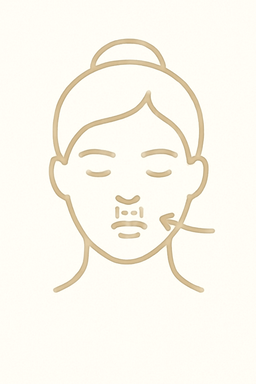
Hormonal hair growth on the face is worth mentioning at the consultation, because a condition that keeps producing new follicles changes what a course can promise. Marks left behind by old ingrowns often need their own treatment once the hair is under control. The full Red Deer menu is on the clinic page, and the areas we treat are set out on the laser hair removal page.
Choosing between them
Laser or dermaplaning, if the hair is on your face
These two get confused constantly, because both are sold as facial hair removal. They do not treat the same hair, and picking the wrong one is the most common disappointment we hear about.
Laser hair removal
- For coarse, dark, pigmented hair — chin, jaw, upper lip, neck
- Reduces permanently, over a course of sessions
- Does nothing at all to pale vellus fuzz
- Needs a patch test, and skin tone affects the settings
- Shave between sessions; never wax or pluck
Dermaplaning
- For the soft pale down that covers most of a face
- Removes it on the day; it grows back unchanged
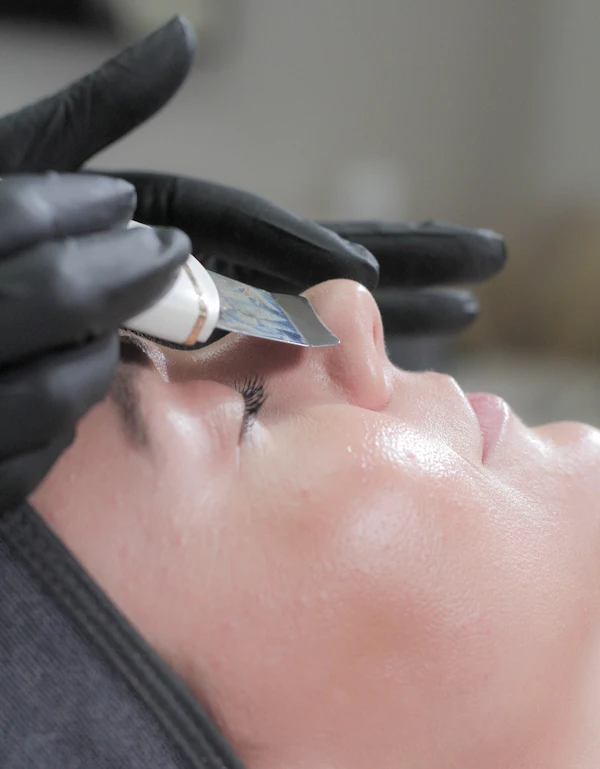
- Also takes off the dead surface layer, which laser does not
- Works on any hair colour and any skin tone
- Repeated on a rhythm rather than worked through as a course
Dark and stubbly is a laser problem. Soft, pale and visible in low sun is a dermaplaning problem. A good many faces have both, and in that case the sensible order is to run the laser course first and use dermaplaning afterwards to keep the finish, rather than the other way round.
Getting ready
Pre & post treatment
These apply to every appointment in the course, not only the first one. The two that actually cost people results are plucking between sessions and arriving with colour on the skin.
Before each appointment
- Four weeks: nothing waxed, threaded, plucked or epilated on the area. Pull the root out and there is nothing left for the light to travel down.
- The night before or that morning: shave the area close and clean. Shaving is the one method that keeps the root exactly where we need it.
- On the day: arrive with bare skin — no deodorant on underarms, no body lotion, no fake tan, no makeup over anything on the face.
- Tell us: about any medication that raises sun sensitivity, any recent tanning of any kind, and any history of cold sores if we are treating the upper lip.
For a few days after
- The first day or two: the area looks like mild heat rash, with small raised bumps around each follicle. That reaction is the treatment having worked, and it settles on its own.
- Two days: no hot tub, no sauna, no gym session hot enough to leave the area sweating, and no very hot showers.
- One to three weeks: treated hairs push out and drop away. That is shedding, not regrowth. Do not help it along with tweezers.
- Until the next session: shave whenever you like, keep the area covered outdoors, and use sunscreen on anything that is not.
Also on Timberlands Drive
Treatments that work well around this one
- Dermaplaning Facial in Red Deer — for the pale fuzz that laser cannot see
- Hydro Facial in Red Deer — useful on a face that shaving keeps irritating
- Blue Light Therapy in Red Deer — for inflamed follicles and persistent folliculitis
- Scalp Microneedling in Red Deer — the opposite problem, and we treat that too
- Laser hair removal across You Glow Aesthetics — every area we treat, in detail
- Our Red Deer clinic — hours, team and everything else we run here