You notice more hair on the pillow, in the shower drain, and on the brush just as the leaves turn, and the first question is whether this is normal or the start of something. The honest answer is that it depends on how long it lasts, how it looks on your scalp, and what else has changed in your life. This guide helps you sort a passing shed from persistent thinning, shows what to track, and explains where scalp microneedling may fit as a supportive option.
It is not a retelling of how the treatment works. If you want that, our existing articles on what scalp microneedling can realistically do for regrowth and on whether your scalp is behind thinning hair cover it. Here the focus is the fall question: what is happening, what to check first, and what to do in the meantime.
Key Takeaways
- A higher-than-usual shed that eases on its own is a different situation from thinning that keeps progressing, and a dated record helps you tell them apart.
- Thyroid, iron, medications, stress, and recent illness are worth raising with a doctor before you put money into any hair treatment.
- Sudden, patchy, painful or heavy loss should be seen by a doctor or dermatologist promptly.
- You Glow describes scalp microneedling as a way to support the scalp and follicles, used alongside finding the cause rather than instead of it.
- Dry indoor air and winter headwear affect scalp comfort, so gentle care matters even when you are not treating anything.
Is Fall Shedding Real?
Many people report shedding more in the autumn months, and You Glow’s Ottawa scalp microneedling page says the same, adding that it is usually temporary. We want to be careful here: we could not find authoritative dermatology guidance that confirms a firm seasonal cycle in humans, so the fair summary is that some people notice it and the evidence is limited.
What the American Academy of Dermatology does say is more useful. Its page on hair loss versus hair shedding explains that shedding 50 to 100 hairs a day is normal, and that significantly more is called excessive shedding. It notes that this kind of shedding often follows a stressor, typically becomes noticeable a few months afterward, is usually temporary, and tends to settle as the body readjusts. It also says a dermatologist can tell shedding from hair loss, and some people have both. That timing matters: what looks like a fall shed may be an echo of a summer illness, a hectic stretch at work, or a change in routine.
Normal Shedding or Something to Check?
Hair counts are hard to judge from a hairbrush, so patterns tell you more than numbers. The table below is a general guide for sorting what you see, not a diagnosis.
| What you notice | Often fits a passing shed | Worth a professional look |
|---|---|---|
| Where it happens | Spread evenly across the scalp | A widening part, a receding hairline or a thin crown |
| How long it lasts | Eases over a few months | Keeps going without easing |
| Scalp surface | Looks and feels as usual | Redness, scaling, itching, pain or sore spots |
| Pattern | General thinning that feels even | Smooth or bald patches, or sudden heavy loss |
| Hair itself | Same texture, just more falling | Strands visibly finer and shorter over time |
If anything in the right-hand column describes you, see a doctor or dermatologist. Sudden, patchy, painful, or heavy loss in particular should not wait for a season to pass.
What to Track Before You Decide Anything
A simple record turns a vague worry into information you can show a professional. Start today and keep it up for a few months.
- Photos: the part, the hairline, and the crown, taken in the same light and position each time.
- Shedding timeline: the date you first noticed more hair and whether it is rising, steady or easing.
- Life events: illness, fever, surgery, childbirth, a major stressor, a change in diet or weight.
- Medications and supplements: anything started or changed in the months before.
- Scalp symptoms: itch, flaking, tenderness or redness, and what seems to trigger them.
- Hair care changes: new products, tight styles, coloring, heat tools, or more hat wearing.
Photos matter most. Progress at the crown especially is nearly impossible to judge in a bathroom mirror, and the Calgary SE and Red Deer scalp pages both ask clients for a starting photo for the same reason.
Medical Causes Worth Checking First
Hair is sensitive to what is going on in the rest of the body, so a doctor is usually the right first stop. Common areas to discuss include thyroid function, iron levels, medications, stress, and a recent illness. None of this is a diagnosis, and several of these can overlap.
The American Academy of Dermatology page above lists high fever, surgery, illness, childbirth, significant weight loss, stopping birth-control pills, and prolonged stress among the stressors that can precede excessive shedding. It also advises talking with your doctor if you suspect a medication is involved, because stopping a drug suddenly can cause serious side effects. Please do not change any prescription on your own.
You Glow’s Red Deer page says something similar in its own words: its team cannot tell you why thinning is happening, and a blood test ruling out the common medical causes is worth having before starting a long course. Its Calgary SE page adds that if a cause is hormonal, nutritional, thyroid-related, or medication-related, scalp treatment works alongside it and does not remove it.
Where Scalp Microneedling May Fit
Once a medical cause has been identified, or while you are working on one, a scalp-focused treatment can support your care. You Glow’s scalp microneedling treatment page describes it as a non-invasive treatment that uses ultra-fine needles to create tiny micro-channels in the scalp, aiming to support follicles and the scalp environment. Results vary by individual, and nobody can promise regrowth.
It tends to suit some situations better than others. The clinic pages say it is better suited to thinning where follicles are still present than to areas that have been smooth for years, and that hair loss after childbirth, illness or severe stress often recovers by itself. In that case, treatment may support recovery but is not the reason the hair returns. A consultation is where that judgement is made.
| Situation | How scalp microneedling may relate |
|---|---|
| Short-term shed after a stressor | Often settles on its own; treatment, if any, is supportive and discussed in consultation |
| Gradual thinning, follicles still present | The kind of concern the treatment is designed to support |
| Smooth areas with no hair for years | Unlikely to help; medical assessment is the better first step |
| Patchy, painful, or sudden loss | See a doctor or dermatologist first |
| Active scalp condition or open sores | Disclose it; treatment may need to wait |
Thinking About a Consultation This Fall?
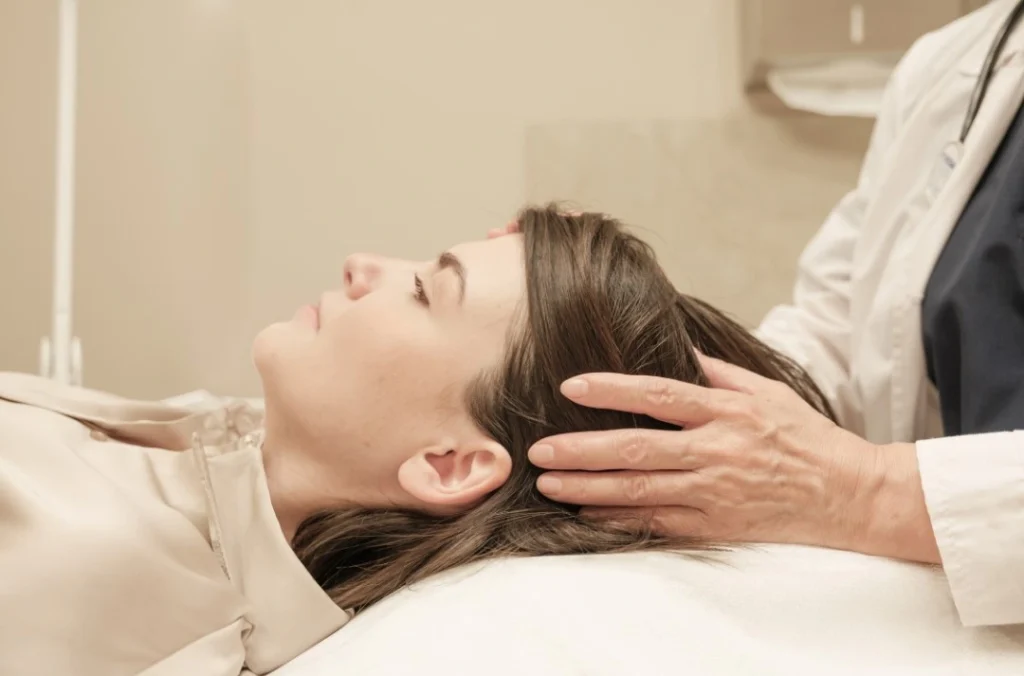
If your shed has lasted a while, or you have been tracking a part that keeps widening, a free consultation is a low-pressure way to have your scalp assessed. Bring your photos and notes.
You Glow’s team can look at your scalp, explain what the treatment may and may not do for your situation, and tell you if a medical check should come first.
What to Expect From a Scalp Visit
The treatment page lists prep and aftercare in plain terms. Clients are asked to arrive with a clean scalp, free of hairspray and gels, to pause topical growth products such as minoxidil for a short window beforehand, and to avoid colouring or chemical treatments in the days before. They are also asked to mention any scalp conditions, open sores or recent hair treatments.
Afterward, mild redness, tenderness or tightness is described as normal and temporary. The page advises waiting before washing, then using lukewarm water and a gentle shampoo, avoiding heavy sweating and heat for a short time, and protecting the scalp from direct sun with a loose, clean hat. Exact timing and the number of visits are set by your provider based on your assessment,, so confirm them at your consultation.
Which Clinics Offer It
Availability varies by clinic. Scalp-focused pages exist for four of our clinics, and each describes its approach a little differently.
| Clinic | What its page describes |
|---|---|
| Ottawa | Scalp microneedling at the McCarthy Road clinic; notes scalp condition is considered before starting |
| Calgary SE | Scalp microneedling at the Macleod Trail clinic; numbing cream is used first |
| Red Deer | Scalp microneedling at the Timberlands Drive clinic; consultation questions cover history and causes |
| Vancouver | A broader hair restoration protocol that includes microneedling among other components, at the West Broadway clinic |
If you are in Calgary NW, Toronto or Winnipeg, we have not published a scalp page for those clinics, so please confirm availability when you book.
Scalp Care in Dry, Cold Air
Fall brings heating season, and the scalp feels it as much as your face does. You Glow’s Ottawa page points to months of indoor heat and winter hats as a combination that can leave the scalp dry and irritated. That doesn’t mean cold air causes hair loss, but a comfortable scalp is easier to notice and treat.
- Use lukewarm, not hot, water and a gentle shampoo you tolerate well.
- Avoid scratching an itchy scalp, which can make irritation worse.
- Keep hats and toques clean and avoid very tight fits.
- Note flaking or itching in your tracking log, since persistent symptoms are worth a professional opinion.
If dryness, flaking, or tightness keeps returning, You Glow’s page on chronic dry scalp is a useful next read.
Ready to Make Sense of Your Shed?
If your hair seems to be falling out more than usual this season, the most useful step is to document it and have a professional look into the cause. You Glow Aesthetics is happy to review your scalp, talk through whether scalp microneedling is a sensible supportive option for you, and say plainly if it is not.
Book a free consultation at your nearest clinic for a personalized plan, with no pressure and no obligation. Book a Free Consultation
Frequently Asked Questions
Is hair shedding worse in fall?
Some people say so, and the pattern is commonly reported, but we could not find authoritative guidance confirming a firm seasonal cycle, so the evidence is limited. Excessive shedding often follows a stressor by a few months and tends to settle. If it doesn’t ease, or comes with other symptoms, see a doctor.
How many hairs is it normal to lose a day?
The American Academy of Dermatology says shedding between 50 and 100 hairs a day is normal. Counting is unreliable, so watch the trend instead: sustained hair loss, visible thinning, or patchy areas are signs worth raising with a doctor or dermatologist, not a single heavy brushing day.
Should I see a doctor before booking scalp microneedling?
If your loss is sudden, patchy, painful, or heavy, yes, see a doctor or dermatologist first. For gradual changes, it is sensible to ask about thyroid, iron, and medications as well. Our team can discuss your history at a consultation, but they do not diagnose medical causes.
Can scalp microneedling stop seasonal shedding?
No treatment can promise that. Shedding after a stressor or illness often settles on its own, and scalp microneedling, if suitable for you, may support scalp and follicle health. Whether it makes sense depends on your pattern, cause, and goals, so it starts with an assessment.
Is scalp microneedling available at every You Glow clinic?
No. Scalp microneedling pages exist for Ottawa, Calgary SE, and Red Deer, and Vancouver has a hair restoration page with its own protocol. Availability varies by clinic, so confirm with your preferred location when booking, especially for Calgary NW, Toronto, or Winnipeg.