Somewhere in mid-winter, you look in the mirror, and your skin looks tired. Your cheeks feel rough, foundation clings to dry patches, and even a good moisturizer seems to sit on top instead of sinking in.
This guide helps you decide whether microdermabrasion is the right fix for a dull winter face, how it compares with other surface options, and how to book and prepare for it sensibly.
Key Takeaways
- If you can feel the problem with a fingertip, microdermabrasion is likely the right tool; if you can only see it, another treatment may fit better.
- It uses no acid, light, or heat, and you may look a little pink for an hour or so.
- Pause retinoids, acids, and strong exfoliants before, and do not stack two exfoliation methods in the same week.
- It is offered at selected clinics, and sunscreen still matters all winter.
Why Winter Leaves Skin Dull, Rough and Resistant to Moisturizer
The outermost layer of your skin is made of dead cells that are meant to shed gradually and invisibly. When shedding slows, those cells hang around, and the surface scatters light instead of reflecting it, so the face reads flat or grey.
Winter is a classic trigger. Our Red Deer and Ottawa clinics both point to cold, dry air outdoors and constant indoor heating as slowing that shedding, so the surface layer thickens and feels rough. That layer can also act as a small barrier, so serums have to work through it, and makeup sits unevenly on top.
It is a texture problem, not a sign that you are doing something wrong. If your skin also feels tight or sensitive, our guide to dry, dehydrated, and damaged winter skin explains how the three differ.
How Microdermabrasion Clears the Dull Layer
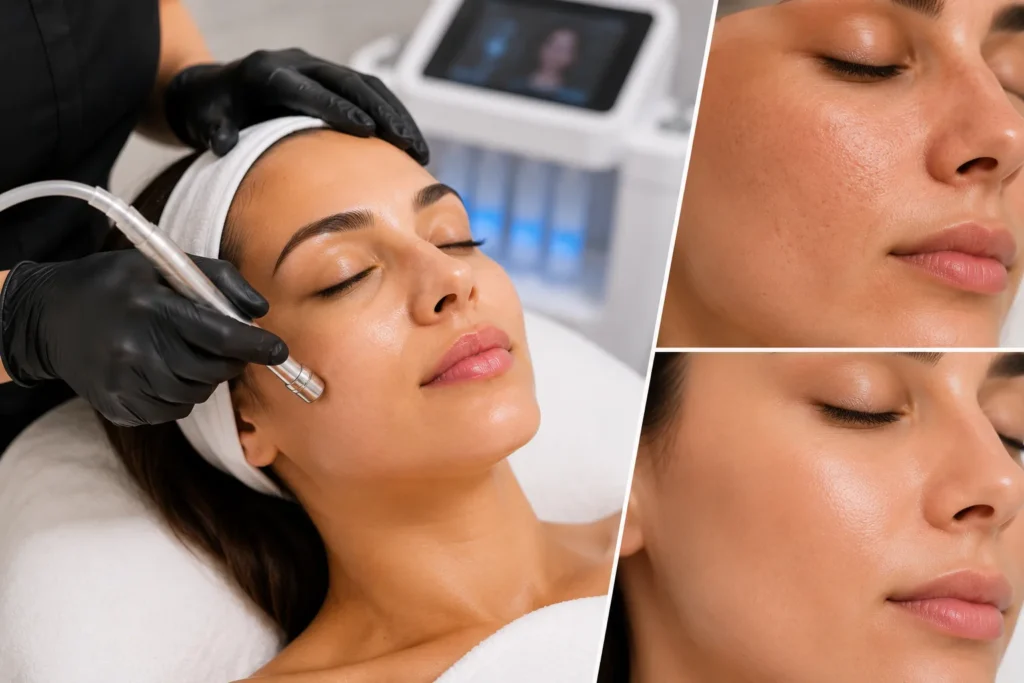
Microdermabrasion is a gentle cosmetic treatment that uses a specialized device to exfoliate the outer layer of dead skin cells. At our clinics, the tool is a wand tipped with diamond grit, with suction running through the same handpiece. The tip buffs the loosened cells away, and the suction lifts them off instead of pushing them around.
Nothing is dissolved, injected, or heated. There is no acid or light involved, and the depth is adjusted to suit your skin, including the tip grade, suction strength, and number of passes.
Because the work stays on a layer that was already dead, there is no wound to heal. With the dead layer cleared, the products you already own can reach the skin they were meant for, which is why many people find their routine seems to start working again.
Dull, Dry or Dehydrated? Matching the Fix to What You Feel
Different winter complaints need different tools. Our clinics use a simple test: if you can feel it with a fingertip, the wand is probably the right tool, and if you can only see it, it probably is not.
| What you notice | Often a better fit |
|---|---|
| Rough to the fingertip, foundation clings | Microdermabrasion, which removes the thickened dead layer |
| Tight, thirsty and dull | HydroFacial, since dehydration on its own is better answered by hydration |
| Brown marks, redness or uneven colour | A peel or light-based treatment, because this is colour rather than texture |
| Fuzzy under foundation | Dermaplaning, which removes fine hair along with the dead layer |
| Lines or scars you can feel as dips | Microneedling, which reaches past the surface |
Our comparison of microdermabrasion versus microneedling explains the surface-versus-depth difference in more detail.
Can’t Tell Whether Your Dullness Is Surface-Level?
Rough, flat and grey can come from a thickened surface, from dehydration, or from uneven tone, and each calls for a different treatment. Feeling the skin is the fastest way to tell.
Write down your main complaint and what is on your shelf, then have an esthetician feel your skin and name the right treatment in a free consultation. It may turn out to be the wand, a HydroFacial or something else.
Wand, Blade or Fluid? Choosing a Surface Treatment
Several treatments work on the same surface layer, and plenty of clients alternate them across the year. Microdermabrasion abrades with grit and suction and suits rough, thickened, or congested skin, while dermaplaning uses a sterile blade and suits fine hair and a smooth makeup finish. A HydroFacial uses fluid and suction and is the gentler choice for thirsty or reactive skin.
Do not stack two forms of exfoliation in the same week, and several clinics ask for a fortnight between this and any peel, laser or needling session. If you cannot tell which camp you are in, that is a two-minute answer at a consultation.
What an Appointment Feels Like and How to Prepare
Most people describe a light scratching or sanding feeling with a gentle pull from the suction. It is comfortable, and there is no downtime. You may be warm, tight, or pink for an hour or so, and the American Academy of Dermatology’s microdermabrasion FAQs note that pinkness or slight swelling tends to disappear within a day.
| When | Do | Avoid |
|---|---|---|
| 3 to 5 days before | Pause retinoids, AHA/BHA acids, and strong exfoliants; some clinics ask for five days off retinol | Scrubs, cleansing devices, waxing the face, tanning |
| Appointment day | Arrive makeup-free, and tell us about breakouts, sunburn, cold sores, or recent procedures | Heavy creams or serums |
| First 24 to 48 hours | Use a gentle, fragrance-free moisturizer | Hot showers, saunas, heavy sweating |
| 3 to 5 days after | Keep products simple | Retinoids and exfoliating acids |
| Every day | Wear broad-spectrum sunscreen | Skipping SPF because it is winter |
Skin tends to absorb unusually well afterwards, so our Calgary SE and Calgary NW teams suggest plain and hydrating rather than potent, and not the evening to try a strong new serum. Ask your clinic when makeup suits your skin; our Calgary SE team says it is fine the same day.
Why sunscreen still matters in winter
The new surface is more sun-sensitive than the one that came off, and our Red Deer and Calgary NW clinics note that snow and altitude can send surprising amounts of light back at your face. Choose broad-spectrum sunscreen with SPF 30 or higher, as the American Academy of Dermatology recommends, and wear it daily.
How Often to Book Through the Dry Months
Skin regenerates its surface continuously, so there is no single fixed schedule. Our Ottawa clinic recommends every two to four weeks while you work on texture, then monthly to maintain. Our Red Deer and Calgary SE clinics describe settling into a rhythm every few weeks through the drier half of the year, then leaving it alone in summer.
The American Academy of Dermatology adds two honest points: most people need a series of treatments to see results, and the results tend to be temporary, so follow-up treatments are usually needed. Your own plan depends on your skin, your goals, and how it responds, so it is set at consultation.
Where to Book, and How Winter Differs by City
Microdermabrasion is offered at selected clinics rather than all seven. These are the clinics with dedicated pages, along with the local winter factors each describes.
| Clinic | Local winter factor described | Booking page |
|---|---|---|
| Red Deer | Dry air indoors and out, Chinook swings, hard hats and helmets | Red Deer |
| Calgary SE | Hard-water residue and furnace-dried air, as that team describes it | Calgary SE |
| Calgary NW | Flaky cheeks with a congested centre after chinooks | Calgary NW |
| Ottawa | Cold, dry air plus constant indoor heating | Ottawa |
For Vancouver, Toronto and Winnipeg, availability varies by clinic, so please confirm when you book.
Who Should Ask First
Microdermabrasion is gentle, but it is not for every skin on every day. Active eczema, rosacea in a flare, a cold sore, or fresh sunburn are reasons to wait, and active breakouts or severe inflammation are not a good match.
The American Academy of Dermatology advises seeing a dermatologist first if you have a mole or spot that is growing, bleeding, or changing, have taken isotretinoin within the past six months, or scar easily. Tell your provider about pregnancy, medications, and medical conditions too, and take medical questions to your doctor. It also will not tighten sagging skin or change deeper pigmentation.
Frequently Asked Questions
Does microdermabrasion hurt?
No, it is described as comfortable. Most people feel a light scratching or sanding sensation with a gentle pull from the suction, and the depth can be adjusted for your skin. Tell your provider if anything feels uncomfortable. You may look a little pink for an hour or so, then carry on with your day.
How is this different from the scrub I use at home?
The main differences are depth and control. A scrub moves loose particles across the surface with whatever pressure your hands apply. The wand abrades at a level chosen for your skin, and suction pulls the material off the face instead of grinding it back in.
Can I have it before an event?
Our Calgary SE team calls it the treatment on its menu; it is most comfortable doing close to a date, since you may be only slightly pink for an hour. Still, leave a couple of days rather than none, and avoid making your first session the day before a wedding. Mention your date at booking.
Do I still need sunscreen if winter days are grey?
Yes. Freshly exfoliated skin is more sun-sensitive, and snow and altitude can reflect light back at your face. Apply broad-spectrum sunscreen every morning, including on cloudy days. Skip new strong serums for a few days, and avoid direct sun while your skin settles.
Is it suitable if I have sensitive skin or took isotretinoin?
Because no acid, heat, or light is involved, some of our clinics position it for reactive skin, but very sensitive skin, rosacea, or active acne should check with a provider first. Eczema, rosacea in a flare, or cold sores mean waiting. If you have taken isotretinoin within the past six months, the American Academy of Dermatology advises seeing a dermatologist before treatment.
Give Your Winter Skin a Fresh Start
Dull winter skin is not a failure of your routine. It is a normal response to cold, dry air, and often it simply needs a clearer surface to work with.
If you would like to see whether microdermabrasion suits you, plan your winter microdermabrasion rhythm with the team at You Glow Aesthetics. We will look at your skin, talk through your goals, and help you decide what makes sense for the season ahead.