About the treatment
The laser is looking for pigment, not hair
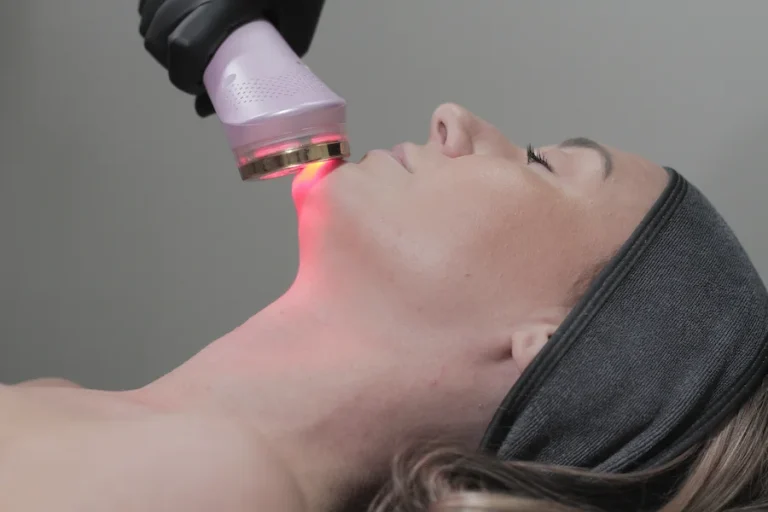
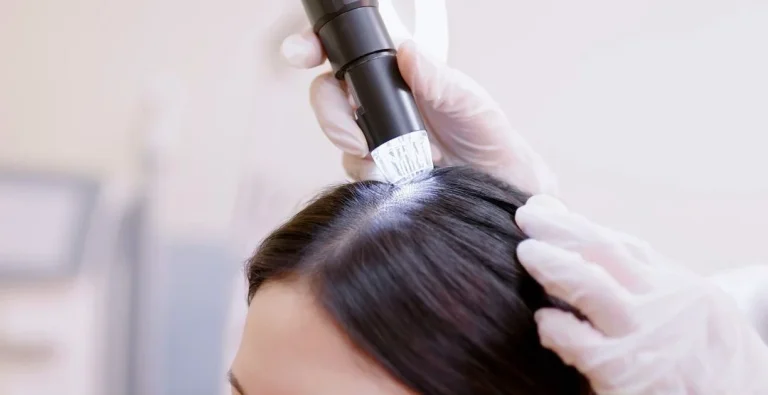
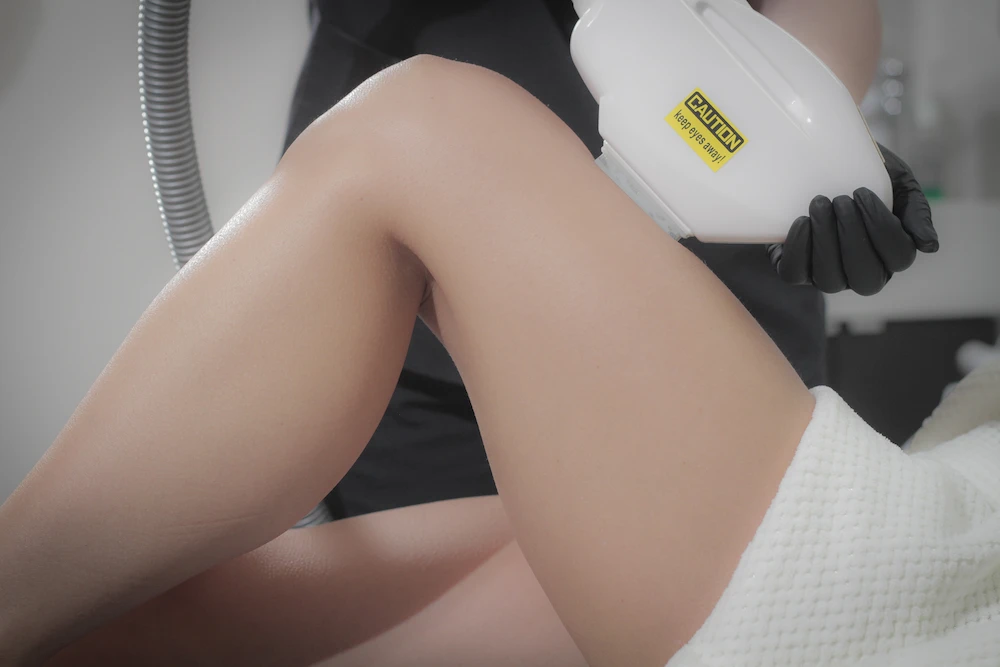
A pulse of light passes into the skin and is absorbed by the melanin in the hair shaft. That energy turns to heat, travels down the shaft to the follicle, and damages the structure that produces the hair. Surrounding skin, which holds far less pigment, is left alone.
That is the whole mechanism, and it explains everything else about the treatment: why it needs dark hair to work on, why the hair has to be attached to the follicle at the time, and why one appointment can only ever affect part of what is growing on you.
Sessions at our Macleod Trail clinic are quick — an upper lip is minutes, and even a large area does not take long. There is no downtime. Most people come in on the way somewhere else and carry on with their day.
How it works
Why nobody can do this in one visit
Hair does not grow continuously. Every follicle on your body is cycling through three phases independently of its neighbours, and only one of them can be treated.
Growing
The hair is attached to the follicle and packed with pigment. This is the only phase in which the light has a path to the target, and at any given moment only a fraction of the hairs in an area are in it.
Detaching
The hair separates from the base and the follicle begins to shrink. The pigment is still there but the connection is gone, so the heat has nowhere useful to travel. Treating now achieves nothing.
Resting
The follicle is dormant with no hair in it at all. There is nothing to absorb the light. These follicles will cycle back into growth over the following weeks, which is exactly what your next appointment is waiting for.
Six to eight sessions, four to eight weeks apart, catches each group as it comes round. The spacing is not a sales structure — it is the biology.
Areas
Where people actually book it
Almost anywhere except the area immediately around the eye. These are the requests we see most often in south Calgary.
Face and neck
Upper lip, chin and jawline, and the sides of the neck. Small areas, quick appointments, and the ones where the daily maintenance people are trying to escape is most relentless. Facial hair is also the most likely to be hormonally driven, which affects how we plan the course.
Underarms and bikini
The two areas where the return on a course is highest, because shaving there causes the most irritation, the most ingrown hairs and the most dark marks left behind. Underarms in particular tend to respond quickly.
Legs and arms
Larger areas and longer appointments, but the same course length. Full legs are the treatment people most often describe as having changed their routine rather than just their skin.
Back, chest and shoulders
Mostly men, and mostly areas that are awkward or impossible to manage alone. Coarse dark hair here usually has plenty of pigment for the laser to work with.
Indications
What is it good for?
Unwanted hair, and the damage that years of removing it another way leaves behind.
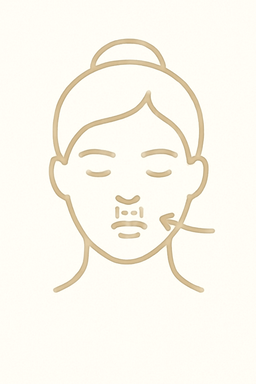
Fine, colourless facial down is a different problem and belongs to dermaplaning. The full list for south Calgary is on our Calgary SE clinic page.
Why here
Starting a course on a Calgary calendar
A course runs six to nine months. When you begin it decides how smoothly it runs, and here that is a real consideration rather than a marketing line.
Autumn is the sensible start
Begin in September or October and the course finishes comfortably before the weather turns and everyone goes outdoors again. Starting in May means fighting the sun through the middle of it.
Tan is the constraint, not temperature
Treated skin needs to be its own natural colour. Two weeks with no sun on the area before each appointment is the rule, and that is easy to keep in February and awkward in July.
Mountain sun counts
A ski weekend, a spring hike, an afternoon at the lake — UV at this altitude burns skin that felt cold the whole time. Tell us if you have been up west recently rather than letting us find out.
Work backwards from July
If Stampede or a summer holiday is the deadline you actually care about, count six sessions at four to eight weeks and pick your start date from that. Booking in June is booking late.
Getting ready
Pre & post treatment
Two rules do most of the work: shave, and stay out of the sun. The rest is detail.
Before each session
- Shave the area 12 to 24 hours ahead. Hair above the surface only absorbs energy that should be going downwards.
- No waxing, plucking or threading for four weeks. These remove the root, and the root is the target.
- Two weeks with no sun, no tanning bed and no self-tanner on the area.
- Arrive bare: no deodorant, no lotion, no oil, no make-up on the zone.
- Pause retinoids and acids on that skin for three to five days.
After each session
- Redness and small raised bumps around the follicles for a few hours. That reaction is the treatment working.
- No heat for a day or two: hot showers, sauna, hot yoga, hard training.
- Hairs will appear to grow, then fall out over the next week or two. That is shedding, not regrowth.
- Shaving only between sessions. Nothing that pulls, however tempting.
- Sunscreen on the area daily for two weeks, and no direct sun on it.
Being straight with you
Three things we would rather say now
Reduction, not eradication
A completed course typically leaves you with a large majority of the hair gone and what remains finer and lighter. Calling it permanent removal overstates it. Calling it life-changing for your morning routine does not.
Blonde, grey and red hair will not respond
There is not enough pigment for the light to find, and no setting changes that. We will tell you at the consultation rather than sell you a package. It costs you ten minutes to find out.
Hormones can reopen the question
Pregnancy, menopause, thyroid changes and PCOS can all activate follicles that were dormant. That is not the treatment failing; it is new hair. Occasional top-ups keep it in hand.
Also on Macleod Trail
Treatments that work well around this one
- Dermaplaning in Calgary SE — for the fine facial down the laser cannot see
- Laser Tattoo Removal in Calgary SE — the same principle, aimed at ink instead of pigment in hair
- Hydro Facial in Calgary SE — for congestion left behind on a treated face
- Laser Lipo Cavitation in Calgary SE — body contouring, often booked alongside a leg course
- Laser hair removal brand-wide — how the treatment works across all our clinics