The question behind most microneedling bookings is not “will it work?” but “how will I look on Monday?” Recovery is usually modest, and it follows a fairly recognizable arc: a flushed first day, a blotchy day or two, some light flaking, then calm. The exact shape of that arc depends on you, so this guide describes common patterns rather than promises.
We have built it around what You Glow Aesthetics publishes on its own microneedling treatment page and clinic pages, plus guidance from the American Academy of Dermatology. It is a planning tool, not a substitute for the written aftercare your provider gives you.
Key Takeaways
- Recovery is a sequence of phases (flushed, blotchy, flaky, settled), and the length of each varies by person, depth, and area.
- Sun protection is the one instruction that stays on the list the longest, well past the point your skin looks normal.
- The most visible days are the first two or three, so schedule around them rather than hoping they will not show.
- Looking recovered is not the same as seeing results. Collagen changes build over weeks to months, so judging at one week tells you very little.
- Where this guide and your written aftercare differ, your provider’s version wins.
What Is Happening Under the Redness
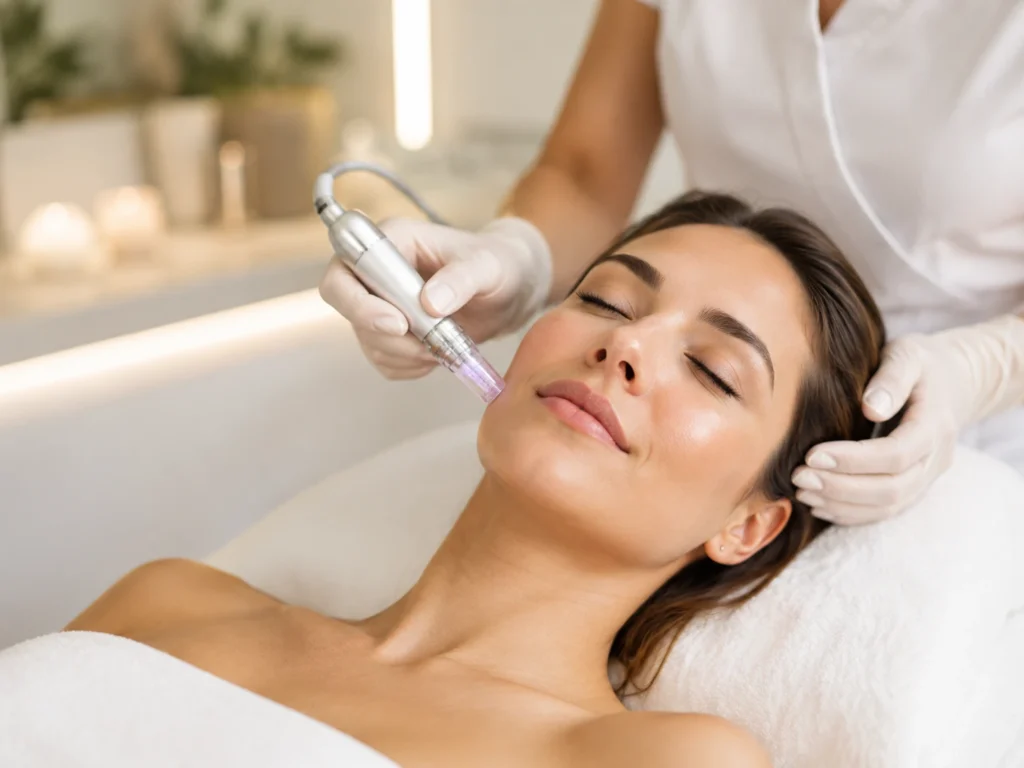
Microneedling uses a device with fine needles to create tiny, controlled micro-injuries. According to You Glow’s treatment page, this stimulates the body’s natural wound-healing response, which supports collagen and elastin production. The redness and warmth are visible signs of that response, not a sign something has gone wrong.
The American Academy of Dermatology describes downtime as minimal, with redness, a sunburn-like feeling, and swelling that usually disappear within a few days to a week. That broader range is worth keeping in mind next to the 24 to 72 hours on You Glow’s page. Both are general descriptions, and healing varies from person to person.
The Day-by-Day Recovery Timeline
A quick note on counting. Some clinic pages call the treatment day “day one,” while others start counting the next morning. Ask your provider how they count so the instructions you receive line up with the calendar.
Treatment day: warm, tight, and clearly pink
Many people leave looking flushed, with warm, slightly tight skin. You Glow’s city pages describe the first day as hot, tight, and visibly red, with nothing on the skin except what the clinic sends home with you. They also say to skip makeup on that day.
Plan a quiet evening. Keep the routine bland, avoid heat, and resist the urge to inspect the skin up close.
Day 1: the sunburn-like stage
The next morning, mild redness, warmth, and sensitivity are common. The You Glow treatment page lists these as normal and temporary, and says they usually subside within 24 to 72 hours. Cleanse and moisturize with mild, fragrance-free products, and use daily broad-spectrum sunscreen as directed.
Heat is the main thing to sidestep here. The treatment page asks clients to skip saunas, steam rooms, hot baths, and heavy workouts for 24 to 48 hours.
Days 2 to 3: blotchy, then flaky
Redness often fades to pink, sometimes patchy, and fine flaking can appear. The Winnipeg clinic page mentions light flaking around day three, and the treatment page says slight peeling or dryness typically resolves within a few days. Do not pick or scrub flaky patches. Let it shed on its own, and keep the barrier moisturized.
Some You Glow city pages say mineral makeup is fine from about day two if you need it. Confirm that with your provider, because it depends on how your skin responds.
Days 4 to 7: settling in
For many people, the skin looks close to normal by the end of the first week, though dryness or a faint pink cast can linger. The treatment page advises pausing retinoids, strong exfoliants, and acids for 3 to 5 days after treatment. Ask your provider exactly when to restart them, since the answer depends on the product and how your skin feels.
Week 2 and beyond: invisible repair
Your skin may look fully recovered, but that doesn’t mean sun sensitivity has disappeared. Some You Glow clinic pages ask for two weeks of daily sunscreen and no deliberate sun exposure after each session. The treatment page simply says to protect skin strictly with daily broad-spectrum sunscreen, so follow whichever timeline your written aftercare gives you.
The Winnipeg page describes collagen being laid down over the following weeks, with structural change showing up later. We return to that timing below.
Recovery Phases at a Glance
| Phase | What many people notice | Focus on |
|---|---|---|
| Treatment day | Warmth, tightness, visible redness | Only the products your clinic sent home; no makeup |
| Day 1 | Mild redness and sensitivity, often like a sunburn | Gentle cleanser, fragrance-free moisturizer, SPF, no heat |
| Days 2 to 3 | Pink or blotchy skin, possible fine flaking | Hands off flaky patches; hydration |
| Days 4 to 7 | Often close to normal; some dryness may linger | Ask when to restart retinoids, acids, and exfoliants |
| Week 2 and beyond | Skin looks settled; collagen response continues | Daily SPF and patience; follow your written aftercare |
Treat the table as a rough map. Deeper settings, larger areas, and sensitive skin can stretch each phase, while lighter treatments may move through them faster.
Book Your Recovery Plan, Not Just Your Appointment
The easiest way to make downtime feel like no big deal is to plan it before you are in the chair. In a free consultation, your provider can talk through your skin, the area you want treated, and the calendar you are working around, then tailor the aftercare to that.
What Helps and What to Avoid
These are general patterns drawn from You Glow’s published guidance and general dermatology advice. They are not individual medical advice, so confirm specifics with your provider.
| Topic | What helps | What to avoid |
|---|---|---|
| Sun | Daily broad-spectrum sunscreen; covering up outdoors | Tanning, sunbathing, long exposure to direct sun |
| Makeup | A clean, bare face on treatment day; ask when to restart makeup | Makeup on the first day, and heavy products on flaky skin |
| Active ingredients | Mild, fragrance-free cleanser and moisturizer | Retinoids, acids and strong exfoliants for 3 to 5 days, or as your provider instructs |
| Sweat and heat | Light activity once cleared by your provider | Saunas, steam rooms, hot baths and heavy workouts for 24 to 48 hours |
| Flaking or dryness | Barrier-supporting moisturizer | Picking, scrubbing or peeling flakes |
Because aftercare can differ by person and depth, treat your provider’s written instructions as the final word. The preparation side is covered separately in our guide on how to prep your skin for microneedling, so we will not repeat it here.
When to Call the Clinic
Normal recovery should feel like a mild sunburn that gradually eases. Contact your provider if what you are experiencing does not fit that picture, for example:
- Pain that is unusual for you or getting worse rather than better.
- Redness that is spreading or intensifying instead of fading.
- Signs that could point to infection, such as increasing swelling, warmth, pus or a fever.
- Blisters, open areas, or anything that simply does not look like the pattern you were told to expect.
If something is severe or you feel unwell, seek medical care promptly rather than waiting for a callback. You Glow’s clinic pages also ask clients to mention cold sores, active breakouts, tendencies toward raised scarring, and certain acne medications before treatment. If you have a history of cold sores, tell your provider before treatment so they can advise you. The American Academy of Dermatology also lists active infections and certain skin conditions as reasons to wait, which is why its microneedling overview is worth reading.
Scheduling Around Events, Work and Weekends
The most noticeable stage is usually the first two or three days, so build the schedule around that stretch. A late-week appointment can fall on a weekend, as the Calgary NW clinic page suggests. The Winnipeg page notes that some clients choose a late-afternoon slot.
| Situation | Planning idea |
|---|---|
| Important meeting or photos | Count back at least a couple of weeks and ask your provider where a session fits |
| Busy work week | Consider a Thursday or Friday appointment, where clinic hours allow |
| Travel or sunny holiday | Avoid scheduling a session right before heavy sun exposure |
| Hard-training weeks | Plan lighter workouts for the first 24 to 48 hours |
Fall and Winter: Easier Sun Management, Same SPF
Autumn and winter can make microneedling easier to plan, because there is generally less UV exposure than in summer. You Glow’s Toronto page suggests starting in the lower-light half of the year, and the Winnipeg page notes that winter has the least UV to worry about. That is a helpful tailwind, not a free pass.
Snow reflects UV, car windows do not block all of it, and heated indoor air can dry out healing skin. Daily sunscreen still applies, and a plain moisturizer matters more when the air is dry. Our overview of how seasonal weather affects skin concerns and treatment results goes deeper on the climate side.
Local clinic pages carry their own tips if you are near one: microneedling in Toronto, Calgary NW, and Winnipeg each cover the practical details for that city. Microneedling is also available at the other You Glow clinics, so confirm your preferred location when you book.
When Do Results Show Up?
This is where recovery and results part ways. Calm, normal-looking skin at the end of week one does not mean the work is finished. You Glow’s city pages describe a glow in the first few days, then a quieter stretch, with structural change often described as showing up around two to three months later. The Winnipeg page frames the full result of a session at about twelve weeks.
The American Academy of Dermatology says you may see improvement within a few weeks, with full results usually taking several months, and notes that scars can require more than one session. You Glow’s treatment page likewise says a series of sessions, spaced a few weeks apart, is usually recommended, with the number set in consultation. For scar-specific context, see our article on microneedling and acne scars, and for general timing across treatments, how long non-invasive treatments take to show results.
Results vary by skin type, depth, number of sessions, sun exposure, and aftercare, and we don’t guarantee any outcome.
Plan Your Recovery With You Glow
If you are weighing microneedling and want to know how recovery fits your calendar, You Glow Aesthetics offers free consultations to discuss your skin, goals, and schedule before anything is booked. Your provider can personalize the treatment plan and aftercare for your situation, so you don’t have to guess.
Ready to start the conversation? Book your free microneedling consultation and choose the clinic that suits you best.
Frequently Asked Questions
How long does microneedling redness last?
Many people find the redness mild and short-lived. You Glow’s treatment page says redness and sensitivity similar to a sunburn usually subside within 24 to 72 hours, and the American Academy of Dermatology describes reactions that usually disappear in a few days to a week. Your own timeline depends on needle depth, area, and skin sensitivity.
Can I wear makeup after microneedling?
Not on the day of treatment, according to You Glow’s city pages, which also say mineral makeup is fine from around day two if needed. Because skin responds differently, confirm the timing with your provider. Keep products gentle while the skin is flushed or flaking.
When can I exercise or use a sauna?
You Glow’s treatment page says to skip saunas, steam rooms, hot baths, and heavy workouts for 24 to 48 hours after treatment. The clinic wants you to avoid sweating on healing skin, so follow the exact window in your written aftercare and ask your provider about returning to your usual routine.
Is it safe to book microneedling if I get cold sores?
Tell your provider before treatment. You Glow’s pages ask clients to mention cold sores, and the Winnipeg page says active breakouts, cold sores, or a recent peel mean waiting rather than ruling treatment out. Your provider can assess whether it is appropriate and advise on timing for your situation.
Why does my skin look fine but I see no results yet?
That is a common pattern. Visible recovery is quick, but collagen remodelling takes longer. You Glow’s pages describe structural change building over roughly two to three months, and many people need a series of sessions. Judging at one week usually tells you very little, and results are never guaranteed.