Your skin felt fine in September. Now it feels tight after every shower, your moisturizer disappears by mid-afternoon, and makeup catches on patches you never noticed before.
This guide helps you decide whether a HydroFacial is the right move against heating-season dryness, what it can realistically do, and how to keep the effect from fading in a few days.
Key Takeaways
- A HydroFacial exfoliates with fluid and suction rather than grit, so it is often considered when scrubs or stronger peels feel like too much.
- Dryness that keeps itching, cracking, or flaring despite gentle care deserves a doctor’s or dermatologist’s opinion, not just a facial.
- One session will not fix deep concerns such as indented scars or deeper pigment.
- Gentle showers, a mild cleanser, and moisturizer on damp skin protect your results between visits.
Why Your Skin Feels Parched Once the Heat Comes On
Your outer skin barrier helps hold water in. When the surrounding air is very dry, more water tends to escape, and the surface can feel rough, tight, or flaky.
Winter stacks the odds. Cold outdoor air holds little moisture, and heating it indoors can leave humidity low. Add long hot showers, wind on the commute, and the occasional panic scrub, and the barrier can fray a little. Winnipeg and Ottawa winters are a textbook case, with very dry outdoor air and indoor heating that leaves little moisture behind.
None of this means something is wrong with you. It is a common seasonal pattern, and it responds better to gentle care than to aggressive fixes. For a wider look at the different kinds of winter dryness, our guide to dry, dehydrated and damaged winter skin goes deeper.
Dryness Signals Worth Noticing: A Quick Self-Check
Not every tight, itchy patch is the same problem. This table matches what you may be noticing with the person who is best placed to help first.
| What you notice | Who to talk to first |
|---|---|
| Tight, rough, or flaky skin that moisturizer no longer calms | Your esthetician. Dry skin is a listed HydroFacial concern. |
| Dull skin where products seem to sit on top | Your esthetician. Dullness and congested pores are also listed concerns. |
| Stinging, flushing or raw patches | See your esthetician or doctor before adding anything strong. |
| Persistent redness, itching, cracking or bleeding | Your doctor or dermatologist, since dryness can have medical causes. |
This table is a starting point, not a diagnosis. If your skin feels sore or keeps flaring, a professional should look at it.
How a HydroFacial Works on Heat-Weary Skin
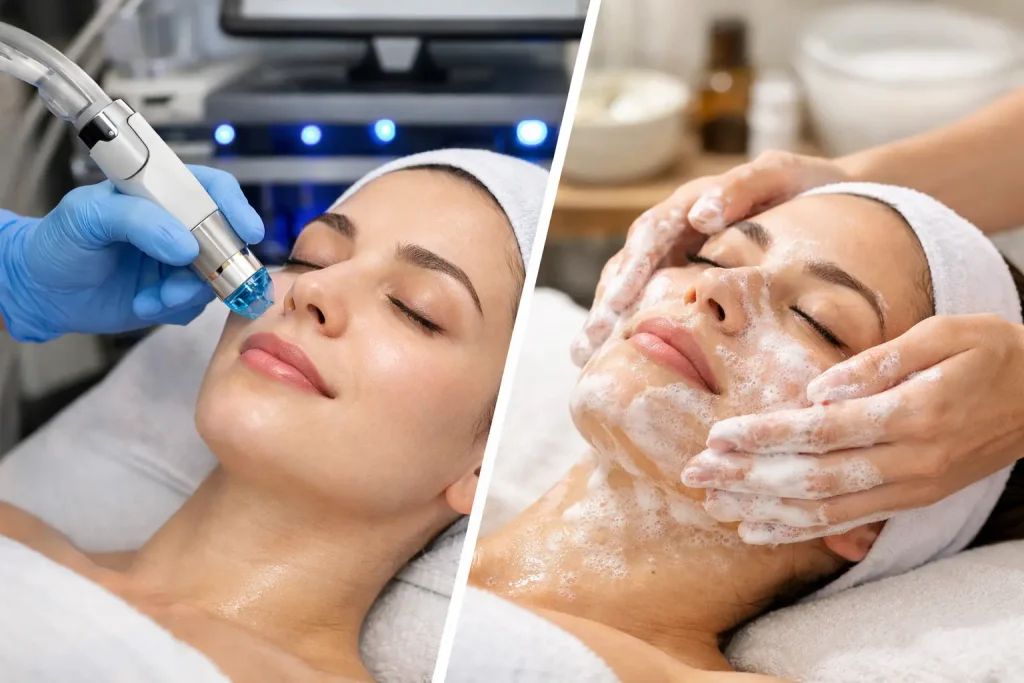
The Blue Ice HydroFacial is a non-invasive treatment that combines cleansing, exfoliation, extraction, hydration, and antioxidant protection in one appointment. A specialized wand uses fluid and gentle suction to lift impurities from the pores while delivering moisturizing serums.
It is built for skin that cannot handle abrasion. Liquid exfoliation means nothing is dragged across reactive skin. Serums go in after the surface is cleared, when they can absorb more readily than through a layer of dull buildup. The appointment moves through three passes with the wand:
- Cleanse and loosen. Cleansing and mild exfoliating fluid dissolves the dead surface layer.
- Extract by suction. Gentle vacuum lifts oil, dead cells, and blackheads from the pores, with no squeezing.
- Fuse in serums. With the pores clear, hydrating and antioxidant serums are delivered into the skin.
Your esthetician can also adjust suction strength and serum blends for sensitive or reactive skin. That flexibility matters in winter, when skin that tolerated everything in September may now flush or sting more easily. Most clients describe the sensation as a cool, wet massage with a light vacuum feeling, and there is no peeling or recovery window.
Prefer to see how it compares with a conventional facial? Our article on HydroFacial versus traditional facials lays out the differences.
Not Sure Whether Your Skin Needs Hydration or a Gentler Reset?
Winter dryness has several possible causes, and the right plan depends on your skin, your products, and how reactive things feel right now. A short conversation can keep you from stacking the wrong treatment on a stressed barrier.
Jot down what you have been using lately, then bring your current routine to a free HydroFacial consultation, and your esthetician will help you choose a sensible starting point.
What One HydroFacial Can and Cannot Do
A HydroFacial is a surface treatment, so it is worth knowing where its reach ends. This table sorts common winter concerns by what it is designed to address.
| Concern | Within a HydroFacial’s reach? | What else may help |
|---|---|---|
| Dehydration and dullness | Yes, this is its main job | Consistent home care |
| Congested pores and blackheads | Yes, suction clears the pores | Regular maintenance visits |
| Fine lines caused by dryness | May soften their look temporarily | Rehydration, then reassess |
| Indented scars | No, they sit deeper | Microneedling |
| Sunspots and melasma | Surface brightening only | A peel or light-based treatment, chosen at consultation |
A single session also will not repair a barrier that is stressed every day by hot showers, harsh products, and very dry air. Think of the facial as a reset button, not a force field.
Making the Glow Last Between Visits
You do not need a twelve-step routine. Because the facial adds hydration but cannot change the room you live in, a few small changes make the biggest difference against heated air. These come from the American Academy of Dermatology’s dry skin tips:
- Keep showers short and warm. The guidance suggests five to ten minutes in warm water, then patting skin dry rather than rubbing.
- Cleanse gently. A gentle, fragrance-free cleanser, used only where you need it, is usually enough.
- Moisturize on damp skin. Apply a fragrance-free moisturizer right after bathing, while skin is still damp, and again when it feels dry.
- Try a bedroom humidifier. A portable one can run overnight in the bedroom, and it should be cleaned regularly to prevent mold.
- Wear sunscreen daily. A broad-spectrum, water-resistant sunscreen protects skin even when it is dry and sensitive.
The same guidance says that if dryness continues after trying these steps, it is time to see a board-certified dermatologist, because extremely dry skin can be linked to an underlying medical condition. If a product seems to be making your skin angrier, with new stinging, persistent redness or cracking, ease off strong actives and check in with your doctor or dermatologist.
Our skin hydration and moisture restoration page outlines how we approach dehydrated skin in more detail.
Timing, Prep and Aftercare at a Glance
Monthly sessions are the usual rhythm for building cumulative benefits, so the gap between visits matters more than any single appointment. Your esthetician will set the right schedule with you.
| When | Do | Avoid |
|---|---|---|
| The week before | Mention any recent procedures | Peels, microdermabrasion or laser treatments |
| 3 to 5 days before | Tell your esthetician about breakouts or routine changes | Retinoids, strong AHA/BHA acids, aggressive exfoliants |
| Several days before | Minimize direct sun exposure | Sunburn and tanning |
| Appointment day | Arrive with a clean, makeup-free face | Makeup on the skin being treated |
| First 24 to 48 hours after | Protect with broad-spectrum SPF | Saunas, steam rooms, hot showers, heavy sweating, facial massage |
| 3 to 5 days after | Gentle, fragrance-free products | Strong actives, exfoliants, retinoids |
It is a cruel irony for a heating-season facial, but skipping heat for a day or two keeps your skin calm.
Where to Book a HydroFacial
The HydroFacial is offered at our Red Deer, Calgary SE, Calgary NW, Toronto, Ottawa and Winnipeg clinics. Our Winnipeg HydroFacial and Ottawa HydroFacial pages link the treatment to cold, dry winters, and you can compare every clinic on our locations page.
In Vancouver, availability varies by clinic, so please confirm when you book.
A HydroFacial may not be the right first step for everyone. If you are pregnant, have an active infection or irritation, open wounds, a recent procedure, or take certain medications, mention it at your consultation. Results vary with your skin type, routine, and environment.
Frequently Asked Questions
Is a HydroFacial too harsh for flaky winter skin?
Often it is a gentler choice than a scrub or strong peel, because it uses fluid and suction instead of abrasion. Suction strength and serum blends can be adjusted for reactive skin. Tell your esthetician about any stinging, redness, or recent routine changes so they can set up the session safely.
How long will the hydration last in dry indoor air?
You Glow states the glow and deep hydration usually last about five to seven days, and often longer. In very dry indoor air with nothing used at home, it can be shorter. Regular monthly sessions build on each other, so benefits tend to be cumulative rather than one-and-done.
Can I go back to work after a HydroFacial?
Generally yes. There is no peeling or recovery window, which is why many people book it around work. For the next day or two, skip saunas, steam rooms, hot showers, and heavy sweating. Ask your esthetician when makeup suits your skin, since your products and sensitivity matter.
Do I need to stop using retinol before my appointment?
Yes, pause it first. Avoid retinoids, strong AHA/BHA acids, and aggressive exfoliants for three to five days beforehand, and skip peels, microdermabrasion, or laser treatments in the week before. Mention any active breakouts or sensitivity at booking so your esthetician can plan around them.
Is a humidifier worth using alongside facials?
It may help. The American Academy of Dermatology suggests a humidifier for dry skin, placed in the bedroom and run overnight, and cleaned regularly to prevent mold. It will not replace a facial or moisturizer, but it can make dry indoor air more comfortable and may help your results last.
Give Your Winter Skin a HydroFacial Reset
Dry indoor air does not have to mean a winter of tight, dull skin. A professional hydration boost, a few gentle swaps at home, and a steady rhythm of maintenance can make the season far more comfortable.
When you are ready, ask the team which hydration plan suits your skin and climate, and we will map out a rhythm that fits your winter.