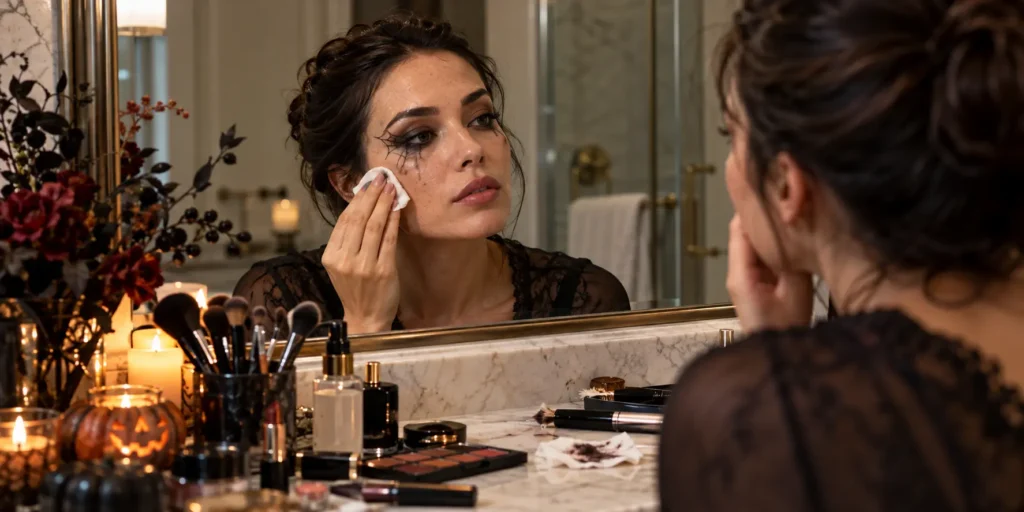
You spent three hours on a zombie wound, a glittery vampire, or a full-face clown look, and the party was brilliant. Then you woke up on November 1st to a jawline full of fresh bumps and a bathroom sink that looks like a paint palette. Breakouts after costume makeup are common; they are not a character flaw, and most of the damage comes from a few predictable habits that are easy to adjust.
This guide is about the event itself: heavy or long-wear products, late nights, skipped cleansing, shared brushes, and what to do in the days that follow. It also covers where blue light therapy can sensibly fit into a post-event plan, and when a breakout deserves a professional look instead of another round of home fixes.
Key Takeaways
- The product matters less than how long it stays on. A few hours of costume makeup is manageable; falling asleep in it is what tends to cause trouble.
- Gentle and thorough beats aggressive. Scrubbing, stacking new actives, or picking at spots usually makes post-event skin angrier, not clearer.
- Blue light therapy is one tool for inflamed, active breakouts. It does not remove blackheads, fade marks, or promise a cure.
- Painful, deep, spreading, or recurring breakouts deserve a professional assessment, and any swelling, eye irritation, or signs of allergy need medical attention.
Why Costume Makeup Is Tougher on Skin Than Everyday Makeup
Everyday makeup is designed to last a workday and wash off by bedtime. Costume looks play by different rules. Theatrical products, greasepaint, body paint, and long-wear formulas are built to survive sweat, dancing, and photos, which also means they are harder to remove. The Canadian Dermatology Association notes that makeup and hair care products can clog pores, and that labels such as oil-free, non-comedogenic or non-acnegenic are worth looking for when you are acne-prone.
Then there is everything around the makeup. A late night, a warm crowded room, a mask or hat pressing against the jaw, hands touching the face all evening. None of these is dramatic on its own. Together, they create conditions that can leave skin congested and inflamed a few days later.
Common Halloween habits and what to do instead
| Habit | Why it can cause trouble | Easier alternative |
|---|---|---|
| Thick face paint or full-coverage layers | Heavy films can sit in pores for hours and are harder to remove fully | Apply thinly where you can; keep the heaviest product to the areas the costume needs |
| Sleeping in makeup after a late night | Product, sweat and oil stay on skin overnight | Remove makeup before bed, even if the cleanse is quick and basic |
| Sharing palettes, sponges or brushes | Tools carry oil, bacteria and product residue between people | Use your own, or disposable applicators and a clean surface for shared items |
| Old products from last year’s box | Opened makeup can degrade and harbor bacteria over time | Check what is still fresh; if it smells or looks off, replace it |
| Hats, masks, wigs and headbands | Pressure and friction along the hairline and jaw may contribute to breakouts | Take breaks from the headwear and wipe contact surfaces clean afterward |
The Night-Of Plan: Removal That Actually Works
Think of removal as the second half of the costume. It deserves the same planning as the first half, even at 1 a.m. with a ringing in your ears.
Take it off in two gentle steps
Heavy or waterproof products often need a first pass with a cleansing balm, oil, or dedicated makeup remover to break down the film. Follow that with a mild cleanser to remove the remaining residue. This two-step approach is generally good practice for stubborn products, and it should feel comfortable, not tugging or stinging.
Resist the scrub
It is tempting to scour off glitter and pigment with a rough cloth or a gritty scrub. The Canadian Dermatology Association advises washing the face once or twice a day with a gentle cleanser and notes that cleansing more often, scrubbing or using strong cleansers or astringents can irritate skin and even worsen acne. If glitter lingers, a second gentle cleanse or a soft damp cloth is kinder than force.
Mind the eyes
Use products made for the eye area, and never push costume paint near the lash line unless it is made for that purpose. If anything stings, swells, or itches around the eyes, stop and wash it off. Eye-area reactions aren’t a beauty-routine problem, so seek medical attention if they don’t settle quickly or if you notice swelling, pain, or vision changes.
Clean the tools, not just the face
Wash brushes and sponges after the event, let them dry fully, and keep personal tools personal. If a tool was shared or has not been cleaned in months, the first time you reuse it is a good moment to start fresh. Pillowcases and towels that took the brunt of a late night can also go straight into the wash.
The Days After: When to Pause New Products
The instinct on November 1st is to throw everything at the problem: a new serum, a strong acid, a clay mask, a scrub. Resist it. Skin that has just been through heavy product use and a late night is often more reactive than usual, and piling on new actives can add irritation to inflammation. A calmer routine for a few days is a sensible, non-medical default, with more questions for a professional if skin does not settle.
| When | Sensible focus | Hold off on |
|---|---|---|
| Night of the event | Thorough, gentle removal and a basic moisturizer | Scrubs, strong cleansers and sleeping in makeup |
| Next day | Mild cleanse, moisturizer, daily sunscreen; clean brushes and pillowcase | Trying a brand new product; picking at spots |
| Following days | Keep the routine simple and consistent while skin settles | Stacking exfoliating acids, retinoids and scrubs at once |
| If spots keep appearing | Book a skin assessment so the plan fits your skin | Escalating home treatments or squeezing spots |
Picking is worth its own mention. The CDA notes that picking and squeezing spots can push sebum and bacteria into surrounding tissue, increasing swelling, redness, and the risk of scarring. Our guides on common mistakes people make when treating acne at home and why acne treatments fail without a personalized plan go deeper on the general pattern.
Post-Halloween Breakout? Let’s Plan Your Reset
If your skin is still reactive a week or so after the event, a free consultation is a low-pressure way to find out what is going on. A You Glow team member can look at your skin, ask about the products and routines you have been using, and talk through whether a treatment such as blue light therapy makes sense, whether something else would suit you better, or whether a medical opinion is the right next step.
It is also a good moment to bring up any medications, recent procedures or sensitivities, since these can change what is suitable.
Where Blue Light Therapy Fits After a Costume Breakout
Blue light therapy is a non-invasive treatment that uses a specific wavelength of blue light and, per You Glow’s blue light therapy page, is designed to target acne-causing bacteria and calm the inflammation around active breakouts. If you want the full science, our earlier posts on active breakouts and blue light cover it. Here the question is narrower: where does it sit in a post-event plan?
Right for inflamed spots, not for everything
The clinic’s pages describe blue light therapy as suited to active, inflamed breakouts and the redness around them. It is not the tool for every post-party bump. Blackheads and closed bumps are blockages rather than inflamed spots, and several of You Glow’s clinic pages point to a deep-cleansing treatment such as a Blue Ice HydroFacial for those. Marks left behind after a spot heals need a different approach again.
| Post-event concern | Where blue light fits |
|---|---|
| Red, raised, inflamed spots | The kind of concern blue light therapy is designed to address, as part of a plan |
| Blackheads and congestion from heavy product | Usually a deep-cleansing treatment is the better match; sometimes both are discussed |
| Flat marks after spots heal | Not the job of blue light; a consultation can cover options |
| Deep, painful or very persistent breakouts | Professional or medical assessment first |
What to expect in the treatment room
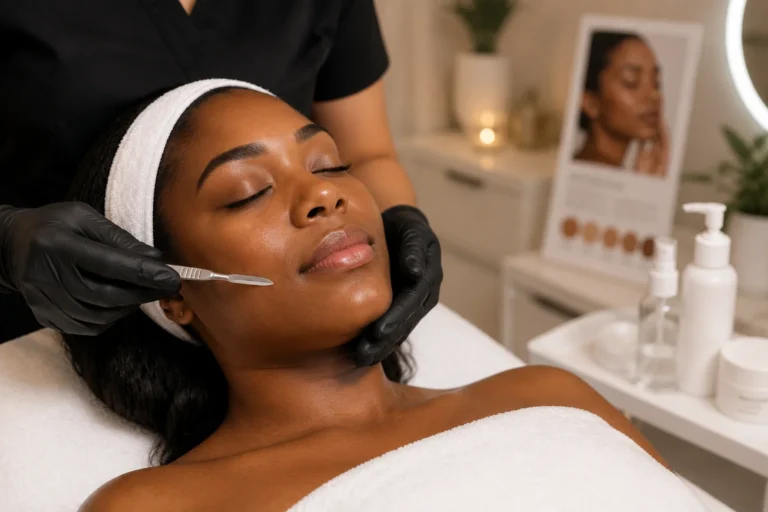
You Glow’s treatment page asks you to arrive with clean skin free of makeup, so leftover costume product has to come off before the session. It also suggests skipping harsh exfoliants, retinoids, and acids for two to three days beforehand, and telling your technician about open wounds, inflammation, or recent skin procedures. Protective goggles are provided during the session.
Afterward, the page describes mild warmth or redness that fades, gentle cleansing and moisturizing, pausing retinoids, acids, and harsh scrubs for two to three days, skipping saunas, steam rooms, and heavy workouts for 24 hours, and daily broad-spectrum sunscreen. Individual clinics may give slightly different aftercare notes, so follow the instructions you are given on the day.
Realistic expectations
The treatment page notes that you may see a calmer complexion after one visit, but the best results come from a series. The site’s general guidance is typically four to six sessions about a week apart, followed by monthly maintenance, and your own plan is set in consultation after seeing your skin. Results vary with the type and severity of the breakout, how many sessions are completed, and what else you are doing at home, and blue light therapy does not cure acne.
For a one-off post-event flare, you may not need a long course. For someone whose skin was already prone to breakouts, a party may simply have exposed a pattern, and that is where a personalized plan matters more than any single product.
Availability varies by clinic
Blue light therapy isn’t offered the same way at every location, so availability varies by clinic. Dedicated pages exist for blue light therapy in Toronto, Calgary SE, Ottawa, Winnipeg and Red Deer. Check the locations page or confirm when you book, particularly if you are at the Vancouver or Calgary NW clinics.
When a Breakout Deserves a Professional Look
Most post-event bumps settle with a gentler routine. Some do not, and that is not a failure on your part. These signs are worth a professional assessment:
- Breakouts that are deep, painful, or last for weeks rather than days
- Spots that keep recurring in the same areas, or leave marks or pitting
- Skin that stays red, itchy, burning, or flaky after you have stopped using the product
- Acne that appears suddenly in adulthood, or alongside other changes in your health
An esthetician can assess whether blue light, a deep-cleansing facial, or another approach suits your skin, and will tell you honestly if a doctor’s opinion is the better next step. Seek medical attention promptly for swelling around the eyes, difficulty breathing, hives, blistering, or any reaction that looks like an allergy. Those are not situations for a spa appointment or a new serum.
Plan Your Post-Event Skin Reset With You Glow
If a costume left your skin looking inflamed or congested, You Glow Aesthetics can help you work out the next step without pressure. A free consultation lets a team member assess your skin, check whether blue light therapy is available and suitable at your nearest clinic, and build a personalized plan around your skin, schedule, and goals.
Ready when you are: book your free consultation, or tell us about your Halloween makeup breakout, and we will take it from there.
Frequently Asked Questions
Can Halloween makeup really cause breakouts?
It can contribute. Heavy, long-wear and face-paint products can sit on the skin for hours, and the Canadian Dermatology Association notes that makeup can clog pores. Late nights, incomplete removal, and shared or unwashed tools add to the load. Not everyone breaks out, because skin type and existing acne tendencies play a big role. If you are prone to breakouts, extra care with removal is worth the effort.
How soon after Halloween should I treat a breakout?
Start with a calm, simple routine and give skin a few days to settle before adding anything new. If inflamed spots persist, spread, or become painful, book an assessment rather than escalating home products. For deep, painful, or recurring breakouts, seek a professional or medical opinion sooner. Treatment timing depends on your skin, so confirm it with your clinic.
Is blue light therapy safe to use after wearing heavy makeup?
Skin must be completely clean and makeup-free for a session, so remove all cosmetic products first. You Glow’s page asks clients to mention any open wounds, inflammation, or recent procedures, because irritated or broken skin may need to heal first. Your technician will decide whether treatment is suitable that day. Medications and sensitivities matter too, so bring a list to your consultation.
How many blue light sessions will I need after a breakout?
It varies. You Glow’s treatment page typically describes four to six sessions about a week apart, followed by monthly maintenance, though the plan is set in consultation. A one-off flare may need less than skin that breaks out regularly. Results depend on the type of breakout, consistency and home care, and no treatment can promise to cure acne.
What should I do if makeup irritates my eyes or skin?
Wash the product off gently and stop using it. Mild redness may settle on its own, but swelling around the eyes, pain, blistering, hives, or trouble breathing need prompt medical attention. Do not wait for a spa or clinic appointment in those cases. Once skin has calmed, a consultation can help you choose products and routines that suit it better.