Skin redness is one of the most common concerns we see among clients exploring aesthetic treatments. Whether it shows up as persistent flushing, visible capillaries, rosacea-prone skin, or redness left behind after breakouts, it can affect confidence and comfort. Many people in the local area are searching for non-invasive ways to calm the skin, restore balance, and achieve a more even complexion without downtime.
Two of the most popular treatments for redness are IPL and LED light therapy. While both use light-based technology, they work very differently and are suited to different skin needs. Understanding how each option works can help you make a smarter decision for your skin and avoid unnecessary treatments.
Understanding Why Skin Redness Happens
Before choosing a treatment, it helps to understand what causes redness in the first place. For some people, redness is genetic and linked to conditions like rosacea. For others, it is triggered by sun damage, broken capillaries, inflammation, acne, or environmental stress. Lifestyle factors such as heat exposure, stress, spicy foods, and harsh skincare products can also make redness worse over time.
The right treatment depends on whether the redness is caused by surface inflammation, deeper blood vessels, or a combination of both. This is where IPL and LED therapy differ most.
What IPL Treatment Does For Skin Redness
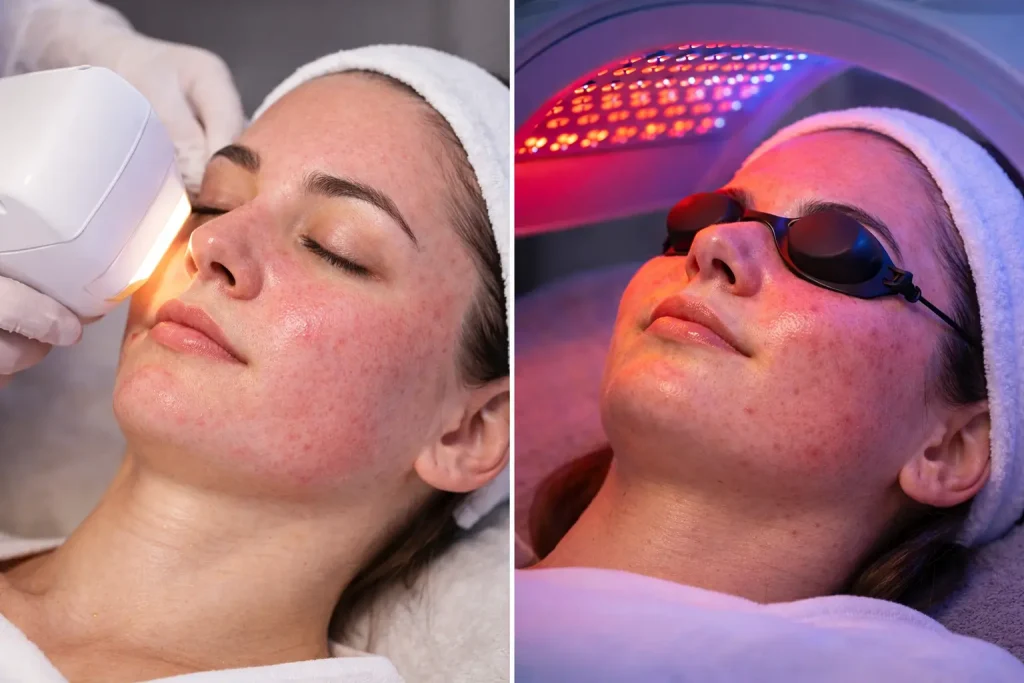
IPL, which stands for Intense Pulsed Light, uses controlled bursts of broad-spectrum light to target pigment and blood vessels beneath the skin. Unlike lasers, IPL is adjustable and can treat a wider area, making it effective for redness that comes from visible capillaries, sun damage, and uneven skin tone.
When IPL light reaches the skin, it is absorbed by hemoglobin in the blood vessels. The heat causes these vessels to break down naturally, allowing the body to reabsorb them over time. As a result, redness fades, and the skin appears clearer and more even.
IPL is often recommended for clients with persistent redness, facial flushing, broken capillaries around the nose and cheeks, and redness caused by long term sun exposure. It can also improve overall skin tone and texture, which is why it is commonly paired with photofacial treatments.
What Led Light Therapy Does For Redness
LED light therapy works in a gentler way. Instead of targeting blood vessels, it uses specific wavelengths of light to calm inflammation and support the skin’s natural healing process. Red and near infrared LED light penetrate the skin to reduce irritation, improve circulation, and stimulate cellular repair.
LED therapy does not generate heat and does not damage the skin. This makes it ideal for sensitive skin types and clients who experience redness due to inflammation, acne, or post treatment sensitivity. It is often used as a calming treatment after facials, microneedling, or chemical peels.
While LED therapy does not remove broken capillaries, it can significantly reduce overall redness, soothe reactive skin, and improve skin resilience with consistent sessions.
IPL vs LED For Different Types Of Redness
The main difference between IPL and LED therapy is how deeply and aggressively they treat redness. IPL addresses redness at its source when blood vessels are involved. LED therapy focuses on calming the skin and reducing inflammation on a cellular level.
If your redness is visible, persistent, and linked to sun damage or vascular issues, IPL is often the more effective option. If your redness is mild, comes and goes, or is linked to sensitivity, acne, or irritation, LED light therapy may be the better starting point.
Many clients benefit from a customized approach that combines both treatments over time. For example, IPL can reduce visible redness, while LED therapy helps maintain calm, balanced skin between sessions.
What Treatment Feels Like And What To Expect
IPL treatments usually feel like a quick snapping sensation against the skin, similar to a rubber band. Most sessions are completed within 30 to 45 minutes, depending on the area treated. Mild redness or warmth may appear afterward, but downtime is minimal for most clients.
LED light therapy is completely painless and relaxing. During the session, you simply rest under the light while it works. There is no downtime, making it easy to fit into a busy schedule.
Results from IPL often develop gradually over several weeks as the skin heals and clears. LED therapy results tend to be subtle at first and improve with consistent treatments.
Safety, Skin Tone, And Professional Guidance
Not every treatment is right for every skin type. IPL requires careful assessment, especially for darker skin tones or clients with active skin conditions. LED therapy is generally safe for all skin types and tones, making it a popular option for first-time clients.
This is why a professional consultation is essential. A trained provider can assess your skin, identify the cause of your redness, and recommend the most effective treatment plan. At a full service aesthetics clinic, IPL and LED therapy are often integrated with other services such as customized facials, acne treatments, and skin rejuvenation programs.
How To Choose The Right Option For Your Skin
Choosing between IPL and LED light therapy is not about which treatment is better overall. It is about which one is better for your skin, your concerns, and your goals. Some clients want fast visible improvement, while others prefer a gentler, long-term approach to calming the skin.
A personalized consultation allows you to explore your options, understand expected results, and build a plan that fits your lifestyle and skin health goals. Combining treatments with professional skincare guidance often delivers the best outcome.
Final Thoughts And Next Steps
Skin redness does not have to be something you live with or cover up daily. With modern aesthetic treatments like IPL and LED light therapy, it is possible to calm irritation, improve tone, and restore confidence in your skin.
If you are considering treatment for skin redness and want expert guidance, schedule a consultation with us. Our team will help you choose the right approach, create a customized plan, and support you every step of the way toward clearer, more balanced skin.