Have you ever invested in a high-end, top-rated foundation, spent thirty minutes carefully blending it out with a damp beauty sponge, only to step into natural daylight and feel completely disappointed? Instead of looking like a radiant, airbrushed second skin, your foundation looks heavy, clings to random dry patches you didn’t even know you had, and somehow accentuates every single pore and fine line on your face.
As a professional esthetician, I see this frustration all the time. Clients often blame their makeup brands, their primers, or their setting sprays. But more often than not, the issue isn’t the product you are putting on your face—it’s the canvas underneath.
If you want your foundation to glide on seamlessly, stay fresh all day, and catch the light beautifully without looking cakey, you need to eliminate the two silent culprits holding your makeup back: dead skin cells and vellus hair (the fine fuzz covering our faces). That is precisely why dermaplaning has become the ultimate industry secret for anyone seeking the smoothest possible complexion.
The Anatomy of a Rough Canvas: What’s Hiding Under Your Foundation
To understand why makeup can look textured, we have to look closely at the surface landscape of your skin. Our skin cells are constantly regenerating, a process called desquamation (cellular shedding). Ideally, our bodies naturally cast off dead skin cells every 28 to 40 days to make room for new ones.
However, as we age, this natural renewal slows down significantly. Instead of falling away, those microscopic dead cells pile up unevenly like microscopic roof shingles.
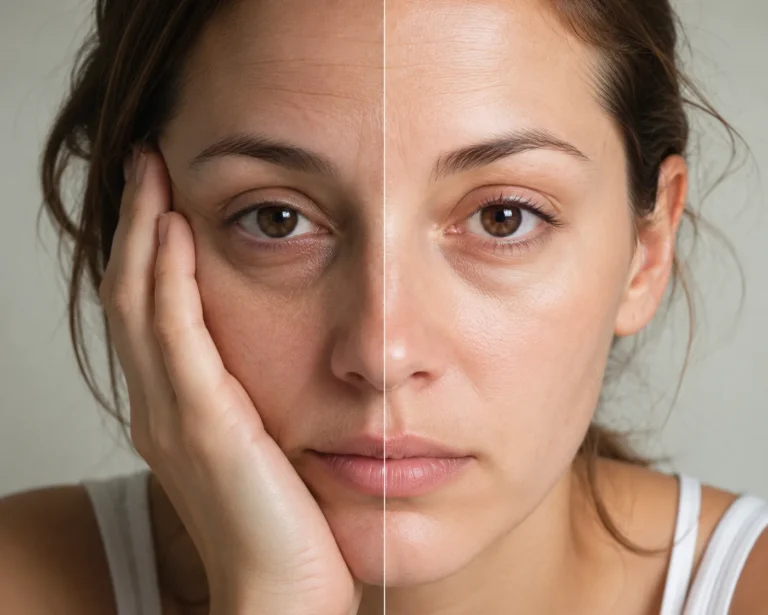
When you layer a dense cream or liquid foundation over this uneven terrain, the makeup acts like a spotlight on the rough patches. Compounding this issue is vellus hair. While perfectly natural and important for temperature regulation, these tiny peach fuzz hairs catch powder and liquid makeup pigments. The foundation ends up sitting on top of the hairs rather than melting directly into your skin, creating that dry, powdery, “cakey” effect.
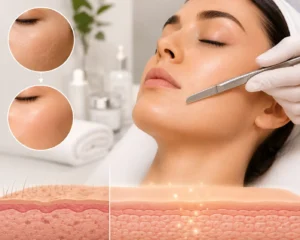
The Science of Dermaplaning: Deep Exfoliation Defined
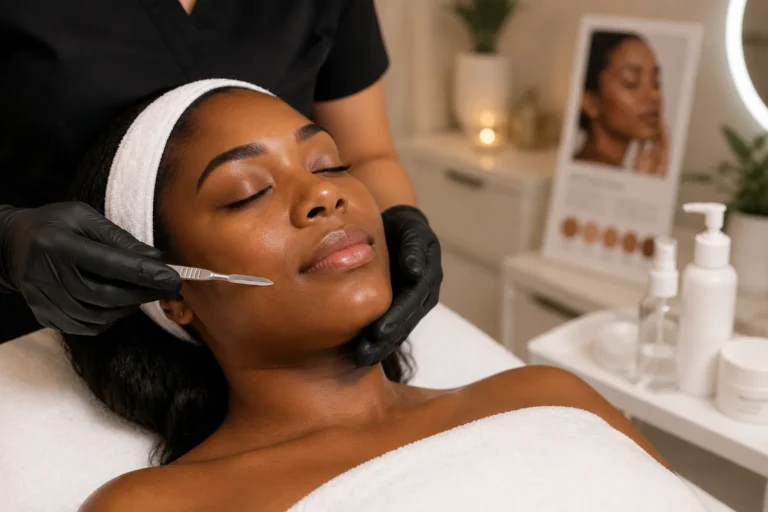
Dermaplaning is a highly controlled physical exfoliation method. During a treatment, a trained professional stretches your skin taut and holds a sterile, medical-grade surgical blade at a strict 45-degree angle. With delicate, feather-light strokes, the blade gently skims across the epidermis (the outermost layer of skin).
This process instantly sweeps away:
- Up to 2 to 3 weeks’ worth of rough, accumulated dead skin cells.
- Embedded surface impurities and dry flakes.
- Every trace of vellus peach fuzz.
By physically removing this barrier, dermaplaning bypasses the slow process of chemical shedding. It gives your skin an immediate reset, leaving it profoundly soft and perfectly level down to a cellular level.
The Ultimate Pre-Makeup Payoff: Flawless Application & Longevity
Once the outer layer of dead cells and peach fuzz is cleared away, your entire makeup routine undergoes a massive upgrade. The differences are immediately apparent the very next morning:
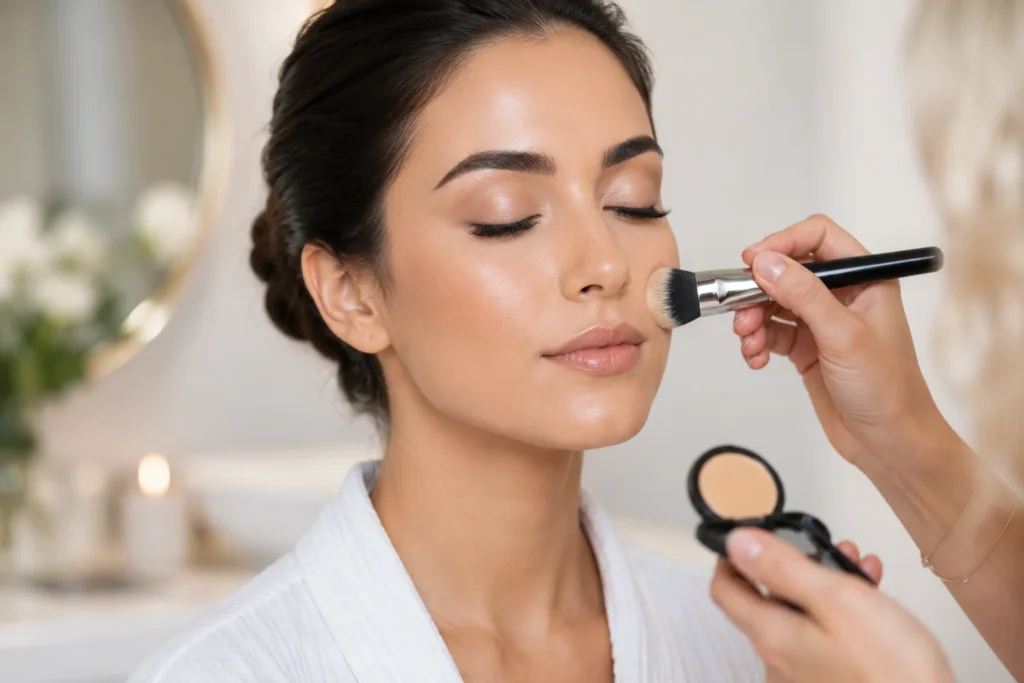
- Effortless Blending: Without peach fuzz blocking the way, liquid foundations and tinted moisturizers spread like butter. You end up needing to use significantly less makeup to achieve full, flawless coverage because the pigments aren’t getting trapped by dry texture.
- A Real “Lit-from-Within” Glow: Smooth, freshly exfoliated skin acts like a pristine mirror. When light hits a flat, uniform surface, it bounces back cleanly, creating a natural, reflective dewiness. Conversely, rough skin scatters light in different directions, making your complexion look dull and flat.
- Extended Wear Time: Makeup breaks down throughout the day when your skin’s natural oils mix with dead cells and get held in place by vellus hair. By removing those anchoring textures, your primer and setting products stick better to your actual skin, meaning fewer touch-ups and no mid-day separating or creasing.
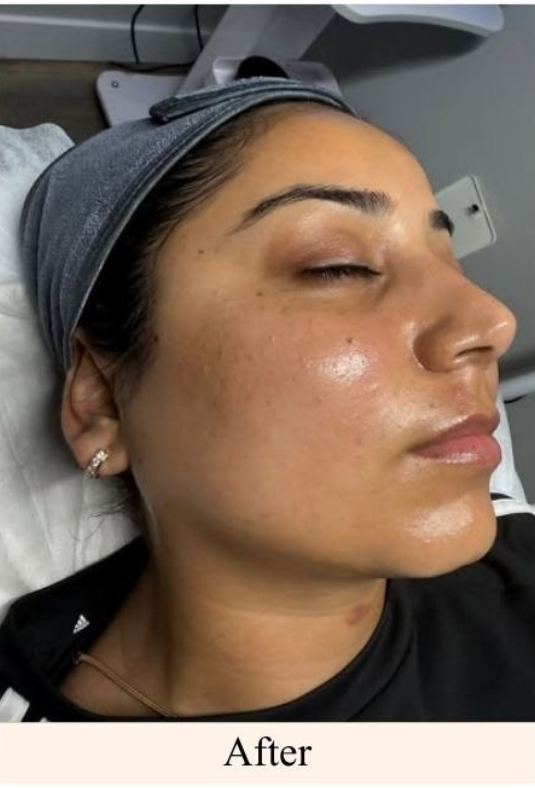
Maximizing the Treatment: Synergistic Skincare Pairings
While the immediate makeup benefits are incredible, dermaplaning acts as a powerful catalyst for your long-term skin health goals. When we lift away that top layer of dead tissue, we essentially open a window of high permeability for your active skincare ingredients.
At You Glow Aesthetics, we love customizing our exfoliation steps to deliver deep, transformative results. Depending on your primary skin goals, we frequently build comprehensive routines by matching physical scraping with advanced medical modalities:
| Primary Skin Goal | Recommended Treatment Combination | Why it Works |
| Deep Hydration & Plumping | Dermaplaning + Skin Tightening Facial + Skin Analysis | Removing the dead cell barrier allows deeply hydrating serums and firming nutrients to sink straight to the lower dermal layers, plumping out fine lines before we analyze your hydration baseline. |
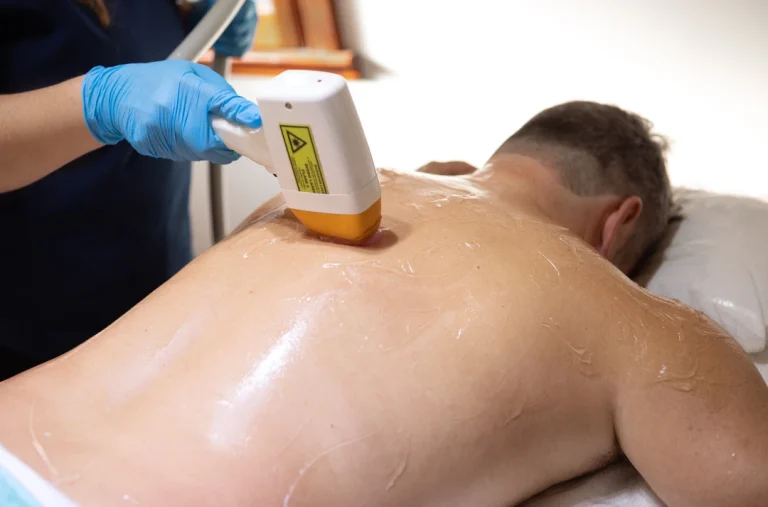
| Advanced Anti-Aging & Lift | Dermaplaning + Laser Hair Removal Preparation | While dermaplaning cleanses the superficial layers and handles fine peach fuzz, it pairs beautifully as a clear skin baseline before addressing deeper structural concerns with thermal technologies. |
Debunking the Myth: Will My Facial Hair Grow Back Thicker?
I cannot discuss dermaplaning without addressing the single biggest fear clients voice before trying it for the first time: “If you shave off my peach fuzz, will it grow back thicker, darker, or more coarse?”
The short, definitive answer is absolutely not. This is an old wives’ tale that contradicts basic human biology.
The hair on your face is divided into two distinct types: vellus hair (the soft, translucent peach fuzz) and terminal hair (the coarse, dark hair found on your scalp, eyebrows, and lower face driven by hormones). Dermaplaning only targets vellus hair.
The structure, color, and thickness of a hair follicle are entirely pre-programmed by your genetics and hormones deep beneath the skin’s surface. A superficial blade cutting hair off at the skin level cannot alter the internal blueprint of the follicle. When your peach fuzz grows back in about 4 weeks, it will have a slightly blunt edge at first as it emerges, but it will return exactly as soft, fine, and light as it was before.
Professional Esthetician Tips: Safe Aftercare for the Perfect Canvas
Because dermaplaning leaves your fresh, vulnerable skin cells exposed to the world, how you treat your face in the 48 hours following your treatment dictates how beautiful your final results will be. Follow these simple guidelines to protect your investment:
- Hold Off on Makeup for 24 Hours: Give your skin a chance to breathe and rest right after your treatment. Your pores are highly accessible, so skipping heavy foundations for just one day prevents any potential irritation or congestion.
- Double Down on SPF: Freshly exfoliated skin is highly susceptible to UV damage. Always apply a broad-spectrum SPF 30 or higher daily to protect your bright new layer from hyperpigmentation.
- Skip the Harsh Actives: Put your retinoids, salicylic acid, and glycolic scrubs on pause for 3 to 5 days post-treatment. Your skin has already received a premium physical exfoliation; adding harsh chemicals on top will only compromise your natural skin barrier. Focus instead on soothing ceramides and hyaluronic acid.
Ready to Experience the Ultimate Smooth?
If you are tired of battling texture, fighting with your foundation, and settling for a dull complexion, it is time to treat yourself to the professional standard of skin prep. Dermaplaning is more than just a quick grooming habit—it is a restorative treatment that reveals your most radiant, smooth, and touchably soft skin.
At You Glow Aesthetics, we don’t believe in generic, one-size-fits-all treatments. Every session is executed with medical-grade precision and paired with ultra-soothing, customized hydration masks tailored explicitly to your skin’s unique needs.
Give your makeup—and your confidence—the flawless foundation it deserves. Book your professional dermaplaning session and skin analysis at You Glow Aesthetics today, and let’s unveil your most luminous glow yet.