If you have ever woken up, looked in the mirror, and noticed uneven dark spots or patches looking back at you, I know exactly how frustrating that feels. In my treatment room, uneven skin tone is one of the most common reasons clients seek my help. They tell me they are exhausted from buying heavy concealers just to camouflage their skin, or that they feel discouraged because their expensive brightening creams aren’t doing anything.
Often, people lump all dark spots into one big category: “hyperpigmentation.” But treating skin discoloration effectively requires knowing its exact origin.
While all melasma is a form of hyperpigmentation, not all hyperpigmentation is melasma. Treating melasma the exact same way you treat a basic sun spot can actually make your discoloration significantly worse. Let’s lift the curtain on these two common skin conditions, figure out exactly which one is sitting on your skin, and look at the customized clinical solutions that will bring back your uniform, radiant glow.
The Umbrellas of Discoloration: What is Hyperpigmentation?
To understand your skin, let’s start with the broad term: hyperpigmentation. This is a catch-all umbrella term for any condition where the skin overproduces melanin—the natural pigment that gives our skin, hair, and eyes their color. When specific trigger events send your melanocytes (pigment-producing cells) into overdrive, they dump excess pigment into the surrounding skin tissue, creating dark spots or patches.
Standard hyperpigmentation typically falls into two main camps:
- Sun Spots (Solar Lentigines): These are small, clearly defined spots that appear on areas frequently exposed to the sun, like your face, chest, and hands. They are the direct result of cumulative UV damage over the years.
- Post-Inflammatory Hyperpigmentation (PIH): This happens after your skin experiences a trauma, injury, or severe irritation. Think of that flat brown, pink, or purple mark left behind long after an acne blemish heals, or the discoloration that occurs after an aggressive scratch or insect bite.
The Complex Imposter: What Makes Melasma Different?
While standard hyperpigmentation is usually straightforward environmental damage or post-injury healing, melasma is a much more complex, deeply rooted puzzle.
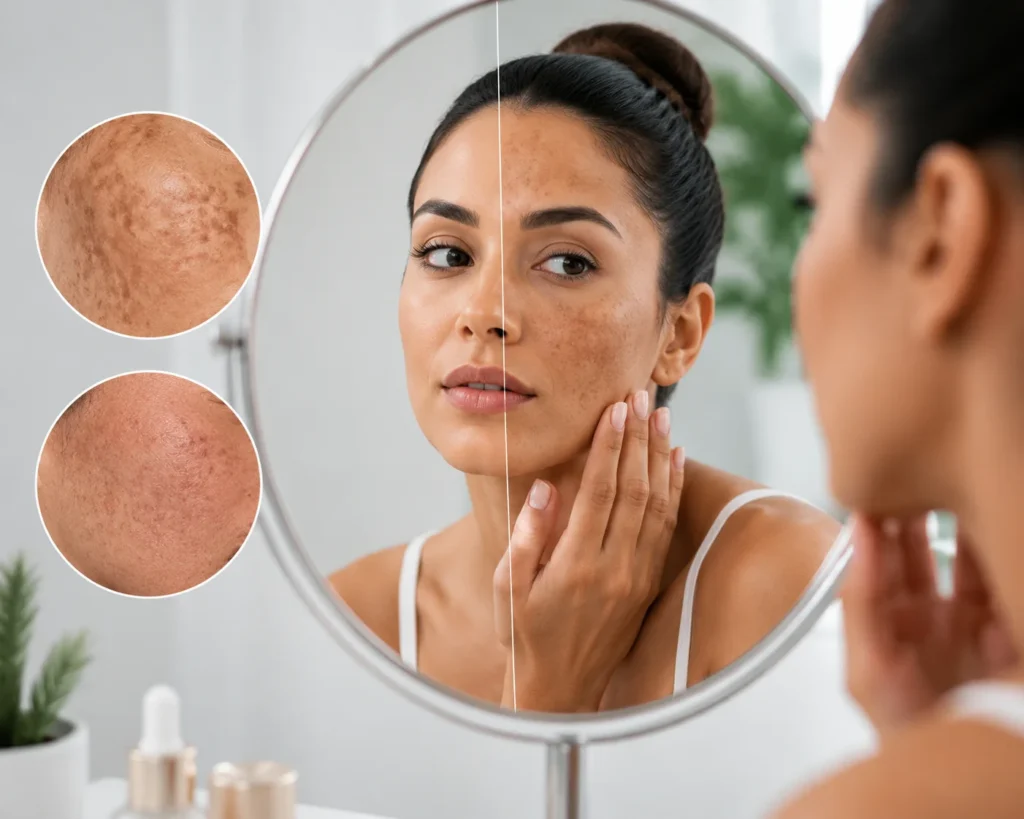
Melasma presents as larger, irregular patches of discoloration rather than isolated spots. It is often referred to as a “symmetrical” condition because it mirrors itself on both sides of the face. You will typically see it show up as mask-like patches across the forehead, the bridge of the nose, the upper cheeks, and the upper lip.
The key difference lies in the triggers. While sun damage plays a massive role in exposing melasma, the root cause is deeply tied to internal hormonal fluctuations and heat. Fluctuations in estrogen and progesterone stimulate the melanocytes to overproduce pigment even under the slightest provocation. It is incredibly common during pregnancy (often called the “mask of pregnancy”), when starting or changing birth control pills, or during hormonal shifts like menopause.
The Mirror Test: How to Tell Which One You Have
If you are trying to evaluate your skin at home, look closely at the shape, placement, and behavior of your discoloration.
| Feature | Standard Hyperpigmentation / PIH | Melasma |
| Appearance | Small, distinct spots with sharp edges, or flat marks located exactly where an old blemish used to be. | Large, scattered, or confluent patches with soft, wavy, or feathered borders. |
| Symmetry | Randomly scattered wherever sun damage or skin injury occurred. | Strictly symmetrical; matching patches on both cheeks, sides of the forehead, or jawline. |
| Key Triggers | Direct UV exposure, picking at acne breakouts, or physical skin trauma. | Hormonal shifts (pregnancy, medication), UV rays, visible blue light, and internal or external heat. |
| Seasonal Behavior | Stays relatively stable unless you spend an unprotected day in the summer sun. | Fluctuates rapidly; can flare up or darken significantly just from sitting in a hot sauna or cooking over a hot stove. |
The Pitfall: Why Heat is the Ultimate Melasma Enemy
This is where many clients accidentally ruin their skin progress. If you treat a stubborn case of melasma with aggressive heat-based treatments—like high-energy laser treatments designed for simple sun spots—you can trigger severe rebound hyperpigmentation.
Because melasma-prone melanocytes are hyper-reactive, the internal thermal heat generated by certain strong lasers or aggressive friction can misidentify the treatment as an injury. In response, they go into emergency overdrive, dumping a fresh wave of pigment into the area, making the patches look significantly darker a few weeks later.
If you are dealing with melasma, your clinical approach must focus on cooling, calming, and using specialized, non-thermal pathways to gently break up the pigment.

Professional Treatment Pathways at You Glow Aesthetics
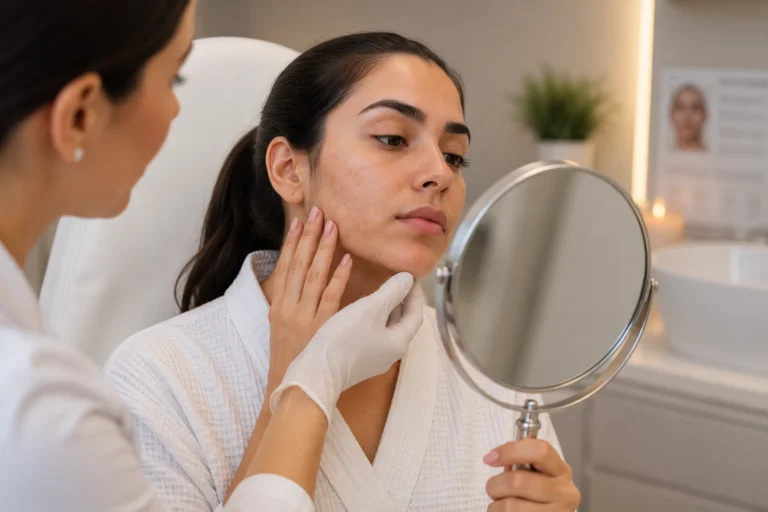
Because these conditions behave completely differently beneath the surface, we customize our advanced Skin Treatments to match your specific diagnosis. Trying to guess your way through it at home using random skincare products often leads to increased barrier irritation.
- For Melasma: We focus heavily on advanced, medical-grade chemical resurfacing. Our specialized Facial Treatments utilize tailored peeling agents—like lactic acid, mandelic acid, and targeted pigment inhibitors—that lift away superficial pigment without generating dangerous heat. We pair these with deeply hydrating infusions to keep the skin barrier cool and calm.
- For Sun Spots & PIH: Because these spots are not driven by hyper-reactive hormones, we can be much more direct. We can safely leverage advanced energy modalities and skin-rejuvenating treatments to rapidly shatter the localized pigment pockets, letting your body naturally clear them away to reveal clean skin.
- Complementary Care: Many of our clients like to streamline their aesthetic goals. If you are already prioritizing your confidence with body contouring or non-invasive Body Treatments, creating a clear, bright complexion is the perfect way to look and feel completely refreshed from head to toe.
Pro Tips to Control Discoloration at Home
No matter which type of discoloration you have, your daily habits will dictate 80% of your long-term success. Follow these professional protocols to protect your investment:
- Upgrade Your Sunscreen: Standard chemical sunscreens absorb UV light and convert it into heat within the skin—which can flare melasma. If you have melasma patches, switch to a pure mineral sunscreen (Zinc Oxide or Titanium Dioxide). Mineral options physically reflect light off the skin like a mirror, protecting you without generating internal heat.
- Look for Tyrosinase Inhibitors: Look for home care ingredients that actively block the chemical pathway responsible for creating pigment. Ingredients like vitamin C, kojic acid, azelaic acid, tranexamic acid, and licorice root extract are phenomenal additions to your routine.
- Cool Your Skin: If you have a melasma flare-up or feel hot after an outdoor day, apply a cool compress to your face immediately to bring your skin temperature down before your melanocytes react.
Ready to Reveal a Flawless, Even Tone?
You don’t have to spend your mornings hiding behind heavy, caked-on foundation or feeling self-conscious about uneven patches. Your skin discoloration can be successfully managed, faded, and balanced with the right expert guidance and clinical precision.
At You Glow Aesthetics, we don’t believe in guesswork. We carefully analyze your skin layers to build a safe, highly effective treatment roadmap tailored to your exact type of discoloration. Ready to see how we can restore your clear, natural brilliance? Explore our comprehensive range of skin-perfecting options on our primary Treatment Page, or look through our Latest Blog Posts for more esthetician-vetted skincare strategies.
Click here to book your skin analysis at You Glow Aesthetics today and let our expert team clear away your dark spots for a lifetime of radiant confidence!