We’ve all been there. In our teens and twenties, a day at the beach meant lathering up in tanning oil, chasing that perfect sun-kissed glow, and occasionally dealing with a painful sunburn. At the time, your skin bounced back. But fast forward ten or fifteen years, and that UV exposure is finally introducing itself in the mirror.
As an esthetician, I see it every day: hyperpigmentation that concealer can’t hide, stubborn sun spots along the cheekbones, fine lines around the eyes, and a general loss of that youthful bounce.
The good news? Your skin is incredibly resilient. While you can’t build a time machine, you can effectively hit the reset button on accumulated UV damage. One of the most reliable, clinically proven ways to do this is through professional chemical peeling. Let’s dive into exactly how these treatments work and how to choose the right one for your skin.
The Anatomy of Sun Damage: What’s Happening Beneath the Surface
To understand how to fix sun damage, we first have to understand what UV radiation actually does to your cells. Photoaging isn’t just a surface-level issue.
When UV rays penetrate the skin, they trigger an overproduction of melanin, leading to uneven patches, melasma, and solar lentigines (commonly known as age spots). Even worse, UV light degrades collagen and elastin—the structural proteins that keep your skin firm and wrinkle-free.
The result is a sluggish cellular turnover rate. Dead, damaged skin cells build up on the surface, reflecting light poorly and making your complexion look dull, rough, and prematurely aged.
Why Chemical Peels Are the Ultimate Reset Button
Many clients come to me asking if a high-end serum can fade a decade of sun spots. While daily skincare is vital for maintenance, over-the-counter topicals can only do so much heavy lifting. They work primarily on the outermost layer of the epidermis.
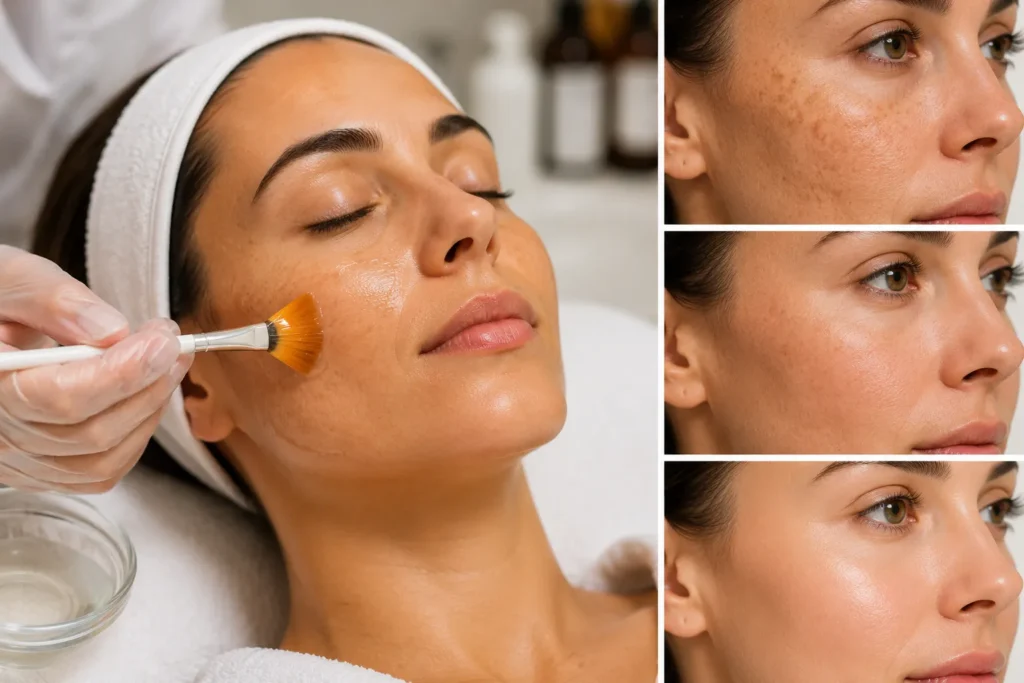
Chemical peels, however, offer a controlled, deeper exfoliation. By applying a specialized acid solution to the skin, we safely dissolve the cellular “glue” holding those damaged, hyperpigmented cells together. This process forces the old, damaged layer to shed, signaling your body to rush fresh, healthy cells to the surface. Simultaneously, the deeper stimulation kickstarts collagen production, plumping up those sun-induced fine lines from the inside out.
Choosing Your Weapon: The Best Peels for UV Repair
Not all chemical peels are created equal, and treating sun damage requires a targeted approach. We categorize peels by their depth and the specific acids used:
- Alpha Hydroxy Acids (AHAs): Glycolic and Lactic acids are fantastic for mild, surface-level sun damage. Glycolic acid has a tiny molecular size, allowing it to penetrate efficiently to brighten the complexion and smooth out rough texture. Lactic acid is excellent for drier skin types, as it hydrates while it exfoliates.
- The VI Peel: If you are dealing with deep-set hyperpigmentation, melasma, or severe texture issues from years of sun exposure, a specialized medium-depth peel like the VI Peel is a game-changer. It combines a powerful blend of TCA, Retinoic Acid, Salicylic Acid, and Vitamin C to aggressively tackle pigment and stimulate deep cellular turnover with minimal downtime.
- TCA (Trichloroacetic Acid) Peels: Perfect for targeting deeper wrinkles and more stubborn sun spots, TCA peels penetrate into the lower layers of the epidermis to completely remodel the skin surface.
What to Expect: The Treatment and Recovery Phase
A common misconception is that a chemical peel will leave your skin raw and unbearable for weeks. Thanks to modern professional formulations, that is no longer the case.
During the treatment, you may feel a warm, tingling, or prickly sensation as the acid activates on the skin. We closely monitor your skin’s reaction to ensure optimal safety and efficacy.
Depending on the strength of the peel chosen for your skin type, your “peeling” phase will typically begin around day three and wrap up by day seven. This isn’t something to fear; it is the visual proof that your old, sun-damaged skin is making way for a fresh, radiant canvas.
Maximizing Your Results: Professional Aftercare Tips
The work doesn’t stop when you leave the treatment room. In fact, post-peel care dictates about 50% of your final result. Because your fresh skin is highly vulnerable, you must follow these rules:
- Commit to SPF: Applying a broad-spectrum SPF 30 or higher daily is non-negotiable. If you expose newly peeled skin to the sun without protection, you risk triggering post-inflammatory hyperpigmentation, undoing all your progress.
- Ditch the Scrubs: Avoid physical exfoliants, retinols, and harsh acids for at least a week post-treatment. Let the skin shed naturally—never pick or pull at flaking skin.
- Hydrate Intensively: Use a ceramide-rich moisturizer to support your skin’s barrier repair process.
Ready to Reclaim Your Radiance? Book Your Consultation Today
You don’t have to live with the visible reminders of past summers. At You Glow Spa, we specialize in advanced corrective skin treatments designed to restore your natural luminosity. Whether your skin would benefit most from a gentle, brightening AHA peel, a transformative VI Peel, or a comprehensive custom skincare regimen, our expert team is here to guide you every step of the way.
Let’s erase the damage of the past decade and reveal the healthy, glowing skin underneath. Click here to schedule your personalized skin assessment and chemical peel consultation at You Glow Spa today!